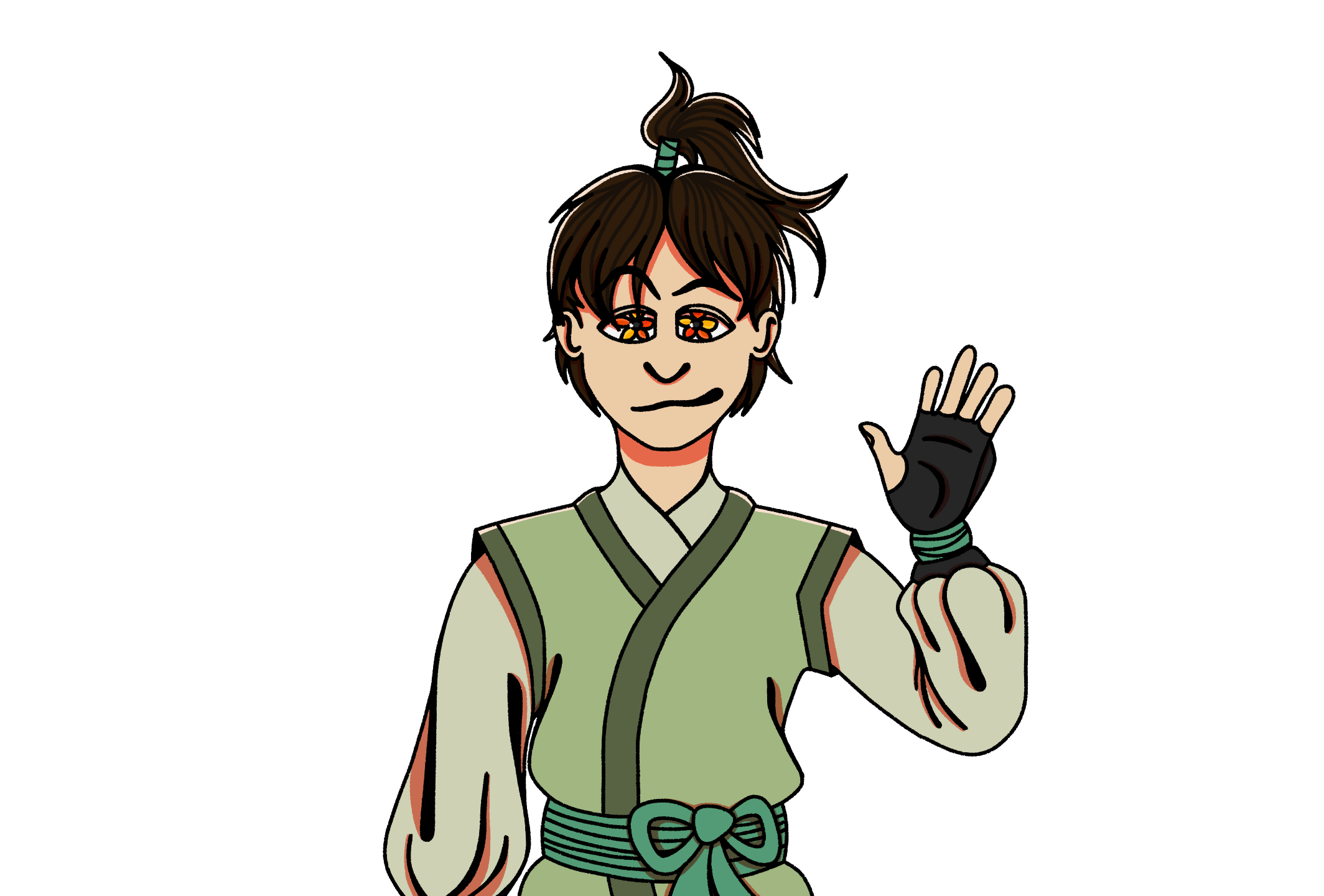
Ever feel like the world is rooting for you, only to realize you’re just a pawn in a game you didn't even know was being played? That’s basically the life of Yun. Most casual fans of the Avatar: The Last Airbender universe know Kyoshi as the towering, fan-wielding powerhouse who didn't take any crap. But before she was the Avatar, there was Yun.
He was the "chosen one" who wasn't. The boy who did everything right and still lost his soul to a spirit-worm in the middle of a forest. Honestly, the story of Yun the false avatar is probably the darkest thing to ever come out of the franchise. It’s not just a "whoops, wrong guy" situation. It’s a tragedy that nearly leveled the Earth Kingdom.
How do you even misidentify an Avatar?
You’d think the high sages and elemental masters would have a foolproof system, right? Usually, it’s the toy test—the same one Aang passed as a toddler. But after Avatar Kuruk died young, the world was a mess. Bandits (the Daofei) were everywhere, and the Earth Kingdom was basically a collection of warring states.
Jianzhu and Kelsang, Kuruk’s old friends, were desperate. They needed a win. When they found Yun in Makapu Village, he wasn't just a talented kid; he was a prodigy. He was winning at Pai Sho using the exact, bizarre strategies that Avatar Kuruk used to favor.
It felt like destiny.
Yun was charismatic, handsome, and an earthbending genius. He was so good that he could make stone move like water—a technique called "liquefying" that even masters found impossible. Because he was so "Avatar-like," they skipped the formal tests. They just decided he was the one. For years, Yun lived the life of the most powerful person on the planet. He studied politics, trained with the best, and carried the weight of the world on his teenage shoulders.
The moment everything broke
The turning point for Yun the false avatar happened at the worst possible place: a remote mountain range during a botched spirit ritual. Jianzhu, who was basically a Machiavellian chess player in a green robe, realized the truth. Kyoshi—Yun’s friend and "maid"—was the real deal. She was the one actually bending the elements when things got hairy.
Instead of a graceful transition, it was a bloodbath.
Jianzhu literally sacrificed Yun to Father Glowworm, an ancient and terrifying spirit, just to save his own skin and secure "his" new Avatar, Kyoshi. Imagine being Yun. You’ve given up your childhood, your identity, and your future to serve a world that just traded you for a "better" model.
Most people think Yun died there. He didn't.
He spent a week (which felt like forever in spirit-time) fighting Father Glowworm. He didn't just survive; he ate the spirit. Literally. He consumed its essence, crawled back into the human world, and decided that everyone who ever lied to him—the masters, the politicians, even his friends—needed to pay the ultimate price.
Why Yun was actually more dangerous than most Avatars
Here is the thing about Yun: he had all the training of an Avatar but none of the spiritual restraints. By the time he reappears in The Shadow of Kyoshi, he’s basically a horror movie villain.
He wasn't just throwing rocks.
- Mimicry: He could bend dust in the air to look like fire blasts.
- Precision: He could "paint-bend" because pigments are made of minerals.
- Stealth: He learned to travel through the ground like a shark in water, using his seismic sense to kill people through walls before they even knew he was there.
Kyoshi was terrified of him. Not just because he was her friend, but because he was a reflection of what happens when the Avatar system fails. He was a master of "Neutral Jing"—the art of waiting and listening—and he used it to dismantle the Earth Kingdom's leadership piece by piece.
The final showdown: Not your typical hero ending
If you’re looking for a "power of friendship" ending, you won’t find it here. The final fight between Kyoshi and Yun the false avatar is brutal. It happens in the ruins of the mansion where they used to live as friends.
Kyoshi eventually realized that Yun couldn't be "saved." He was too far gone, consumed by the spirit of Father Glowworm and his own very human rage. While he was monologuing—a classic mistake, honestly—Kyoshi used a high-level healing technique in reverse. She put her hand on his chest and froze the blood in his heart and lungs.
He died in her arms. It wasn't a victory; it was a mercy killing.
What we can learn from the "False" Avatar
The story of Yun isn't just lore filler for die-hard fans. It's a critique of the whole Avatar cycle. It shows that the "title" isn't what makes the person. Yun was a great person who became a monster because of the expectations put on him. Kyoshi was a "nobody" who became a legend because she had to stop him.
If you’re diving into the novels or just curious about the deeper history:
- Read the books: The Rise of Kyoshi and The Shadow of Kyoshi by F.C. Yee are where this all goes down.
- Watch for the parallels: Notice how Yun's downfall mirrors some of the struggles Korra or Aang faced, but without the support system.
- Appreciate the bending: Yun’s creative use of earthbending (like liquefying stone) is some of the most technical writing in the entire franchise.
Honestly, Yun deserved better. But in the world of Kyoshi, "better" usually isn't an option.
Check out the official Avatar chronicles or the Kyoshi novels to see the full play-by-play of how Yun’s earthbending evolved after his spirit-world survival. It’s way more graphic and detailed than the shows ever allowed.