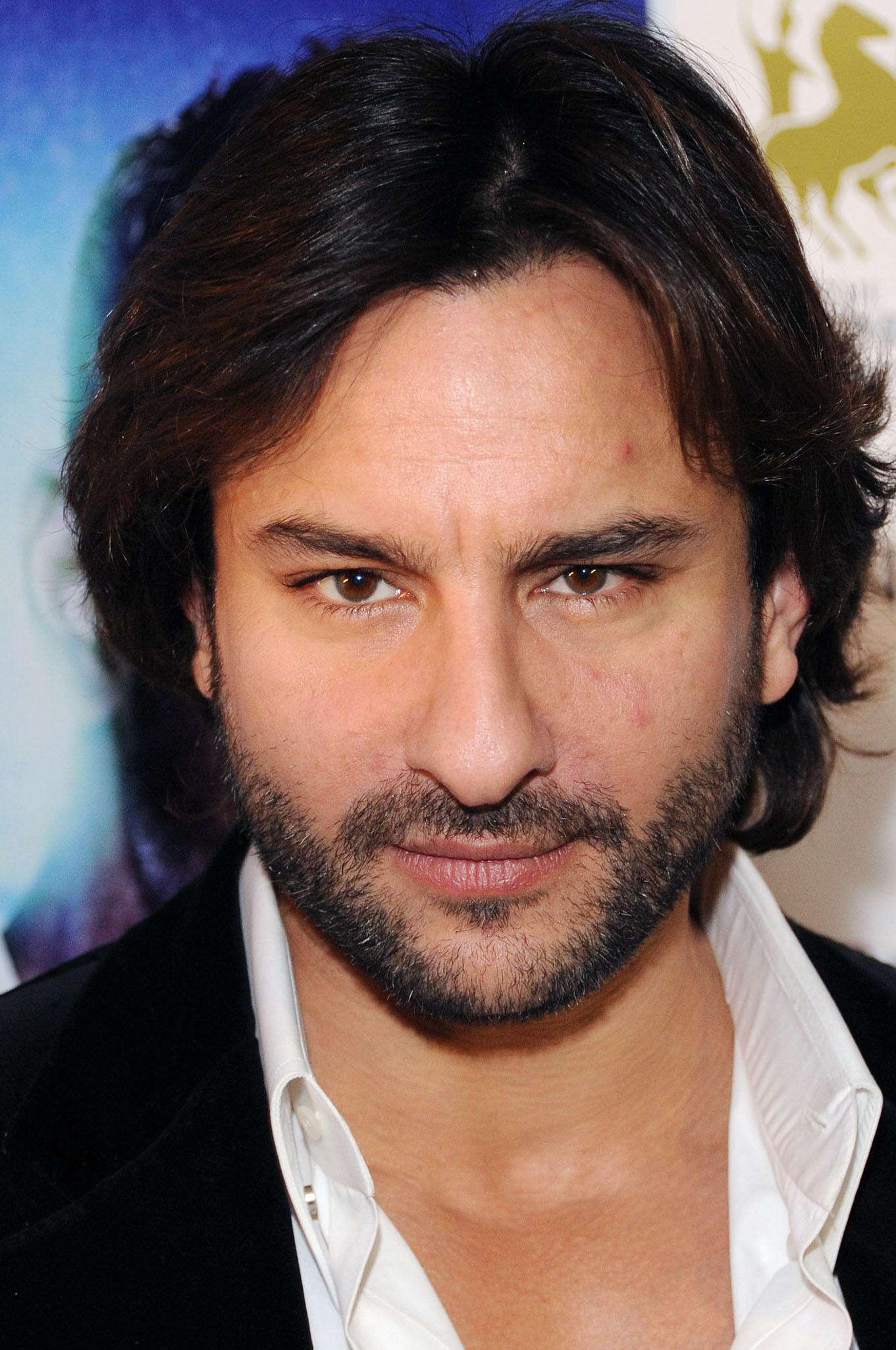
If you saw Saif Ali Khan today, you’d see a man who basically owns the "suave intellectual" vibe. He’s the guy reading Russian literature in a white kurta at Pataudi Palace. But honestly? If you traveled back to 1992, that version of Saif was a total mess. People didn't think he was "cool." They thought he was a joke.
The story of young Saif Ali Khan is actually one of the most chaotic "zero to hero" arcs in Bollywood history. He wasn't some polished star-in-waiting. He was a floppy-haired, high-pitched kid from London who couldn't dance, barely spoke Hindi properly, and got kicked off his first movie for being unprofessional.
The Debut That No One Remembers
Most people think Aashiq Awara was his first film because he won the Filmfare Best Debut award for it. Nope. His actual start was in a 1993 Yash Chopra film called Parampara. On paper, it should’ve been a massive hit. It had Aamir Khan, Sunil Dutt, and Vinod Khanna. But it flopped. Hard.
Saif looked out of place. While Aamir was already a seasoned star, young Saif Ali Khan looked like a confused teenager who’d accidentally wandered onto a film set. He had this thin, reedy voice that the 90s audience—who loved the baritone of Amitabh Bachchan—just couldn't take seriously.
The funny thing is, he was actually supposed to debut earlier in a movie called Bekhudi with Kajol. But the director, Rahul Rawail, literally fired him after the first schedule. Why? Because Saif was, by his own admission, "unprofessional." He’d show up late, look bored, and generally act like a brat who didn't want to be there.
Why the 90s Hated Him (At First)
It’s hard to explain to someone today just how much Saif struggled to fit in. Bollywood in the early 90s was all about the "macho man" or the "tragic lover." Saif was neither.
- The Look: He had long, curly hair that looked like he belonged in a British boy band, not a village in Haryana.
- The Voice: His accent was heavily British-influenced. When he tried to deliver dramatic dialogues, it came off as whiny.
- The Vibe: He was "too urban." In an era where movies were made for the masses in small towns, Saif felt like a guy who only shopped at Harrods.
The "Khiladi" Era: Finding a Safety Net
Things only started looking up when he paired with Akshay Kumar. If Akshay was the muscle, Saif was the comic relief. This partnership basically saved his career.
In Main Khiladi Tu Anari (1994), he played a pampered movie star trying to learn how to be a "real man" from a cop. It was meta. It worked because he was basically playing a version of his own public image—spoiled, funny, and slightly clueless. This film, along with Yeh Dillagi, showed that while he might not be a "hero" in the traditional sense, he had incredible comic timing.
But even then, he was stuck. For the rest of the 90s, he became the "second lead" guy. If you needed someone to play the hero’s goofy brother or the guy who loses the girl in the end, you called young Saif Ali Khan.
A Career in Freefall
Between 1995 and 1999, Saif did a string of movies that almost everyone has forgotten. Bambai Ka Babu, Tu Chor Main Sipahi, Hameshaa. None of them did anything for him.
Critics literally wrote him off. They said he was "over." There’s a famous Reddit thread where 90s kids talk about how they never viewed him as a main character. He was just the guy with the weird hair who did the "Ole Ole" dance.
Honestly, he was lazy. He admitted in later interviews that he took a lot for granted. He didn't go to the gym, didn't study his lines, and was just "drifting."
The Turning Point: Dil Chahta Hai
Everything changed in 2001. Farhan Akhtar cast him as Sameer in Dil Chahta Hai.
This wasn't just a movie; it was a rebranding. For the first time, the industry realized that Saif’s "urban-ness" wasn't a weakness—it was his superpower. He didn't need to play a villager or a tough cop. He was the perfect modern, metrosexual man.
He finally stopped trying to be someone else and started being himself. That’s when we saw the transition from the awkward "Chote Nawab" to the National Award-winning actor of Hum Tum and the terrifying Langda Tyagi in Omkara.
What Most People Get Wrong
People think Saif had it easy because he’s royalty and the son of Sharmila Tagore. While the "nepo" tag got him through the door, it didn't keep him in the room. He spent nearly a decade being the butt of the joke before he found his niche.
His journey is a lesson in reinvention. He’s one of the few actors from that era who actually got better with age. While his contemporaries were trying to stay 25 forever, Saif leaned into being an adult.
Real Insights for Fans
If you’re looking back at his early work, don't expect Sacred Games level acting. Expect a lot of high-waisted jeans and questionable dance moves. But look closely at his eyes—the mischief that made him a star was always there, even when he didn't know how to use it yet.
To really understand the evolution, you have to watch:
- Aashiq Awara - To see the raw, unpolished version.
- Main Khiladi Tu Anari - To see the spark of comedy.
- Kachche Dhaage - A rare 90s action role where he actually held his own against Ajay Devgn.
Next Step: You should check out his 1994 interview clips on YouTube. The contrast between his nervous, "clueless" 20-year-old self and the articulate man he is today is wild. It'll give you a whole new respect for his "slow burn" success.