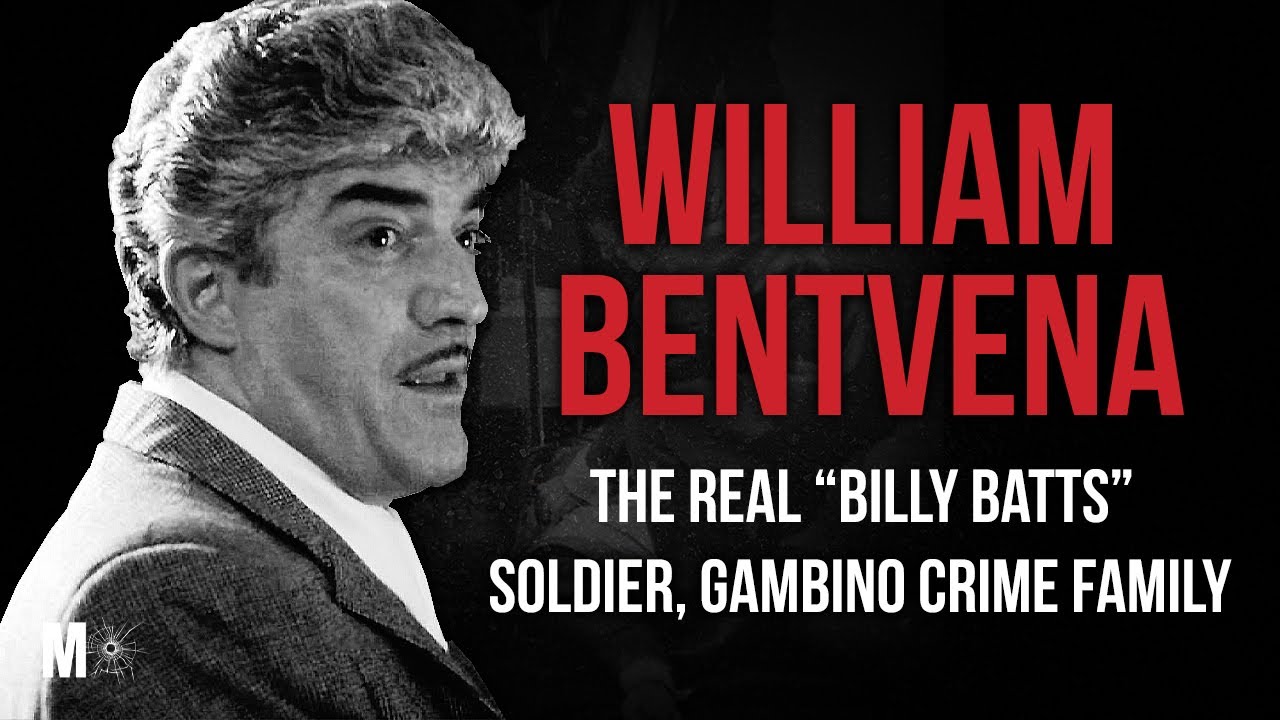
You probably know the scene. Frank Vincent, playing a smug, silver-haired mobster, leans over a bar and tells a young, volatile Joe Pesci to "go home and get your shine box." It’s one of the most iconic moments in cinema history. But the real William Billy Batts Bentvena wasn't just a plot point in Goodfellas. He was a real guy. A soldier in the Gambino crime family. A man who spent six years in federal prison only to be murdered just days after his release.
Movies tend to sharpen the edges of reality to make a better story. In the film, the murder of William Billy Batts Bentvena happens almost instantly after the insult. In real life? It was slower. It was messier. And the reasons behind it weren't just about a bruised ego over a shoeshine.
The Real Billy Batts
William Joseph Bentvena was born in Manhattan in 1933. He grew up in the same rough Brooklyn neighborhoods as the guys who would eventually kill him. By the time he was in his late 20s, he was already deep in the life. He wasn't some low-level associate; by 1961, he was a "made" man in the Gambino family. That’s a big deal. Being made meant you were officially part of the brotherhood. You were untouchable. If someone wanted to hurt you, they needed permission from the boss.
He was a protege of Carmine Fatico and a close friend of a rising star named John Gotti. Batts was primarily a heroin trafficker, which eventually caught up with him. In 1964, he got busted in Bridgeport, Connecticut, during a drug deal. He was sentenced to 15 years, though he only ended up serving six at the Federal Correctional Institution in Danbury.
When he walked out of those prison gates in June 1970, he expected to get his life back. He expected to reclaim his "business." Instead, he walked into a death trap.
Why the Murder of William Billy Batts Bentvena Was About More Than a Shine Box
The "shine box" insult is legendary. It happened at a "welcome home" party for Batts at Robert’s Lounge, a bar owned by Jimmy Burke (played by Robert De Niro in the movie). Batts saw Tommy DeSimone—the real-life version of Pesci’s character—and started ribbing him about his childhood. Tommy had actually shined shoes as a kid. To a guy like Tommy, who was desperate to be seen as a tough guy, being reminded of his days of "servitude" was humiliating.
But honestly, money was the real driver. While William Billy Batts Bentvena was away in prison, Jimmy Burke had taken over Batts’ lucrative loan-sharking routes. In the mob, when a guy goes away, someone usually looks after his business. But "looking after it" often turns into "keeping it." When Batts came home, he wanted his money back.
Burke didn't want to give it up.
Killing Batts solved two problems: it satisfied Tommy's rage and it allowed Burke to keep the cash flowing.
The Night of June 11, 1970
The movie makes it look like it all happened that same night. In reality, Tommy waited. He let the tension simmer for about two weeks. On June 11, Batts was at The Suite, a nightclub in Jamaica, Queens, owned by Henry Hill.
It was late. The bar was mostly empty.
Tommy DeSimone walked in and began pistol-whipping Batts with a heavy .38 revolver. He didn't just hit him; he brutalized him. Henry Hill later recalled that DeSimone was screaming, "Shine these fucking shoes!" while he broke the man's skull. They thought he was dead. They wrapped him in a tablecloth, threw him in the trunk of Henry’s Pontiac, and headed for the suburbs.
The Thumping in the Trunk
This is the part of the story that sounds like a horror movie because it basically was. As they were driving to a plot of land owned by a friend of Burke’s in Upstate New York, they heard a noise.
Thump. Thump. Thump.
William Billy Batts Bentvena was still alive. Imagine the sheer terror of waking up in a dark trunk, your head shattered, realizing the people you thought were your friends were taking you to a hole in the ground.
They pulled over. They didn't use a gun—that would be too loud. Instead, Burke and DeSimone used a shovel and a tire iron. It was a slow, agonizing end for a man who had survived six years in a federal pen just to die on the side of a road.
The Aftermath and the "Unmade" Tommy
Killing a made man without permission is the ultimate sin in the Mafia. It’s a death sentence. Burke and DeSimone knew this. They spent years looking over their shoulders.
A few months after the murder, the land where they buried Batts was sold for development. They had to go back. Henry Hill described the smell as the most horrific thing he’d ever experienced. They dug up the remains of William Billy Batts Bentvena, which had turned a sickly "lime green," and moved them. Some stories say they took the body to a junkyard in New Jersey to be put through a car compactor. Others say he was reburied in the basement of Robert’s Lounge.
Eventually, the "Life" caught up with Tommy DeSimone. In 1979, he went missing. The common belief is that the Gambinos finally found out what happened to Batts. John Gotti, who had been Batts’ friend, supposedly carried out the hit himself or at least authorized it.
Facts vs. Fiction: What the Movie Got Wrong
- Timing: The insult and the murder were weeks apart, not hours.
- The Weapon: They didn't use a kitchen knife in the trunk; they used a shovel and a tire iron.
- The Location: The initial insult happened at Robert’s Lounge, but the beating happened at The Suite.
- The Motive: It was just as much about Jimmy Burke’s greed as it was about Tommy’s temper.
Legacy of a Mob Hit
The story of William Billy Batts Bentvena is a grim reminder of what the "Golden Age" of the Mafia actually looked like. It wasn't just about suits and pasta dinners. It was about betrayal, greed, and a total lack of honor.
If you're interested in the deeper history of the Gambino family or the Lucchese associates who ran the Lufthansa Heist, Batts is a central figure. His death set off a chain reaction that eventually led to the disappearance of Tommy DeSimone and contributed to Henry Hill’s decision to turn informant.
What You Can Do Next
If you want to get the full, unvarnished story of this era, you should check out these resources:
- Read "Wiseguy" by Nicholas Pileggi: This is the book Goodfellas was based on. Henry Hill’s first-hand account of the Batts murder is way more detailed (and grosser) than the film.
- Research the 1978 Lufthansa Heist: Many of the same players involved in the Batts murder were responsible for this massive robbery.
- Explore the Gambino Family Tree: Look into the "Fatico Crew" to see how John Gotti rose to power through the same circles Batts occupied.
The story of Batts isn't just a movie scene. It's a piece of New York history that shows how quickly "respect" turns into a shallow grave.