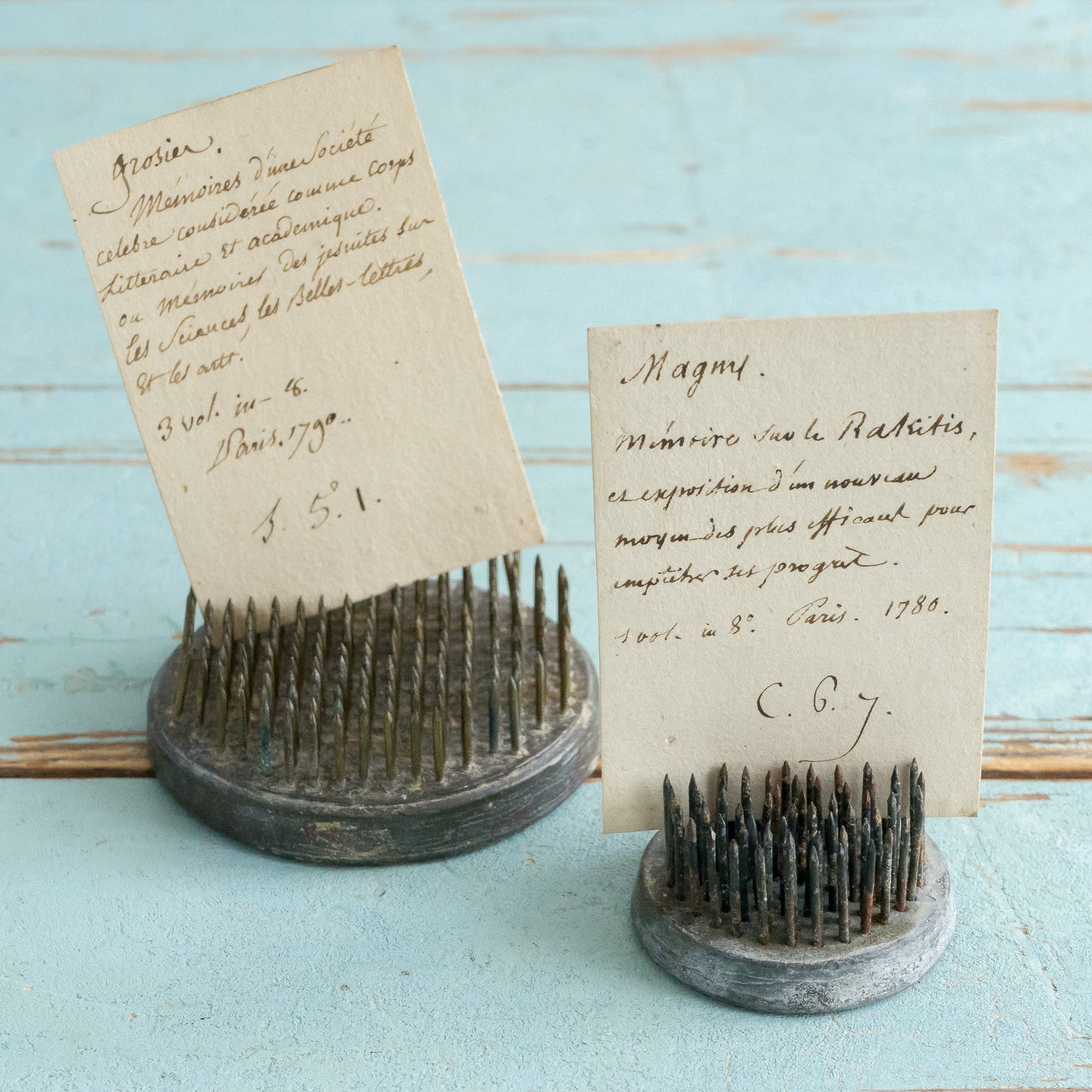
You’ve probably seen them at estate sales or tucked away in the back of a dusty kitchen drawer. They look a bit like torture devices—heavy lead or iron discs covered in sharp brass needles, or maybe a strange cage of crisscrossing metal wires. These are vintage metal flower frogs, and honestly, if you're still using that green floral foam from the craft store, you’re missing out on the best tool ever invented for floral design.
Before the 1950s, when plastic-based foams like Oasis started taking over the industry, these heavy metal anchors were the standard. They were built to last forever. They were functional. And surprisingly, they’re making a massive comeback because people are finally realizing that disposable foam is terrible for the environment and, frankly, kind of a pain to work with.
What a Vintage Metal Flower Frog Actually Is
So, what’s the deal with the name? It sounds weird. Most collectors believe they’re called "frogs" simply because they sit in the bottom of a "pond" (the water in your vase). Others suggest it's because they "sit" in water like an amphibian. Whatever the origin, the vintage metal flower frog serves one primary purpose: holding stems exactly where you want them.
They aren't all the same.
The most common variety you’ll find is the "pin frog," also known in Japanese floral art as a kenzan. These are heavy. Really heavy. They consist of a solid lead or brass base with dozens of sharp brass pins sticking upward. You literally impale the stems of your flowers onto the needles. It sounds aggressive, but it provides incredible stability for top-heavy blooms like peonies or large garden roses.
Then you have the "cage" style. These look like little wire domes or grids. Instead of piercing the stem, you slide the flowers into the gaps. These were huge in the 1920s and 30s, often manufactured by companies like Dazey or the L.F. Grammes & Sons company out of Allentown, Pennsylvania.
The Problem With Lead
We have to talk about the lead. A lot of those heavy, grey-toned frogs from the early 20th century are made of solid lead. It was cheap, easy to mold, and heavy enough to keep a massive arrangement from tipping over. If you’re handling these, just be smart. Wash your hands. Don't let your cat drink the vase water. Some modern collectors actually coat the bottom of their lead frogs in clear spray paint or Plasti Dip to create a barrier, which isn't a bad idea if you’re using them constantly.
Why Collectors Are Scouring Thrift Stores
Most people get into these because they want their flowers to look "natural" rather than stiff. Modern floral foam holds water, sure, but it also contains microplastics and formaldehyde. It’s nasty stuff. When you use a vintage metal flower frog, the stems are in direct contact with a large volume of water. They breathe better. They last longer.
There’s also the weight factor. Have you ever tried to put a long branch of cherry blossoms into a glass vase only to have the whole thing crash onto the floor? A cast-iron or lead frog prevents that. It acts as an anchor.
Identifying the Good Stuff
If you’re out hunting at a flea market, look for marks. They aren't always there, but when they are, they’re usually on the bottom.
- Dazey Manufacturing Co. is the gold standard for many. They made the "Flower-Fashioner" line.
- Blue Ribbon Flower Holders are often found in their original boxes, which is a huge plus for resale value.
- The "Hairpin" Style. These are highly sought after. Instead of sharp needles, they have loops of wire that look like old-fashioned hairpins. They are much gentler on soft-stemmed flowers like tulips or ranunculus.
Check for rust. A little patina is fine—actually, it's beautiful—but if the pins are snapping off or the metal is flaking away in chunks, it’s probably past its prime. Brass pins are the most resilient because they don't rust like steel does.
How to Actually Use One Without Hurting Yourself
It’s easy to poke a finger. Be careful.
First, you need to secure the frog to the bottom of your container. If the frog is heavy enough and your arrangement is balanced, you might not need anything. But if you're worried, use "floral clay"—that sticky, putty-like stuff. Make sure both the bottom of the frog and the bottom of the vase are bone dry before you apply the clay, or it won't stick. Press it down hard.
Once it's in, add your water.
When you’re ready to arrange, cut your stems at an angle. For woody stems, like lilacs, some pros even suggest cutting a small vertical slit in the bottom of the stem so it fits over the pins more easily. Push the stem straight down onto the pins. Don't worry about hitting every pin; just enough to make it feel sturdy.
The beauty of the vintage metal flower frog is that you can achieve "negative space." You don't need to jam the vase full of greenery just to keep the flowers upright. You can have one single, dramatic branch leaning at a 45-degree angle, and it will stay exactly where you put it. It’s a minimalist's dream.
The Economics of Modern vs. Vintage
You can buy a cheap, mass-produced pin frog on Amazon for ten bucks. They work. But they feel light. They feel flimsy.
A true vintage metal flower frog from the 1930s has heft. You’ll probably pay anywhere from $15 to $60 depending on the size and the rarity of the design. The very large ones—the ones that are five or six inches across—are the "holy grail" for many florists and can fetch over $100.
Why pay more? Durability. These things were designed to be heirloom tools. You buy it once, you use it for forty years, and then your kids use it. You aren't throwing away a block of green plastic every time you buy a supermarket bouquet. Over a few years, the vintage frog actually pays for itself.
Cleaning and Care
They get gross. It happens. Organic matter from the flower stems breaks down and gets trapped between the pins.
To clean a vintage metal flower frog, don't just toss it in the dishwasher. The heat and harsh detergents can ruin the finish or accelerate corrosion. Instead, use an old toothbrush and some mild dish soap. If there’s a lot of buildup, you can soak it in a mixture of water and a little bit of white vinegar.
If the pins get bent—which happens if you’re forcing thick branches onto them—you can usually straighten them back out with a pair of needle-nose pliers. Just be gentle. Old metal can be brittle.
Myths and Misconceptions
People think these are only for "Ikebana," the Japanese art of floral arrangement. While the kenzan is a staple of Ikebana, metal frogs were used in Western "mass" arrangements for decades. You can hide the frog under some moss or rocks, or just let it show. In a clear glass compote, a weathered brass frog actually looks quite intentional and industrial.
Another misconception is that they "kill" the flowers by piercing the stems. It’s actually the opposite. By opening up the bottom of the stem, you’re often increasing the surface area for water intake.
Actionable Steps for Your First Arrangement
If you’ve just inherited one or found one at a garage sale, here is how to get started:
- Test the Weight: If your vase is glass and your frog is lead, place it in gently. Dropping a heavy metal frog into a delicate glass vase is a fast way to shatter the bottom.
- The "Dry Fit": Place your frog and your main "anchor" stems in the vase before adding water. This lets you see the structure without making a mess.
- Start with the Heavy Stuff: Place your largest or heaviest blooms first to establish the center of gravity.
- Use a Cleaning Tool: Buy a "pin straightener." It’s a small metal tube that fits over an individual pin to help you bend it back into place, and it usually has a little rake on the other end to clean out debris.
- Mix Styles: Don’t be afraid to use a cage-style frog for the "floppy" flowers (like sweet peas) and a pin frog for the "sturdy" ones (like zinnias) in the same large container.
The vintage metal flower frog isn't just a collectible for a shelf; it’s a functional piece of history that makes floral design accessible to anyone. It forces you to slow down and think about the placement of every single stem. That’s where the art happens.