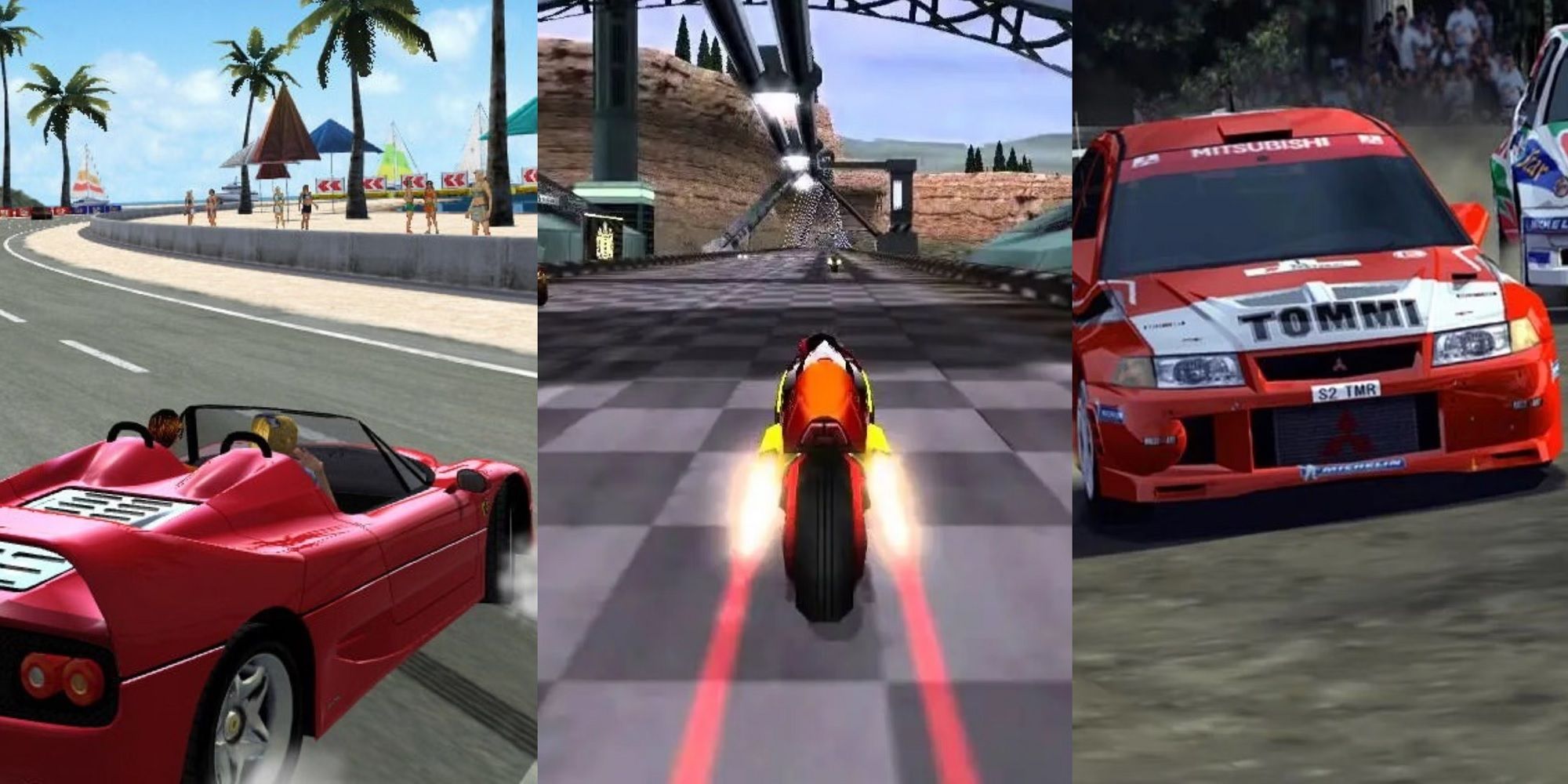
The PlayStation 2 era wasn't just a "good time" for cars; it was a fever dream of burning rubber and blue-tinted nitro trails. If you grew up with a DualShock 2 in your hands, you know that sound of the disc tray clicking shut followed by a high-octane intro movie. Honestly, modern games have the 4K textures and the ray-tracing, but they often miss the soul. They lack that specific "vibe" found in top racing games PS2 libraries.
We’re talking about a console that moved over 150 million units. Naturally, every developer wanted a piece of that pie. The result was a golden age where simulation and arcade racing didn't just coexist—they fought for your attention every single weekend.
The King of the Track: Gran Turismo 4
You can’t talk about the PS2 without mentioning the "Real Driving Simulator." Polyphony Digital didn't just make a game; they made an encyclopedia of automotive history. Released in late 2004 (or 2005 depending on where you lived), Gran Turismo 4 was a technical miracle.
It had over 700 cars. Seven hundred! In 2005! You could buy a used 1989 Nissan Skyline or a literal motorized carriage from the 1800s. The game pushed the PS2 so hard it actually supported 1080i resolution. Most people didn't even have TVs that could handle that back then.
Why It Hits Different
- The License Tests: Everyone hated them, but they taught you how to actually drive. That gold trophy ping was pure dopamine.
- B-Spec Mode: You could literally be the team manager, telling an AI driver when to push and when to pit. Perfect for those grueling 24-hour endurance races.
- Used Car Lots: The rotation of used cars based on "game days" made checking the dealership a daily ritual.
Chaos Theory: Burnout 3: Takedown
If Gran Turismo was a tuxedo, Burnout 3: Takedown was a leather jacket covered in gasoline. Criterion Games basically decided that finishing a race was boring unless you turned your opponents into scrap metal along the way.
This game introduced the "Takedown" mechanic, and it changed everything. Slamming a rival into a pillar at 180 mph wasn't just encouraged; it was how you won. The "Aftertouch" feature let you steer your wreckage into oncoming traffic after you crashed. It turned failure into a mini-game. It was brilliant.
The soundtrack? Pure mid-2000s pop-punk perfection. Fall Out Boy, Yellowcard, Jimmy Eat World—it was the sonic equivalent of a sugar rush. It’s arguably one of the top racing games PS2 ever hosted because it felt so fast your eyes would literally start watering.
Street Culture and Neon: Need for Speed
EA was on a legendary run during this era. They had a "Holy Trinity" of games that defined the tuner scene: Underground, Underground 2, and Most Wanted.
Underground 2 gave us the open world of Bayview. It was always night, always raining, and always glowing with neon. You spent hours in the garage picking out the exact right neon underglow or vertical doors. It captured that Fast & Furious era perfectly.
Then came Most Wanted in 2005. It took the customization of Underground and added the heat of the police. The "Blacklist" was a stroke of genius. You weren't just racing; you were climbing a social ladder of criminals. Getting chased by a dozen cop cars while "Decadence" by Disturbed played in the background is a core memory for an entire generation.
The Underdogs and Heavy Hitters
The PS2 wasn't just about the big three. There were so many weird, experimental, and incredibly polished titles that deserve a spot in the conversation.
- Midnight Club 3: DUB Edition Remix: Rockstar Games brought the "DUB" culture to life. It was faster than Need for Speed and featured massive open worlds in Detroit, Atlanta, and San Diego. The "Remix" version added Tokyo, making it a massive package.
- FlatOut 2: While Burnout was about high-speed wrecks, FlatOut 2 was about dirt and destruction. The physics were insane. You could launch your driver through the windshield in "Ragdoll Olympics" mini-games. High-brow entertainment, obviously.
- Ridge Racer V: A launch title that still looks surprisingly clean. It's the ultimate "arcade" feel—drifting that defies the laws of physics but feels so right.
Why We Still Play Them
The hardware was limited, which forced developers to be creative. They couldn't rely on photorealism, so they relied on style. Every game had a distinct color palette and a specific handling model.
Also, no microtransactions. You bought the disc, you got the game. You wanted a faster car? You won races. You didn't buy "Car Credits" with a credit card. That purity of progression is something we've kinda lost in the modern "live service" era.
What You Should Do Next
If you still have a PS2 gathering dust in a closet, it's time to dig it out. If not, look into high-quality emulation or the few remasters that exist.
Your Action Plan:
- Start with Burnout 3: It’s the easiest to pick up and play for a quick 20-minute session.
- Check the used market: Copies of Gran Turismo 4 are still incredibly cheap because Sony printed millions of them.
- Upgrade your connection: If playing on original hardware, grab a set of Component cables (not Composite!) to get that crisp 480p or 1080i signal. It makes a world of difference on modern screens.
The legacy of these top racing games PS2 isn't just nostalgia; it's a testament to a time when games were built to be fun first and foremost. Go find a copy of Midnight Club 3, put on some headphones, and lose yourself in the neon. You won't regret it.