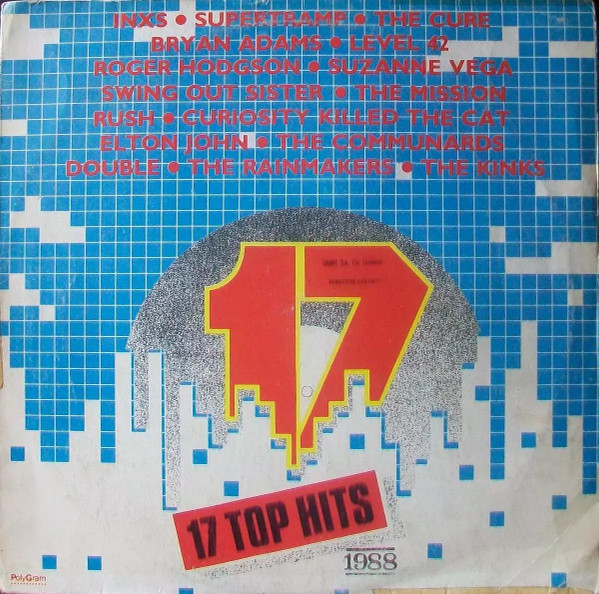
1988 was weird. Honestly, if you look at the charts from that year, it feels like a fever dream where hair metal, teen pop, and socially conscious rap all decided to move into the same crowded apartment. It was the year of the "Tiffany vs. Debbie Gibson" wars. It was the year George Michael proved he was a god-tier songwriter. Most importantly, it was the year digital production finally figured out how to have a soul.
The top hits in 1988 weren't just catchy radio fodder. They were the blueprints. When you hear a modern synth-pop track today, you’re hearing the echo of a Roland TR-808 that was pushed to its limit in a London or New York studio nearly four decades ago.
The Year George Michael Rebuilt the Rules
You can't talk about 1988 without starting with Faith. By the time the calendar turned to January, George Michael had already shed the "Wham!" image, but 1988 was when he became an untouchable titan. He had four number-one singles in that calendar year alone. "Father Figure," "One More Try," "Monkey," and "Faith" itself.
The thing about "Father Figure" that people forget? It was originally intended to be a fast dance track. Michael stripped the beat away, realized the mid-tempo gospel-lite vibe was way more haunting, and accidentally invented a sound that R&B singers are still trying to replicate. It’s sparse. It’s intimate. It’s also incredibly bold for a guy who was essentially the biggest pin-up on the planet at the time. He was taking risks that modern stars—even the big ones—often shy away from.
While George Michael was dominating the adult demographic, the malls were being conquered by teenagers.
Tiffany and Debbie Gibson were essentially the prototypes for the Britney/Christina era. Tiffany’s "Could’ve Been" was a massive ballad that showed a surprising amount of vocal grit for a 16-year-old. Meanwhile, Debbie Gibson was writing and producing her own tracks like "Foolish Beat," which made her the youngest female artist to do so at the time. It’s a record she held for decades. People used to dismiss this stuff as "bubblegum," but if you look at the chord progressions in "Foolish Beat," there’s a level of craft there that belies the neon-colored leggings and hairspray.
The Rise of the New Jack Swing
While the pop charts were glossy, a massive shift was happening underneath the surface. Teddy Riley was busy inventing "New Jack Swing."
You heard it everywhere in the top hits in 1988, specifically with Bobby Brown’s Don’t Be Cruel album. The title track and "My Prerogative" changed everything. It was the bridge between traditional R&B and the aggression of hip-hop. It used heavy, swinging drum machine beats with soulful, polished vocals.
Basically, if Bobby Brown hadn’t released "My Prerogative" in 1988, we wouldn’t have had the 90s as we know them. No Bell Biv DeVoe. No Janet Jackson Rhythm Nation (which was being cooked up right then). No Usher. It was the sound of the street moving into the penthouse.
Rock's Last Great Stand Before the Grunge Storm
1988 was also the peak of "Big Rock."
Guns N’ Roses’ Appetite for Destruction had actually come out in 1987, but it didn't really explode until 1988. "Sweet Child O’ Mine" hit number one in September of '88. Think about that for a second. In a year dominated by Rick Astley and Paula Abdul, this gritty, dangerous band from the Sunset Strip managed to snag the top spot with a song that started as a guitar warm-up exercise.
But it wasn't just GNR.
Def Leppard’s Hysteria was still pumping out hits. "Love Bites" was their only number one, and it’s a masterclass in Mutt Lange’s obsessive production. Every single snare hit was sampled and processed. It sounds like a machine trying to feel heartbreak. It’s arguably the most "produced" song of the decade, and yet it worked because the melody was undeniable.
Then you had the hair metal crossover. Poison’s "Every Rose Has Its Thorn" became the definitive power ballad. It’s a simple song. Three chords and a story about a guy getting his heart ripped out in a laundromat. But that simplicity is why it stayed at the top of the charts for three weeks. It was relatable in a way that the more theatrical rock of the era wasn't.
Sampling Goes Mainstream
We have to talk about "Fool's Gold" and the emergence of the "Madchester" scene in the UK, but in the US, 1988 was the year hip-hop truly broke the Billboard seal.
- DJ Jazzy Jeff & The Fresh Prince gave us "Parents Just Don't Understand." It was funny, clean, and won the first-ever Grammy for Best Rap Performance.
- Rob Base & DJ EZ Rock released "It Takes Two." If you go to a wedding today, they will play this song. It’s a law. The way it sampled Lyn Collins’ "Think (About It)" was a sign of the sampling gold rush that was about to take over the industry before the lawyers got involved and made everything expensive.
The Weird One-Hit Wonders and the "Rickroll" Genesis
Rick Astley's "Never Gonna Give You Up" was the number one song of the year according to some year-end tallies.
Long before it was a meme, it was just a massive, Stock Aitken Waterman-produced juggernaut. Astley had this booming, soulful voice that didn't match his boyish look, which fascinated the public. It was the ultimate "blue-eyed soul" moment of the late 80s.
Then there was Bobby McFerrin. "Don't Worry, Be Happy" was the first a cappella song to reach number one on the Billboard Hot 100. No instruments. Just McFerrin layering his voice. It’s a feat of technical brilliance disguised as a simple, catchy jingle. Some people hated it—it was voted one of the most annoying songs eventually—but in 1988, it was a cultural phenomenon that even George H.W. Bush tried to use for his campaign (McFerrin famously hated that).
Why the Sound of 1988 Was Technically Superior
By 1988, studios had transitioned into the "DDD" (Digital-Digital-Digital) era of recording.
The hiss of the 70s was gone. Everything was crisp. This is why top hits in 1988 like INXS’s "Need You Tonight" sound so modern even now. That guitar riff is dry, tight, and funky. There’s no reverb drowning it out. Michael Hutchence’s vocal is right in your ear. It’s a "cool" record. It doesn't try too hard, which is a rarity for the 80s.
Similarly, Tracy Chapman’s "Fast Car" proved that audiences were starving for something real. In a year of synthesizers, a woman with an acoustic guitar singing about the cycle of poverty managed to reach number six. It was an anomaly. It showed that despite the glitter and the drum machines, a great song with a powerful message could still cut through the noise.
The Misconception of "The Plastic 80s"
A lot of people think 1988 was just "plastic" pop. That's a mistake.
Look at U2’s Rattle and Hum era. "Desire" was a raw, Stooges-meets-Bo-Diddley stomp. Look at Cheap Trick’s comeback with "The Flame." Look at The Beach Boys hitting number one again with "Kokomo" because of a Tom Cruise movie (Cocktail). It was a year where the old guard and the new breed were fighting for space, and the result was a chart that was incredibly diverse.
You had Terence Trent D'Arby bringing a Hendrix-style swagger to pop with "Wishing Well." You had Belinda Carlisle proving there was life after The Go-Go's with "Heaven Is a Place on Earth" (which peaked late '87 but lived on the '88 charts).
How to Build a 1988-Inspired Playlist That Actually Works
If you want to understand this era, don't just look at the Year-End Top 10. You have to look at the variety.
- Start with the Groove: Put Bobby Brown’s "My Prerogative" next to INXS’s "New Sensation." Feel the difference in how they use rhythm.
- The Ballad Peak: Compare "One More Try" by George Michael with "Everything Your Heart Desires" by Hall & Oates.
- The New Wave Hangover: Add "Chains of Love" by Erasure. It’s the perfect example of the synth-pop that was starting to get more sophisticated.
- The Rock Crossover: "Pour Some Sugar on Me" is essential. It’s basically a rap song disguised as a metal anthem.
The biggest takeaway from the top hits in 1988 is that the "rules" of what made a hit were dissolving. You didn't have to be a rock god or a disco diva anymore. You could be a kid from the mall, a rapper from Philly, or a soul singer from London.
The music industry was becoming a global melting pot. This paved the way for the massive genre-blending of the 90s. If you’re a songwriter or a producer today, 1988 is a goldmine of "how to do it right." The production is clean but punchy. The hooks are massive. The emotion is usually turned up to eleven.
To truly appreciate these tracks, listen to them on a decent pair of headphones rather than a phone speaker. You’ll hear the layers of the Fairlight CMI synthesizers and the subtle layering of vocals that made 1988 a high-water mark for high-fidelity pop. Check out the original 12-inch extended mixes if you can find them; that's where the real production magic of 1988 lives.