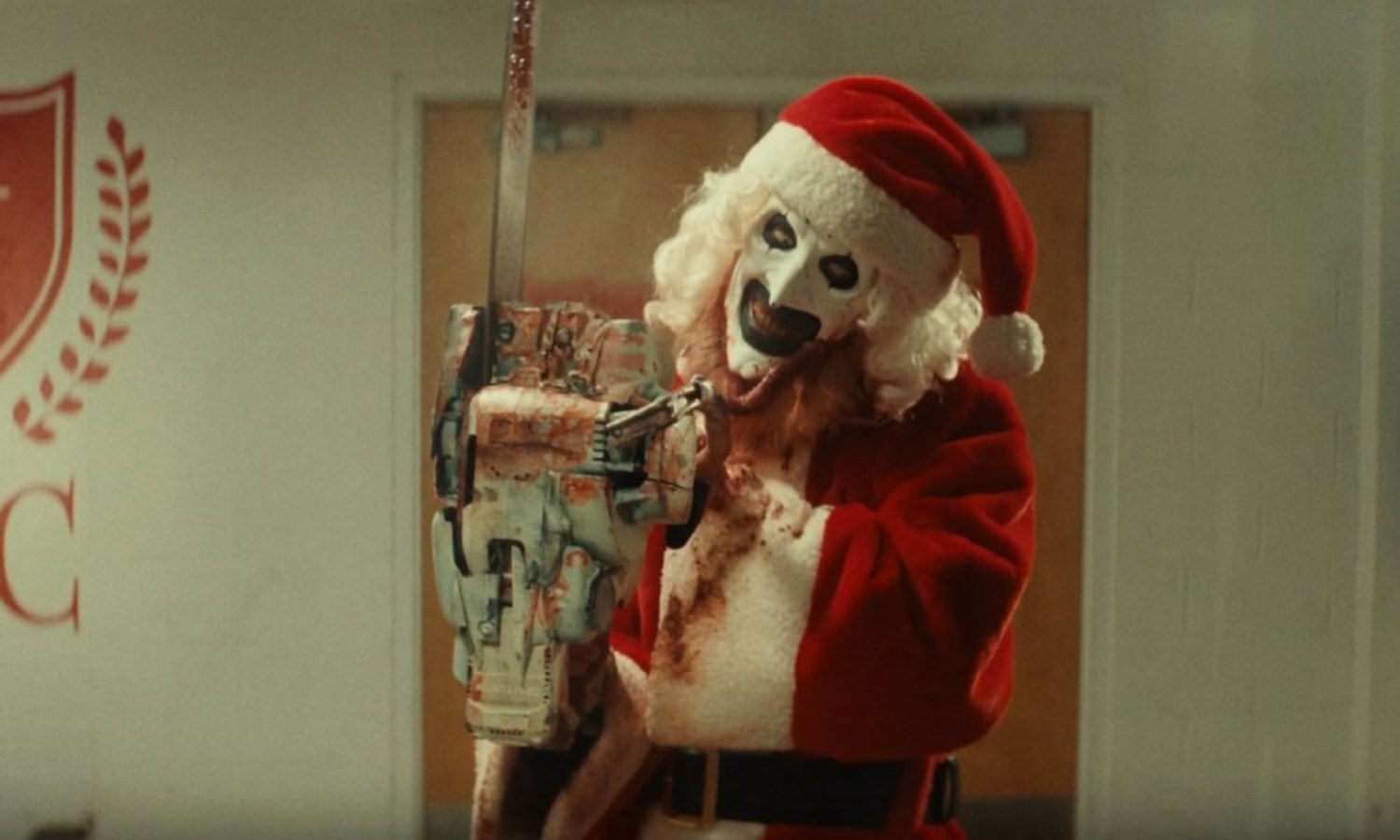
Art the Clown isn’t exactly known for restraint. If you’ve followed the Terrifier franchise from its humble beginnings in All Hallows' Eve, you know Damien Leone likes to push boundaries until they basically snap. But nothing—honestly, nothing—prepared audiences for the Terrifier 3 shower scene. It’s the kind of sequence that makes the infamous "hacksaw" scene from the second movie look like a PG-13 trailer.
It’s brutal. It’s loud. It’s messy.
When the film hit theaters, reports started surfacing about people actually walking out or getting sick in the aisles. That’s not just marketing hype. Leone has a background in special effects makeup, and it shows in every glistening, practical detail of this specific sequence. He doesn't rely on CGI to hide the seams. He wants you to see the textures. He wants you to feel the cold tile and the steam.
The anatomy of the Terrifier 3 shower scene
Most slasher movies treat the shower as a trope. We’ve seen it a thousand times since Hitchcock’s Psycho. But Leone flips the script by making it a dual-victim slaughter. We have Mia and Cole, two characters the audience has spent enough time with to actually care about, trapped in a space that offers zero leverage.
The pacing is what kills you.
It starts with a sense of dread that Art is "somewhere" in the house, but when he finally reveals himself, he’s wielding a chainsaw. It’s a direct nod to The Texas Chain Saw Massacre, yet it feels entirely different because of Art’s silent, miming cruelty. He doesn't just kill; he performs. He waits for the realization to sink in.
The actual logistics of the Terrifier 3 shower scene involved weeks of planning. Practical effects lead Phil Falcone and Leone had to figure out how to spray "blood" in a way that wouldn't immediately wash away under the running water. They used a specific mix of corn syrup and dyes that was thicker than usual. If you look closely at the carnage, the way the water dilutes the red on the floor tiles creates this haunting, pinkish swirl that looks disturbingly real.
Why the chainsaw matters here
In the original Terrifier, Art used a hacksaw. In the sequel, he used... well, everything. But the chainsaw in Terrifier 3 represents a shift toward "elevated" grindhouse. It’s louder. It’s more industrial. When he begins the assault on Mia and Cole, the sound design takes over. You hear the engine revving against the sound of splashing water, creating a cacophony that feels claustrophobic.
Art’s choice of weapon isn't random. He’s a scavenger.
Pushing the limits of the NC-17 line
Technically, the film was released unrated. That’s a bold move for a theatrical run, but it’s the only way the Terrifier 3 shower scene could exist in its current form. If this went through the MPAA, it would have been butchered beyond recognition.
David Howard Thornton, the man behind the makeup, brings a terrifying levity to the scene. His performance as Art during the shower massacre is almost vaudevillian. He’s dancing. He’s mocking the victims. This juxtaposition of "silly" movement with "ultra-violent" imagery is what creates that specific Terrifier brand of discomfort. It’s why people can’t look away even when they want to.
Some critics argued it went too far.
They say it’s "misogynistic" or "torture porn." But horror fans generally disagree. They see it as an evolution of the "Grand Guignol" style—theatre that exists purely to shock the senses. Leone has gone on record saying he doesn't hate his characters; he just wants to provide the most visceral experience possible for a sub-section of fans who feel modern horror has become too "safe" or "sanitized" by big-budget studios like Blumhouse.
Behind the scenes: How they pulled it off
Working in a wet environment is a nightmare for a film crew.
Electronics hate water. Special effects appliances—the prosthetics glued to the actors' skin—hate water even more. The actors, Alexa Blair Robertson (Mia) and Mason Mecartea (Cole), had to spend hours in a cramped, humid set while the crew reset the "blood" pumps.
- The Prosthetics: Multiple "stunt" bodies were used for the more graphic moments of the Terrifier 3 shower scene. These aren't just plastic mannequins; they are silicone casts with simulated bone and muscle tissue.
- The Lighting: Leone chose a high-contrast look. The bright white of the bathroom tiles makes the red of the blood pop more than it would in a dark alleyway.
- The Performance: Thornton often improvises his "bits." That little wave or the way he clears the steam from the glass? That’s often just Thornton being Art in the moment.
It’s also worth noting the psychological toll.
Actors in these scenes often talk about the "comedic" atmosphere on set to balance out the darkness. You have to laugh when there's a guy in a clown suit eating a sandwich while sitting next to a pile of fake limbs. Without that levity, the production would be unbearable.
The cultural impact of the shower sequence
Social media went into a full meltdown after the opening weekend. TikTok was flooded with "reaction" videos of people leaving the theater during the Terrifier 3 shower scene. This created a "dare" culture—can you sit through the whole thing?
It’s a throwback to the 1970s marketing of movies like The Last House on the Left, where the posters would literally warn you about the content. It’s a brilliant way to build a brand without a $100 million marketing budget. The movie became a hit because it felt "dangerous."
Honestly, the scene works because it’s a violation of a safe space.
We are all vulnerable in the shower. We are naked, we are blinded by water, and we are usually alone. By putting two people in there and adding a supernatural clown with a power tool, Leone taps into a primal fear. It’s not just about the gore; it’s about the total loss of control.
Misconceptions about the scene
A lot of people think the scene was shortened for the digital release. It wasn't. The version you see on Screambox or Blu-ray is exactly what played in the "unrated" theatrical cut. There were rumors of an "even longer" version, but Leone has clarified that what's on screen is the definitive vision. Anything more would have been redundant.
Another common myth is that the actors were actually uncomfortable. In reality, Robertson and Mecartea have praised the safety protocols on set. Intimacy coordinators and stunt coordinators were present to ensure that despite the graphic nature of the scene, the working environment remained professional and respectful.
What this means for the future of horror
The success of Terrifier 3 and its standout shower scene proves there is a massive market for "hard" R or unrated horror. We are seeing a shift away from the "elevated horror" trend of the mid-2010s—the Hereditarys and The Witchs of the world—back toward something more tactile and mean-spirited.
It’s a cycle.
Audiences get tired of metaphors and grief-themed monsters. Sometimes, they just want to see a clown do something impossible with a chainsaw.
If you're planning on watching it for the first time, maybe don't eat beforehand. Seriously. The Terrifier 3 shower scene is designed to test your stomach. It’s a technical marvel of low-budget filmmaking and a masterclass in tension, but it’s also deeply, deeply unpleasant. And for a horror fan, that’s the highest compliment you can give.
To truly appreciate the craft behind the scene, focus on the sound design. The "wet" sounds—the squelching, the spraying, the metallic grind—were layered in post-production using everything from crushed vegetables to wet chamois cloths. It’s a sonic nightmare that stays with you long after the credits roll.
If you want to dive deeper into the world of Art the Clown, your best bet is to look for the "making of" featurettes on the physical media releases. They show the actual sculpts of the victims and the trial-and-error process of getting the chainsaw to "bite" into the prosthetics correctly. Understanding the artistry might make the actual watching of the scene slightly less traumatizing. Maybe.
The most important takeaway is how Leone uses the environment. Most directors would keep the camera tight. Leone pulls back. He wants you to see the room. He wants you to see the mess. This transparency in the violence is what makes the Terrifier 3 shower scene a landmark moment in 21st-century slasher cinema. It doesn't flinch, so you have to.
Keep an eye on indie horror festivals for what Leone does next. He’s already hinted at Terrifier 4, and the pressure to top the shower scene is going to be immense. Whether he can actually go further remains to be seen, but given his track record, he’ll probably find a way to make us regret asking.
For now, the shower sequence remains the gold standard for modern practical effects and pure, unadulterated cinematic mean-spiritedness. It’s a reminder that horror can still be "dangerous" in an era where everything feels like a franchise reboot. This felt new. This felt wrong. And that’s exactly why it worked.
Go back and watch the original Terrifier to see how far the special effects have come. The jump in quality from the first film’s shoestring budget to the polished carnage of the third film is staggering. It shows what happens when a creator stays true to their niche and refuses to "sell out" to PG-13 sensibilities.
The next step for any fan is to check out the director's commentary. Leone is incredibly transparent about which parts of the scene were "happy accidents" and which were meticulously choreographed. It’s a crash course in DIY filmmaking that every aspiring horror director should study. Just make sure you have a strong stomach before you hit play on that specific chapter.
The legacy of this film won't be the plot or the lore—it will be that bathroom. It will be the steam, the red, and the clown. It’s a sequence that has earned its place in the slasher hall of fame, right alongside the original shower scene that started it all sixty years ago. Only this time, there’s a lot more to clean up.
Actionable Insights for Horror Fans:
- Watch for Practical Effects: Pay attention to the lack of motion blur in the blood sprays. This is a hallmark of physical pumps rather than digital overlays.
- Study the Soundscape: Notice how the water noise drops in volume when the chainsaw revs. This is a deliberate mixing choice to increase the "threat" level of the weapon.
- Compare to the "Hacksaw" Scene: Look at how Leone uses verticality in the shower scene compared to the horizontal framing of the hacksaw scene in the first movie. It changes the way the viewer perceives the "space" of the kill.
- Support Unrated Cinema: Buying physical copies of unrated films ensures that creators like Leone can continue to work outside the restrictive MPAA system.
- Explore the "Art" of the Mime: Analyze David Howard Thornton’s facial expressions. He often uses "micro-expressions" that are visible even under heavy greasepaint, adding a layer of psychological horror to the physical violence.