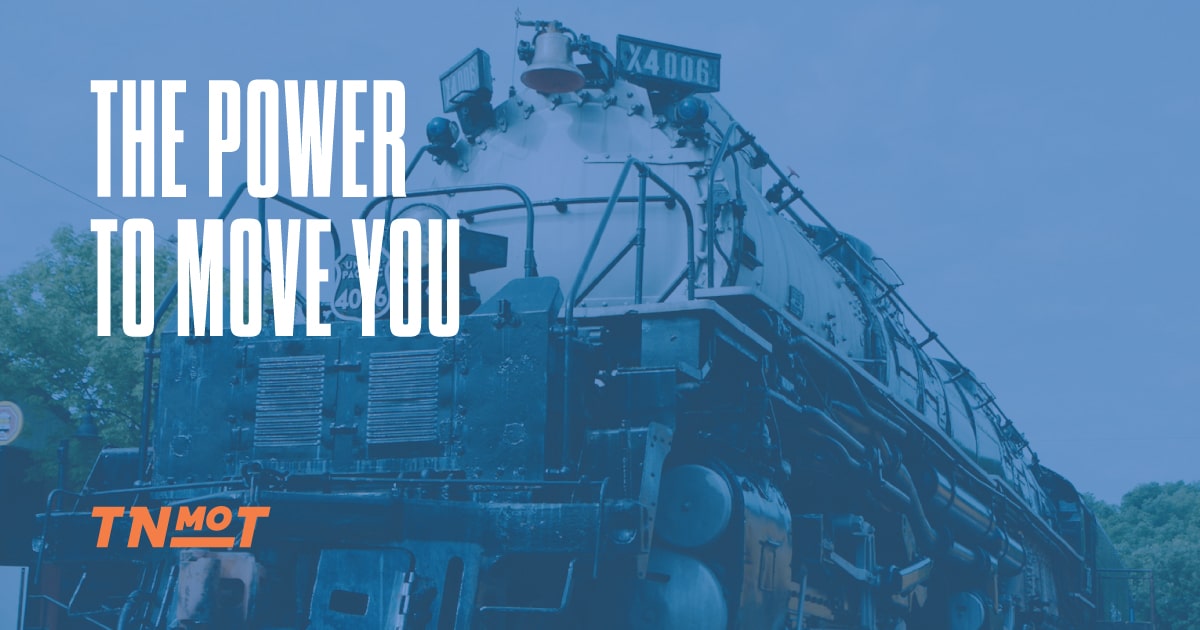
It is big. Really big. When you stand next to the Norfolk & Western 2156, the first thing that hits you isn't the history or the engineering; it's the sheer, oppressive scale of the thing. We’re talking about a machine that weighs nearly 600,000 pounds just for the engine alone. If you include the tender full of coal and water, you’re looking at over a million pounds of steel sitting on the rails. It’s a Mallet. Specifically, a Y6a class compound articulated locomotive.
Most people see a steam engine and think of the Polar Express or some dainty passenger train. The 2156 is none of that. It was built for one purpose: moving massive coal drags through the Blue Ridge Mountains. It didn't go fast. It didn't have to. It just had to be stronger than the mountain.
The Beast from Roanoke
The Norfolk & Western Railway was weird. While other railroads were flirting with early diesels or buying steam power from huge manufacturers like Baldwin or Lima, the N&W basically said, "We can do it better." They built their own. The 2156 rolled out of the Roanoke Shops in 1942. This wasn't some experimental prototype; it was the refined result of decades of perfecting the compound articulated design.
What does "compound articulated" even mean? Honestly, it’s a bit of a mechanical brain-bender.
Basically, the 2156 uses its steam twice. High-pressure steam goes into the rear cylinders first. Then, instead of just exhausting that steam out the stack, the engine pipes it into massive low-pressure cylinders at the front. These front cylinders are huge—nearly 40 inches in diameter. Because the front set of driving wheels can pivot, the locomotive can actually handle curves that would derail a "straight" engine of the same length. It's a masterpiece of 1940s heavy industry.
Why the Y6a Class Was Different
If you talk to serious railfans, they’ll argue all day about the "Big Boy" versus the "Y6b." The 2156 is a Y6a, the slightly older sibling to the famous Y6b. While the Union Pacific Big Boy was designed for speed on the plains, the Norfolk & Western 2156 was designed for raw, lugging "tractive effort."
It produced about 126,000 pounds of starting tractive effort in simple expansion mode. That is a staggering amount of force. It was the grunt of the railroad world. You've got to realize that these engines were operating in a world where "efficiency" meant how many tons of West Virginia coal you could pull up a 1.2% grade without stalling out and blocking the line for twelve hours.
The 2156 represents the pinnacle of this specific tech. By the time it was built, the N&W had figured out how to make these engines reliable. They weren't finicky. They were workhorses that stayed in service long after other railroads had scrapped their steam fleets.
The Long Road to St. Louis (and Back)
Locomotive 2156 is a survivor, but it’s had a bit of a nomadic life lately. For decades, it was a staple at the Museum of Transportation in St. Louis, Missouri. It sat there, static, a silent giant among other legends. But there was always a feeling that it belonged back home.
In 2015, a massive deal was struck. The Virginia Museum of Transportation (VMT) in Roanoke wanted their baby back. They traded their EMD FT diesel—a rare bird in its own right—to St. Louis in exchange for a five-year loan of the 2156.
Moving a million-pound locomotive across the country isn't like towing a car. It’s a logistical nightmare.
You can't just hook it up to a modern freight train and go 60 mph. The 2156 had been sitting for over half a century. The bearings had to be inspected, the rods were often removed to prevent damage, and the move happened at a "restricted speed." When it finally rolled back into Roanoke, grown men were actually crying. It was the first time in decades that the "Big Three" of Roanoke—the Class J 611, the Class A 1218, and the Y6a 2156—were all under the same roof.
It felt right.
What Most People Get Wrong About the 2156
There’s a common misconception that the 2156 is "just a smaller Big Boy." That's just wrong. In terms of pure pull, the Y6a could arguably out-muscle the Big Boy at low speeds. It was a mountain climber.
Another myth is that it’s "broken" or "ruined" because it hasn't run since 1959. While it’s currently a static display, the 2156 is remarkably intact. Unlike engines that were "scrapped" (which basically meant being cut apart with torches), the 2156 was retired and preserved. It’s "cold," not "dead."
However, we have to be realistic. Restoring the Norfolk & Western 2156 to operating condition would cost millions. We're talking $5 million to $10 million, easily. The boiler would need a complete overhaul to meet modern FRA (Federal Railroad Administration) standards. Every staybolt, every tube, every valve would need attention. And frankly, there aren't many places left that can handle a locomotive this heavy. Many bridges on modern short lines would simply crumble under its weight.
Standing in the Shadow of a Giant
If you visit the museum today, you’ll notice the smell first. Even though it hasn't burned coal in sixty years, it still smells like grease, old oil, and heavy iron. It’s a visceral experience.
You look at the wheels. They’re 58 inches tall. Not huge for a passenger engine, but they are thick. Everything about this machine is built for durability. The frame is a single steel casting. Think about the foundry work required to pour that much molten steel into a single mold in 1942. It’s mind-boggling.
The cab is another world. It’s cramped, despite the size of the engine. There are levers everywhere—the throttle, the "Johnson bar" (reverse lever), the brake handles. It was a hot, loud, vibrating box of chaos when this thing was at full steam. Engineers who ran these were a different breed.
The Future of the 2156
As of now, the 2156 has returned to St. Louis after its long-term loan in Roanoke expired. There was a lot of heartbreak in Virginia when it left again in 2020. But that's the nature of museum loans.
The 2156 serves as a permanent reminder of an era when America built things that were meant to last forever. It’s not just a "train." It’s an artifact of the industrial revolution’s final, greatest gasp.
If you want to see it, head to the Museum of Transportation in St. Louis. It stands as the only surviving example of a Norfolk & Western Y6 class locomotive. Every other one—hundreds of them—went to the scrapper's torch to be turned into refrigerators and Buicks.
How to actually experience the 2156:
- Visit in person: Don't just look at photos. You have to stand next to the cylinders to understand the scale.
- Check the Virginia Museum of Transportation archives: They have incredible footage and photos of the 2156 being built and operating in the wild.
- Study the "Compound" system: Look up how Mallet engines work. It makes you appreciate the 2156 far more when you realize the steam is literally being recycled through the front of the engine.
- Support rail preservation: Museums like the VMT and the Museum of Transportation rely on donations to keep these giants from rusting away.
The 2156 isn't going anywhere fast, but it doesn't need to. Its presence is enough. It’s a million pounds of history that refuses to be forgotten. If you're anywhere near Missouri, go pay your respects to the heavy king of the Appalachian coal fields. It’s a sight you won't forget.