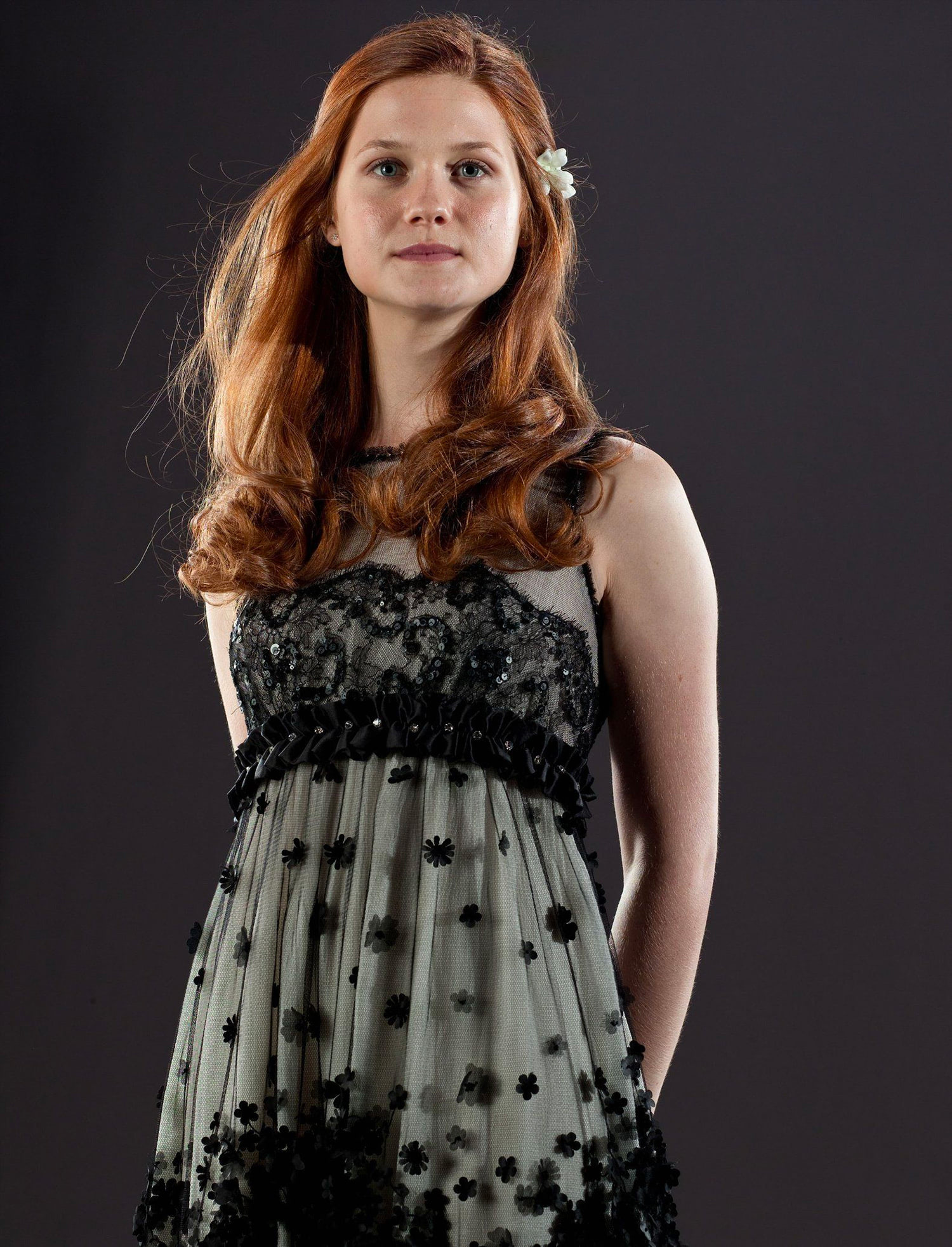
It happened in a blur of adrenaline and Quidditch robes. For years, readers watched Harry Potter pine from a distance, smelling flowery scents in Amortentia and feeling a "monster" roar in his chest whenever Dean Thomas was around. Then, suddenly, the tension snapped. The Harry Potter and Ginny Weasley kiss wasn't just some teen romance trope; it was the payoff for three books' worth of subtle, internal agonizing that most casual fans—especially those who only know the movies—completely miss.
Honestly, the film version in The Half-Blood Prince felt a bit... quiet? Tucked away in the Room of Requirement, it was hushed and private. But J.K. Rowling’s original vision in the text was an explosion. It was public. It was messy. It was exactly what a kid who had spent his whole life being the "Chosen One" needed: a moment of pure, unadulterated impulse.
The Gryffindor Common Room Scene: What Really Happened
If you haven't cracked the book in a while, you might forget that Harry actually missed the final Quidditch match because of Snape’s detention. He was stuck scraping flobberworms or something equally miserable while his team fought for the Cup. When he finally walked back into the Gryffindor Common Room, the place was a riot. They’d won.
In the middle of the chaos, Ginny ran toward him. She had played Seeker in his place. She had won the game. Without thinking—without the "monster" in his chest even having time to growl—Harry just grabbed her. They kissed in front of the entire house. Including Ron.
That’s the part people forget.
The Harry Potter and Ginny Weasley kiss was a massive social gamble. Harry spent months worrying that Ron would hex him into oblivion for looking at his little sister. But in that moment, with the adrenaline of the win and the relief of seeing her, he didn't care. He looked at Ron afterward, and Ron just gave a tiny, almost imperceptible shrug. It was a permission slip. It was a transition from childhood into the high-stakes reality of the war that was coming.
Why the Movie Version Fails the Character Arcs
The cinematic choice to make the kiss a quiet moment between just the two of them in the Room of Requirement changed the fundamental energy of their relationship. In the books, Ginny Weasley is a firebrand. She’s funny, she’s sharp-tongued, and she’s one of the few people who isn't intimidated by Harry's "fame" or his "destiny."
By making the kiss private on screen, the filmmakers leaned into a "soft" romance. But the book version of Ginny wasn't soft. She was a warrior. The public kiss in the common room reflected her personality—bold and unapologetic. It also showed Harry’s growth. He stopped hiding. For a boy who spent his life being stared at for a scar he never wanted, choosing to be "seen" in a moment of happiness was a huge deal.
Understanding the "Monster in the Chest" Metaphor
Rowling used a specific piece of imagery throughout The Half-Blood Prince: a beast or monster in Harry’s chest that roared with jealousy. Critics sometimes find this cringey. It’s very "teenager." But that’s exactly the point.
Harry was sixteen.
He was dealing with the weight of a prophecy that basically said he had to become a murderer or be murdered. Of course his subconscious manifested his repressed hormones as a literal monster. When the Harry Potter and Ginny Weasley kiss finally happens, the monster "purrs." It’s the resolution of a psychological tension that had been building since the moment Harry arrived at the Burrow that summer.
- Timeline of the Build-up:
- The Burrow: Harry notices Ginny is no longer the shy girl who can't speak in his presence.
- The Hogwarts Express: He feels a pang of annoyance when she leaves to find her own friends.
- Slughorn’s Party: The realization that he’d rather be with her than any "important" person.
- The Quidditch Pitch: Genuine admiration for her skill as a player.
This wasn't a "love at first sight" situation. It was a slow burn. It was a "friendship that accidentally caught fire" situation.
The Breakup and the Finality of the Kiss
We can't talk about the kiss without talking about why it had to end. Only a few weeks after they started dating, Dumbledore died. At the funeral, Harry did the "noble" thing. He broke up with her.
He told her that Voldemort used people close to him. He couldn't have her be a target. Ginny’s response is what makes her the best character in the series for some fans. She didn't cry. She didn't beg. She simply said, "I never really gave up on you. Not really. I always hoped..."
She knew. She had known for years that if they were together, it would have to be on these terms. The Harry Potter and Ginny Weasley kiss was a brief window of sunlight before the darkest year of their lives. It served as the emotional anchor for Harry while he was shivering in a tent in the middle of nowhere months later. He spent hours looking at her dot on the Marauder’s Map. That kiss was his "something worth fighting for."
Why It Matters for the Series' Themes
The relationship is often compared to James and Lily Potter. James was the star athlete; Lily was the bright, talented witch. Harry and Ginny mirror this, but with a twist of survival. Their bond is forged in the fact that both have been possessed or deeply affected by Voldemort.
Ginny survived the Diary in the Chamber of Secrets. She understands the "cold" better than Ron or Hermione ever could. When Harry is worried about being possessed in Order of the Phoenix, Ginny is the one who snaps him out of it. She’s the only one who can.
Common Misconceptions About Harry and Ginny
A lot of people think the romance came out of nowhere. "Harry just woke up one day and liked her," they say. If you only watch the movies, that’s a fair critique. The films did a poor job of showing Ginny's personality. They took away her humor. They took away her "coolness."
In the books, Ginny is popular. She’s dating other people (Michael Corner, Dean Thomas). She’s living her life. Harry starts liking her because she isn't waiting for him anymore. It’s a very human bit of psychology. We want what we can't easily have.
Another misconception is that the kiss was just about hormones. It wasn't. It was about Harry finally finding a way into the Weasley family that wasn't just "honorary son." By falling for Ginny, he was choosing his family. He was rooting himself in the world he was trying to save.
Actionable Insights for Fans and Writers
If you’re revisiting the series or writing your own fiction, there are a few things to take away from how this relationship was handled in the text versus the screen.
- Character Agency: Ginny is a hero in her own right before she’s ever a love interest. She plays Quidditch, she joins the D.A., and she fights at the Ministry. The kiss is more impactful because she earned her spot as Harry’s equal.
- Public vs. Private: Think about where your "big moments" happen. A private kiss is romantic; a public kiss is a statement. In Harry’s case, the statement was: "I’m done being the boy who lived; I just want to be a boy who’s happy."
- The Power of Subtext: Watch the "Amortentia" scene in the book again. Harry smells something flowery. Later, he realizes Ginny’s hair smells like that. Subtle clues build a more satisfying payoff than sudden declarations of love.
To truly appreciate the Harry Potter and Ginny Weasley kiss, you have to look past the surface-level teen drama. It’s a moment of defiance. In a world where Death Eaters were literally infiltrating the school and the Ministry was collapsing, two teenagers decided to stop worrying about the future for five minutes. They chose each other in the loudest, most Gryffindor way possible.
If you’re a movie-only fan, go back and read chapter 24 of The Half-Blood Prince, "Sectumsempra." The lead-up to the common room celebration gives the kiss a completely different weight. It’s not just a romantic beat; it’s the last bit of pure joy Harry gets before the world turns gray.
Next time you rewatch the films, pay attention to the subtle looks Bonnie Wright gives Daniel Radcliffe in the background of earlier scenes. Even if the script didn't always support them, the actors were trying to lay that groundwork. But for the real deal, the ink on the page is where the fire is.
Next Steps for Deep Dives:
- Review Chapter 24 of "The Half-Blood Prince": Contrast the internal monologue of Harry's "monster" with the cinematic portrayal.
- Analyze the Marauder's Map Scenes in "Deathly Hallows": Look for the specific moments Harry finds Ginny's dot to see how the kiss sustained his motivation during the Horcrux hunt.
- Compare the "Amortentia" Descriptions: Trace the floral scent Harry identifies in the Potions classroom back to Ginny's presence throughout the sixth book.
The romance wasn't a side plot—it was the emotional tether that kept the hero human.