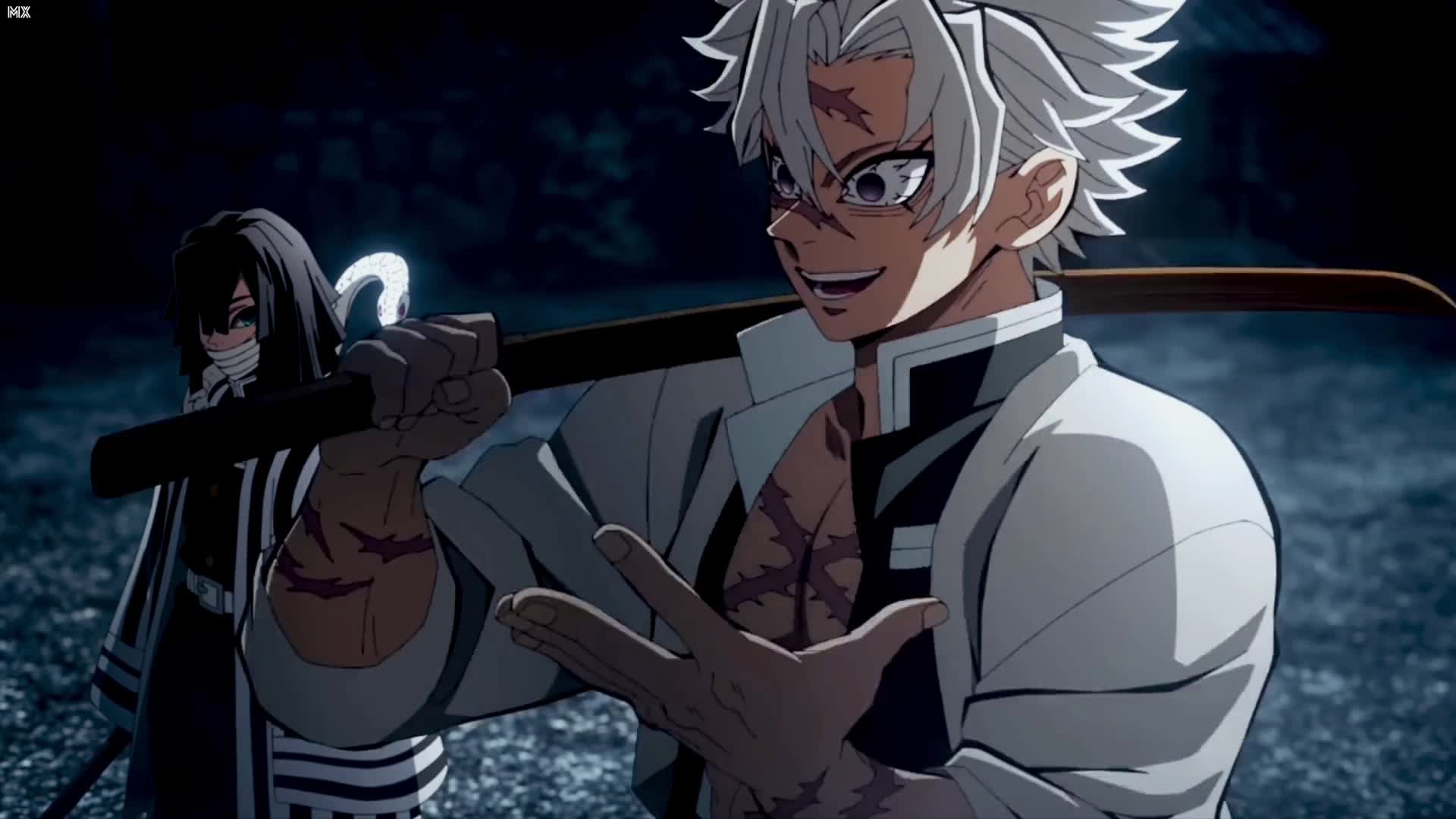
You've seen it. You've probably heard the audio loop a thousand times while scrolling through your FYP at 2 AM. The screen flashes, the bass drops, and suddenly Tanjiro Kamado is moving with a fluid, rhythmic intensity that feels less like a cartoon and more like a high-budget music video. It's the dont copy my flow edit demon slayer phenomenon. It isn't just a random caption people throw on CapCut templates; it’s a weirdly protective, highly competitive subculture within the anime editing community (AEC). Honestly, if you aren't part of that world, the sheer aggression behind the "don't copy" warning might seem a bit much. It’s just pixels, right? Wrong.
Editing Demon Slayer: Kimetsu no Yaiba is a high-stakes game. Ufotable, the studio behind the animation, already did most of the heavy lifting by making the show look like a moving painting. When an editor adds their own "flow"—that specific synchronization of frame rates, zooms, and transitions—they're claiming a piece of that visual real estate as their own.
What the Dont Copy My Flow Edit Demon Slayer Movement Actually Means
In the world of TikTok and Reels, "flow" refers to the kinetic energy of an edit. It’s how one clip of Zenitsu unsheathing his sword bleeds into the next shot of a lightning strike. When someone posts a dont copy my flow edit demon slayer video, they are setting a digital boundary. They're telling other creators that the specific timing of the keyframes and the custom graphs used to smooth out the motion are proprietary. Or at least, they want them to be.
The irony? The anime editing community is built entirely on inspiration.
Most of these "flows" are actually iterations of styles pioneered by legendary editors on platforms like Vine or Instagram years ago. We’re talking about techniques like "Twixtor" (a plugin used to synthesize frames for slow motion) and complex "shakes." When a creator says "don't copy my flow," they are usually reacting to the rise of "preset culture." Basically, a bunch of newer editors download pre-made settings, slap them on a clip of Rengoku, and claim they’ve mastered the craft. It creates this weird tension between the "OGs" who spent six hours masking a single frame and the "preset kids" who finish an edit in ten minutes.
Why Demon Slayer is the Perfect Victim for This Trend
Ufotable is basically cheating. Their use of 3D environments mixed with traditional 2D character animation gives editors a level of depth that you just don't get with One Piece or Dragon Ball. The "Entertainment District" arc, specifically the fight between Tengen Uzui and Gyutaro, became the gold standard for the dont copy my flow edit demon slayer style.
The sparks. The debris. The way the camera swivels around the Nichirin blades.
It provides "impact frames" that are a dream for editors. If you're trying to prove you have the best "flow," you go to Demon Slayer. You don't go to a slower, character-driven drama. You go where the fireworks are. This created a bit of a loop. Because everyone wanted to edit the best-looking show, the "dont copy my flow" warnings became more frequent as everyone’s videos started to look... well, identical. It’s a bit of a paradox. You're telling people not to copy your style while using the same source material and the same viral phonk music as everyone else on the platform.
The Technical Side of a "Unique" Flow
- Keyframe Graphs: This is the soul of the edit. Instead of a linear movement, editors use "S-curves." The clip starts slow, snaps to a high speed in the middle, and settles slowly. If your graph is slightly off, the flow feels "choppy."
- Directional Blurs: Adding motion blur that follows the path of Zenitsu’s dash makes the edit feel 10x faster than the original footage.
- Color Correction (CC): You’ll notice these edits are often very dark or extremely vibrant. This is a deliberate choice to hide the "raw" look of the anime and make the edit feel like a standalone piece of art.
The Drama Behind the "Don't Copy" Mentality
Is it gatekeeping? Kinda.
A lot of people in the AEC think the dont copy my flow edit demon slayer trend is a bit pretentious. At the end of the day, you're editing copyrighted material that you don't own. But from the perspective of a creator, it’s about the "sauce." If you figure out a specific way to make Akaza’s movements look glitchy and cool, and then twenty people do the exact same thing the next day without giving you a shoutout, it stings.
We saw this happen with the "glitch" flow and the "velocity" flow. One person does it, it goes viral, and then it becomes a template. Once it’s a template, the "cool factor" dies. That’s why the "don't copy" warning exists. It’s a desperate attempt to keep a trend from dying by overexposure.
How to Actually Get a "Flow" Without Stealing It
If you’re a new editor, you don’t need to "steal." You need to study. Instead of asking for someone’s project file, look at the frames.
Watch the edit at 0.25x speed.
See where the zoom starts. See where the flash happens. The best way to respect the dont copy my flow edit demon slayer ethos while still improving is to take the "logic" of an edit rather than the "settings." If you understand why a transition works—maybe it follows the movement of a sword swing—you can apply that logic to any anime. You don't need to copy-paste.
The Future of Anime Editing and Copyright
We are moving toward an era where AI-assisted editing is going to make "flow" easier to achieve. Tools are coming out that can automatically track motion and apply "velocity" effects. This is going to make the dont copy my flow edit demon slayer crowd even more protective. When the barrier to entry drops, the only thing left to protect is your specific "eye" for timing.
Honestly, the trend is probably going to evolve into something even more complex. We’re already seeing "3D zoom" edits that require actual modeling knowledge. The bar is being raised. If you want to stand out, stop worrying about people copying you and start worrying about how to out-innovate the templates.
Actionable Steps for Aspiring Editors
To build a flow that people actually want to copy (but shouldn't), focus on these three things:
- Master the Graph Editor: Stop using "Easy Ease" and start manualizing your curves. The difference between a "good" edit and a "viral" edit is usually about three pixels on a motion graph.
- Sound Design is 50% of the Flow: If your visual "hit" doesn't match the "thump" of the bass, the flow is broken. Use sound effects (SFX) like sword clinks and whooshes to reinforce the movement.
- Source High-Quality Footage: You can't make a masterpiece out of a 720p YouTube rip. Use "raws" or "scenepacks" that are at least 1080p with a high bitrate. This ensures that when you apply heavy effects, the image doesn't turn into a pixelated mess.
The reality of the dont copy my flow edit demon slayer world is that it’s a meritocracy. The best editors don't need to tell people not to copy them because their style is so complex that most people couldn't copy it if they tried. Focus on reaching that level of technical skill, and the "copycats" won't even be a blip on your radar.