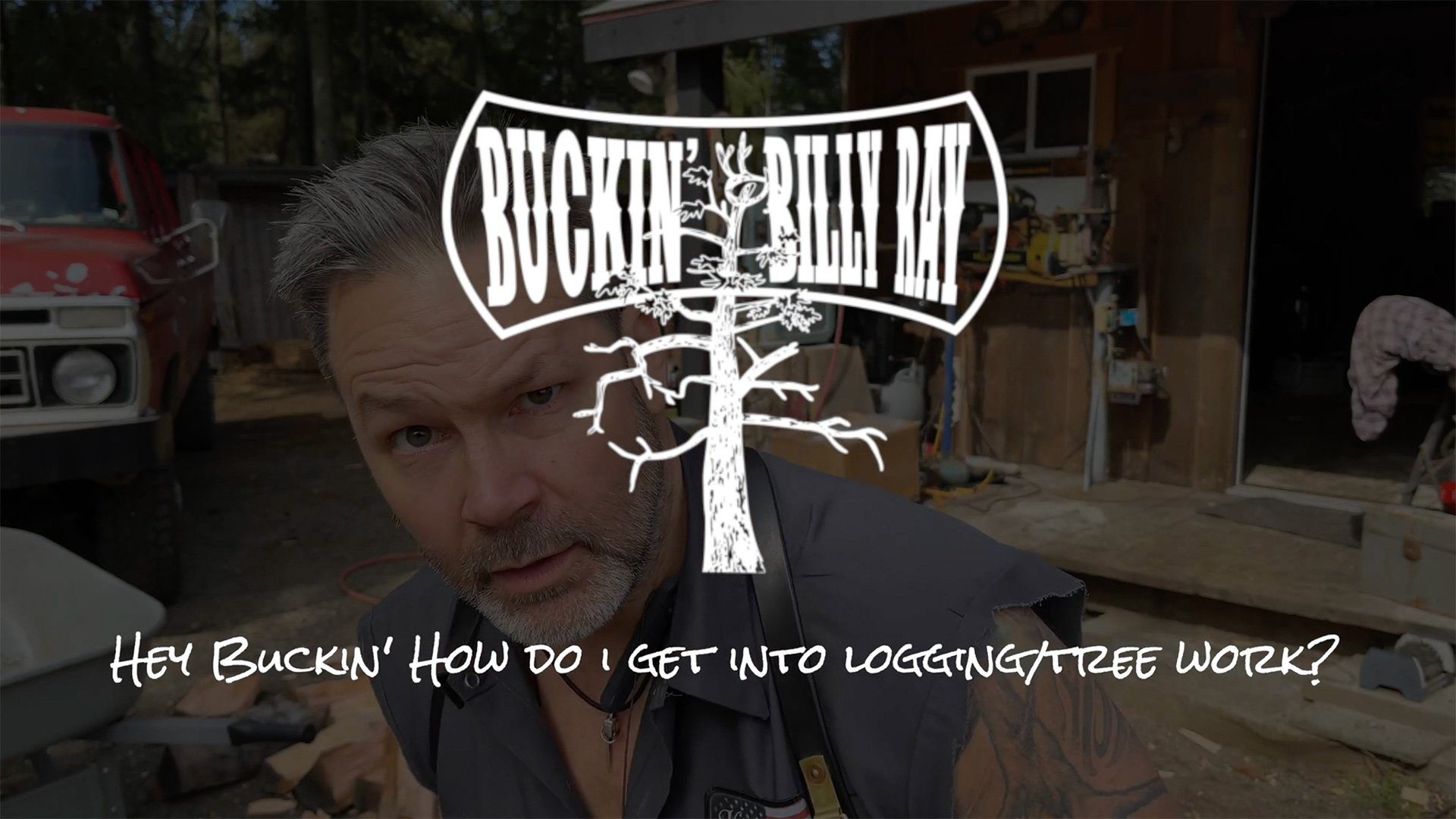
If you spend any time on the "woodsy" side of YouTube, you’ve seen him. Billy Ray. He’s usually wearing a sweat-stained hat, wielding a chainsaw like an extension of his own arm, and talking about the "vibe" of a good piece of steel. But it’s the Buckin Billy Ray axe that really started the fire. People don't just buy these tools because they need to split a log for a Tuesday night fire. They buy them because Billy Ray tapped into a weird, forgotten vein of American tool culture that values soul over mass production.
It’s about the hang.
Most people go to a big-box store, grab a fiberglass-handled axe, and call it a day. Then they wonder why their elbows hurt after twenty minutes. Billy Ray changed the conversation by focusing on vintage heads—Plumb, Kelly Works, Norlund—and mating them with hand-carved hickory. It’s a specific kind of magic. When you see a Buckin Billy Ray axe in action, you aren't just seeing a tool; you're seeing a piece of history that’s been brought back to life by someone who actually knows what a "felling swing" feels like in his bones.
The Obsession With Vintage Steel
Why does everyone want a vintage head instead of a brand-new one from a boutique maker? Quality. Modern steel is fine, sure, but the tempering on old American steel from the mid-20th century was something else entirely. We're talking about the era of the "Lumberjack World Championships" being a mainstream thing. Companies like Council Tool are still doing great work, but the Buckin Billy Ray axe philosophy is rooted in the idea that the best steel has already been made. It’s just sitting in a rusty pile at a garage sale waiting for someone to find it.
Billy Ray looks for specific geometries. He’s obsessed with the "bit"—that’s the cutting edge for the uninitiated—and how thin it can get without chipping. Most modern axes are way too thick. They’re "wedgy." They bounce off the wood. A true Buckin Billy Ray axe is thinned out. It bites. It sinks deep into the grain because the geometry is designed to sever fibers, not just bash them apart.
Honestly, it’s kinda dangerous if you don’t know what you’re doing. You have to respect the edge.
It’s All in the Handle (The "Buckin" Way)
You can't talk about a Buckin Billy Ray axe without talking about the "skinny" handle. This is where he loses some people and gains a cult following for others. Most commercial handles are thick. They feel like holding a baseball bat. Billy Ray takes a drawknife and shaves that hickory down until it’s almost alarming.
- He wants whip.
- He wants a handle that flexes.
- He wants a grip that doesn't cause blisters because it actually fits a human hand.
There’s a specific curve he looks for, often referred to as a "fawn’s foot." If the grain isn't perfectly vertical, he won't touch it. Grain run-out is the enemy. If the grain exits the side of the handle, that handle is going to snap the first time you overstrike. He’s taught a whole generation of weekend warriors how to read wood grain like a book. It’s basically a masterclass in forestry and physics delivered in a gravelly voice.
The Council Tool Collaboration
Eventually, the demand got too high. Billy Ray couldn't spend every waking second in his shop carving handles for the thousands of people screaming for one in his comments section. That’s where the Council Tool 2lb Hudson Bay Axe—the "Buckin" edition—came into play.
This wasn't just a branding exercise. They took their standard 2lb head and modified it to his specs. They gave it a longer, 24-inch handle, which is unusual for a head that size. Usually, a 2lb head goes on a 18-inch "camp" handle. But the Buckin Billy Ray axe setup allows for two-handed swinging with the precision of a small hatchet. It’s a "boys axe" on steroids.
The bit comes factory-thinned. That’s huge. Most manufacturers leave the edge thick so idiots don't break it hitting rocks, but Council Tool trusted the "Buckin" vision enough to ship it "woods-ready."
Why the Hudson Bay Pattern?
People argue about axe patterns like they argue about truck brands. The Hudson Bay is a classic, but it has a notorious flaw: it doesn't have much "poll" (the back of the axe) and the eye is small, which can lead to the head flying off if the fit isn't perfect. Billy Ray loves it because it’s light and versatile. It’s a pack axe. You can hike five miles with it and not feel like you’re carrying a boat anchor.
Dealing With the Hype and the Critics
Let’s be real for a second. There are plenty of "old school" woodsmen who think the Buckin Billy Ray axe style is a bit much. They’ll tell you the handles are too thin. They’ll tell you he spends too much time talking to the camera and not enough time bucking logs.
But here’s the thing: he’s the one who got people back into the woods.
He’s not claiming to be the only guy who knows how to swing a tool. He’s just sharing a very specific, West Coast felling style that was dying out. He uses "oil and grit" as his primary finishing agents. He doesn't like varnish. Varnish gives you blisters. Boiled linseed oil and some dirt from the forest floor—that’s the Buckin Billy Ray axe finish. It sounds hippie-dippie until you actually use a tool finished that way. It stays tacky when wet. It feels alive.
How to Get the "Buckin" Look Yourself
You don't necessarily have to buy the official collaboration to have a Buckin Billy Ray axe experience. In fact, he’d probably prefer you didn't. He’s always telling people to go to flea markets. Find an old True Temper. Get a 2.25lb head. Buy a long handle and a drawknife.
- Strip the factory finish. Use a cabinet scraper or sandpaper to get that nasty polyurethane off the wood.
- Thin the neck. Don't go too crazy at first, but remove the bulk so the axe has some "spring."
- The "Wild" Edge. Use a bastard file to pull the bevel back. Most people only sharpen the very tip; you want a gradual slope that starts an inch back from the edge.
- Oil it till it's thirsty. Soak that handle in Boiled Linseed Oil (BLO).
The Reality of Tool Maintenance
Owning a Buckin Billy Ray axe is a commitment. This isn't a "set it and forget it" tool. Because the handles are so thin and the steel is high-carbon, they require love. You have to keep the head oiled so it doesn't rust. You have to check the wedge frequently. If the wood dries out, the head will wobble. Billy Ray’s solution? More oil. Or, in a pinch, a little bit of water to swell the wood, though that’s a temporary fix that'll eventually make the problem worse.
It’s a relationship. That’s the "vibe" he’s always talking about.
Actionable Steps for the Aspiring Woodsman
If you’re ready to move past the plastic-handled tools and actually learn the craft, here is how you start. First, don't go out and try to fell a 40-foot fir tree. Start with limbing. Use a smaller Buckin Billy Ray axe style tool to learn how to read the tension in branches. If you cut a limb that’s under tension, it’ll snap back and break your jaw.
Next, learn to file. A grinder will ruin the temper of your steel in three seconds flat. Use a hand file. It’s slow. It’s meditative. It’s the only way to ensure you don't overheat the metal.
Finally, watch the grain. When you’re at the hardware store picking out a handle for your next project, look at the "ends" of the wood. You want the lines going straight up and down, not side to side. If you see a handle with "flat" grain, put it back. It’s a "wall hanger," not a worker.
The Buckin Billy Ray axe isn't just a product—it's a gateway drug into a more intentional way of living. It’s about slowing down, using your hands, and respecting the tool. Whether you buy the Council Tool version or build your own from a rusty piece of junk, the goal is the same: make it bite.