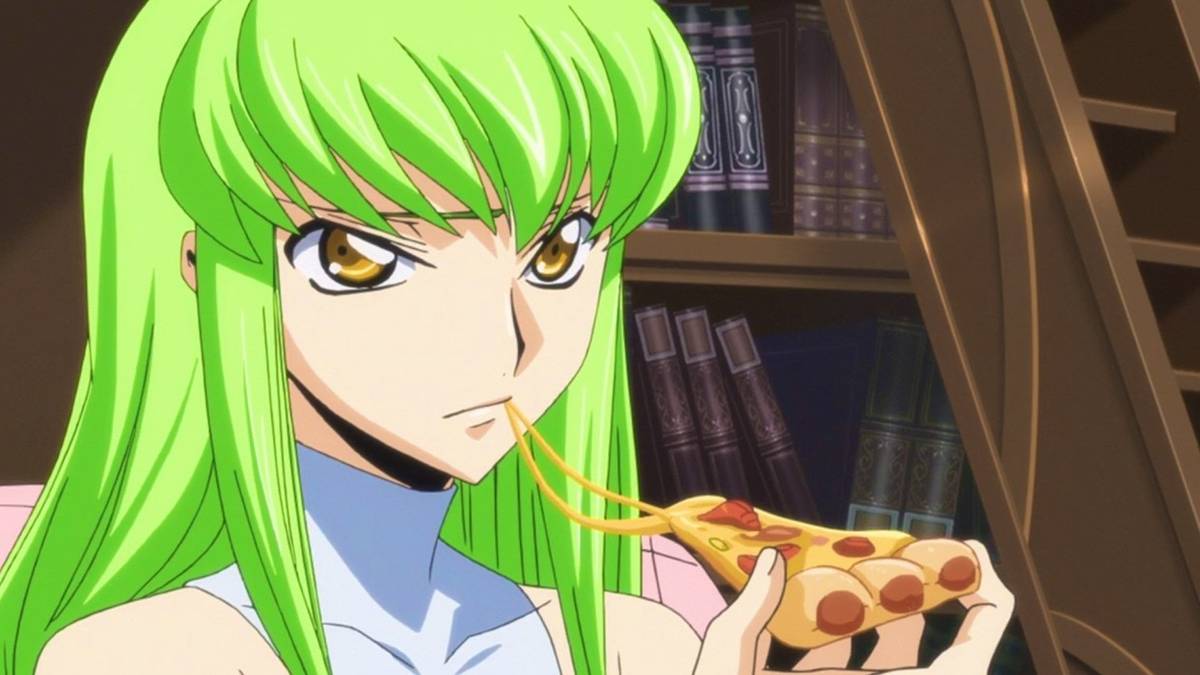
If you watched anime in the mid-2000s, you remember the cheese. It was everywhere. It stretched across the screen in high-definition glory while exiled princes plotted the downfall of global empires. It sat on the desks of rebel leaders. Honestly, if you blinked, you might have thought Code Geass was a show about a high-stakes delivery driver rather than a supernatural political thriller. The Pizza Hut and Code Geass partnership is arguably the most blatant, shameless, and somehow beloved instance of product placement in the history of the medium.
It shouldn't have worked.
Usually, when a giant corporation shoves its logo into a dark story about war and genocide, fans revolt. We hate being sold to, especially when we're trying to get invested in the emotional trauma of Lelouch vi Britannia. But something strange happened with Code Geass. The presence of the red roof logo became a meme before "meming" was even a mainstream term. It became part of the show's DNA.
The Logistics of the Cheese: How the Pizza Hut and Code Geass Deal Happened
The mid-2000s were a wild time for the Japanese animation industry. Production costs were skyrocketing as the transition to HD began, and studios like Sunrise were looking for ways to pad the budget. Enter Pizza Hut Japan. This wasn't just a simple "put a box in the background" deal. It was a comprehensive marketing blitz.
Every time C.C., the green-haired immortal protagonist, felt a hunger pang, it was for a large pepperoni or a specialty Japanese crust. The commitment was staggering. You didn't just see a box; you saw the Cheese-kun mascot. You saw the actual Pizza Hut logo on the boxes Lelouch used to hide his secret equipment. In the Japanese broadcast, there were even literal commercials during the breaks featuring the characters.
The strategy was simple: C.C. loves pizza.
By tying the product to a specific, popular character trait, the advertisers moved beyond "background noise." They turned the pizza into a character quirk. C.C.’s obsession with collecting "Cheese-kun" points became a recurring gag. It gave her a sense of humanity. It made her relatable. Who among us hasn't ignored a world-ending crisis because we really wanted a slice of stuffed crust?
Why the Collaboration Didn't Kill the Mood
You’d think seeing a Pizza Hut box while characters are dying in a military coup would break the immersion. Surprisingly, it did the opposite for a lot of viewers. It grounded the fantastical world of Area 11 in a weirdly mundane reality. In the universe of Code Geass, the Holy Britannian Empire has conquered a third of the world, but apparently, they still haven't found a better pizza franchise than the one we have in our world.
That’s kind of hilarious.
It’s also worth noting that the placement was localized. When the show was licensed for Western audiences by Bandai Entertainment and later Funimation, the Pizza Hut logos were often scrubbed or replaced with generic boxes in the English versions due to licensing conflicts. This created a weird rift in the fandom. If you watched the "official" US release, you saw a generic white box. If you watched the original Japanese version or certain fansubs, you saw the glorious red roof. This discrepancy actually made the Pizza Hut and Code Geass connection more legendary; it was like a secret piece of lore that only "real" fans knew about.
C.C. and the Cheese-kun Phenomenon
We have to talk about Cheese-kun. For the uninitiated, Cheese-kun is the round, yellow, hat-wearing mascot for Pizza Hut Japan. In the show, C.C. is frequently seen hugging a giant plushie of this creature.
This wasn't just a background prop.
The plushie became a symbol of her isolation and her small joys. Sunrise animators actually gave the plushie significant screen time. There is a specific scene where C.C. is shown struggling to win a Cheese-kun pillow, and it’s genuinely endearing.
- The mascot appeared in over a dozen episodes.
- Official merchandise was released in Japan that bundled Code Geass figurines with miniature pizza boxes.
- Pizza Hut Japan even ran a campaign where customers could win Code Geass voice actor autographs.
This level of integration is rare. Usually, a brand wants to be associated with "cool" things. Pizza Hut was okay with being associated with a shut-in immortal girl who arguably had a hoarding problem when it came to pizza boxes. That authenticity—or at least, the commitment to the bit—is why the fans embraced it.
The Business Reality: Why Anime Needs These Deals
Let's get real for a second. The anime industry is notoriously low-margin. High-quality animation, like the kind seen in Code Geass: Lelouch of the Rebellion, is incredibly expensive. Product placement deals like the one with Pizza Hut provide a direct cash injection to the studio.
Without that "pizza money," would the Knightmare Frame battles have looked as good? Maybe not.
Experts in Japanese marketing often point to Code Geass as a turning point. It proved that if you integrate a brand into a character's personality, the audience will forgive the intrusion. Since then, we've seen similar moves in shows like Tiger & Bunny, where heroes literally wear corporate logos on their super-suits. But Code Geass did it first, and in many ways, it did it loudest.
The Lasting Legacy of the Red Roof in Area 11
Even years after the original series ended, the association remains. When the Lelouch of the Re;surrection movie was released, fans immediately wondered if the pizza would return. It’s become a litmus test for the "vibe" of the franchise.
Some critics argue that this kind of blatant commercialism cheapens the art. They aren't entirely wrong. It is jarring to see a corporate logo in a scene discussing the ethics of political assassination. However, the sheer absurdity of it has gained a sort of "camp" value. It's so over-the-top that it transcends being an ad and becomes a piece of performance art.
You can't think of C.C. without thinking of pizza. That is a massive win for Pizza Hut's marketing team, even if the deal ended years ago. They bought a permanent spot in the psyche of a generation of anime fans.
What You Should Do Next
If you’re a fan looking to dive back into this weird piece of history, or a creator wondering how to handle branding, here is how you can actually engage with this:
- Watch the "Uncut" Versions: If you've only seen the show on certain streaming platforms, look for the original Japanese broadcast versions. The experience of seeing the Pizza Hut boxes changes the tone of certain "downtime" scenes in the Ashford Academy.
- Study the Character Integration: For writers or marketers, look at how C.C. interacts with the product. It’s never just a logo; it’s a source of comfort, a hobby (collecting stickers), and a dietary staple. That’s how you do product placement without (completely) alienating your audience.
- Track Down the Merch: Collectors still hunt for the original Cheese-kun plushies and the promotional Pizza Hut folders that were given out in Japan in 2006-2007. They are rare, but they represent a specific era of "Peak Otaku" marketing.
- Embrace the Absurdity: Don't take it too seriously. The creators clearly didn't. There’s a scene where a giant pizza is being made for a school festival—it's ridiculous, it's fun, and it's exactly why this partnership worked.
The Pizza Hut and Code Geass collaboration remains the gold standard for how to be shamelessly corporate while still maintaining a cult following. It’s a reminder that sometimes, the weirdest combinations are the ones that stick in our memories the longest. Whether you love it or hate it, you have to respect the hustle. Next time you're watching Lelouch command someone to die, just remember: he probably did it on a stomach full of stuffed crust.