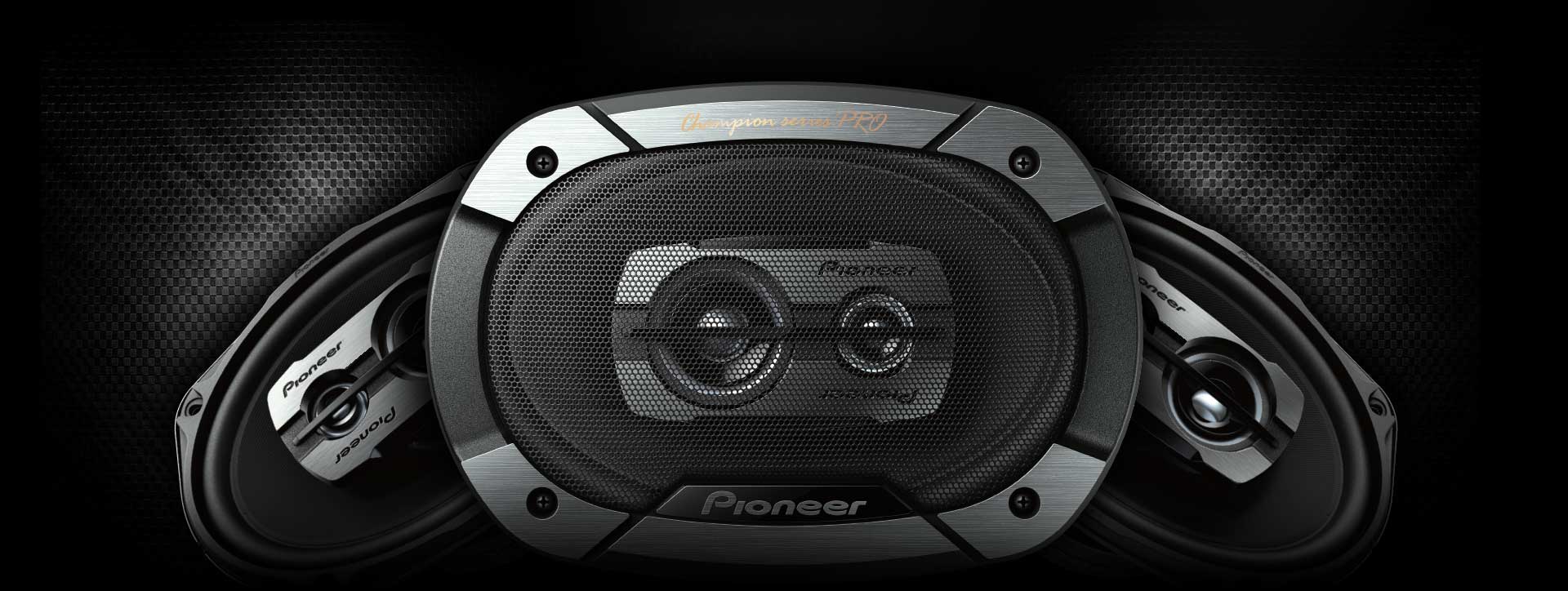
If you’ve spent any time at all hanging around local car meets or browsing old-school audio forums, you know the name. Pioneer. Specifically, the Pioneer Champion Series amplifier. It’s been a staple in trunks for years. Honestly, it’s one of those rare pieces of gear that managed to bridge the gap between "cheap enough for a teenager's first car" and "reliable enough for a daily driver."
Most people just want a sub to kick hard. They don't care about the specs on the box. But here’s the thing: the car audio world is messy. There's a lot of junk out there claiming to push 3000 watts for fifty bucks. Pioneer doesn't usually play those games. The Champion Series was designed to pair specifically with their iconic subwoofers of the same name, and that synergy is basically why they became a legend in the scene.
What Actually Makes These Amps Different?
It isn’t just marketing fluff. These things are Class D. If you aren't a total nerd about it, Class D basically means they are efficient. Really efficient. Old school Class A/B amps get hot enough to fry an egg because they waste a ton of energy. A Pioneer Champion Series amplifier, like the popular GM-D8701 or the newer versions, stays relatively cool even when you're pushing a heavy load.
They're tiny. Surprisingly small. You can tuck one under a seat or behind a panel where a traditional amp would never fit. This is huge because modern cars don't have the real estate for massive heatsinks anymore.
- Low Impedance Stability: Most of these amps are stable down to 1-ohm. That matters because it gives you wiring flexibility. You can parallel two 4-ohm dual voice coil subs and get that maximum power output without the amp going into protect mode.
- The Bass Remote: Most models come with a wired bass boost remote. Is it a bit "early 2000s"? Yeah, kinda. But being able to dial back the boom when a cop pulls up next to you is a lifesaver.
Pioneer uses a "Protection Control System." It’s basically a brain inside the amp that senses when the circuitry is getting too hot or the voltage is dropping too low. Instead of just shutting off and leaving you in silence, it actually throttles the output slightly to keep the music playing. It’s smart engineering that most budget brands skip to save a few pennies.
Why the GM-D8701 is the Gold Standard for Starters
If we’re talking specific models, we have to talk about the GM-D8701. It’s probably the most common Pioneer Champion Series amplifier you’ll find today. It’s rated for 800 watts RMS at 1-ohm.
RMS is the only number that matters. Ignore the "Max Power" stickers. Those are just for show. 800 watts RMS is a serious amount of power for a daily driver. It's enough to make your rearview mirror unusable. It’s enough to make your hair move if you’ve got the right box.
The build quality is also surprisingly rugged. The terminals are solid. The plastic doesn't feel brittle. It feels like a tool, not a toy. People often overlook the fact that Pioneer includes a high-level input. This means if you have a factory radio and don't want to tear out your dash to install an aftermarket head unit, you can just tap into your speaker wires. No RCA converters needed. It saves time and money.
The Sound Quality vs. SPL Debate
Look, let's be real. This isn't a "sound quality" amp in the way a $2,000 Brax or Mosconi is. It’s a Champion Series. It’s built for the "Champion" subwoofers. It’s built for bass.
Does it sound "clean"? Yes, surprisingly so. But its primary job is moving air. It has a high signal-to-noise ratio, which means you won't hear that annoying "hiss" when the music is quiet. But if you’re trying to build a world-class SQ (Sound Quality) car for competitions, you might look elsewhere. For 95% of people who just want their hip-hop or rock to feel physical, this is plenty.
The frequency response is tuned for the low end. It handles those 20Hz to 50Hz notes with a lot of authority. It doesn't get "muddy" as easily as some of the flea-market brands. That’s because Pioneer uses better capacitors and better transformers. They aren't cutting corners on the internal power supply, which is where most cheap amps fail.
Common Misconceptions and Issues
No gear is perfect. People often complain that their Pioneer Champion Series amplifier keeps going into "protect mode." 90% of the time, it’s the installer's fault.
Grounding is everything. If you bolt your ground wire to a painted surface, the amp is going to struggle. It needs bare metal. These amps pull a lot of current. If you use cheap, copper-clad aluminum (CCA) wire instead of 100% oxygen-free copper (OFC), the amp will starve. It’s like trying to run a marathon while breathing through a straw.
Another weird quirk? The crossover dials. They’re small. They’re plastic. You need a tiny screwdriver to adjust them, and it’s easy to accidentally strip them if you’re being a brute. Set them once, and then leave them alone.
Heat Dissipation Realities
Even though I said they run cool because they’re Class D, "cool" is relative. If you mount it upside down against the roof of your trunk with zero airflow, it will eventually thermal out. Physics always wins. Give it an inch of space on all sides.
Setting the Gains Properly (The Secret Sauce)
This is where most people ruin their equipment. They see the "Gain" knob and think it’s a volume knob. It isn't. It’s a sensitivity match.
If you crank the gain to the max on your Pioneer Champion Series amplifier, you’re sending a clipped signal to your subs. Clipping kills speakers. It’s a squared-off waveform that turns electricity into pure heat instead of movement.
- Turn your head unit to about 75% volume.
- Set all EQ settings to flat.
- Slowly turn up the gain until you hear the slightest bit of distortion.
- Back it off a hair.
Better yet, spend twenty bucks on a cheap oscilloscope or a DD-1 tool. It’ll save you hundreds in blown subwoofers later.
Final Practical Steps for Your Setup
If you’ve decided to pick one of these up, don't just throw it in the car. Plan it out.
First, check your alternator. If your car is twenty years old and has a tiny 60-amp alternator, adding an 800-watt RMS amp is going to make your headlights flicker like a disco. You might need to do the "Big Three" upgrade—replacing the main wires from your alternator to your battery and ground. It’s a cheap weekend project that makes a massive difference.
Second, match your subs correctly. If you have a Pioneer Champion Series amplifier that puts out 500 watts at 2-ohms, make sure your subs are rated to handle that. Don't under-power them either; that's just as bad for heat.
Finally, buy from an authorized dealer. There are a lot of "grey market" units online that don't have a warranty. If you buy from a reputable shop, Pioneer’s warranty is actually pretty solid. These amps are workhorses, but in the rare event of a lemon, you want that protection.
The Pioneer Champion Series amplifier remains a powerhouse in the entry-to-mid-level market because it focuses on what actually matters: efficiency, footprint, and raw output. It’s not flashy, but it gets the job done. Every single time.