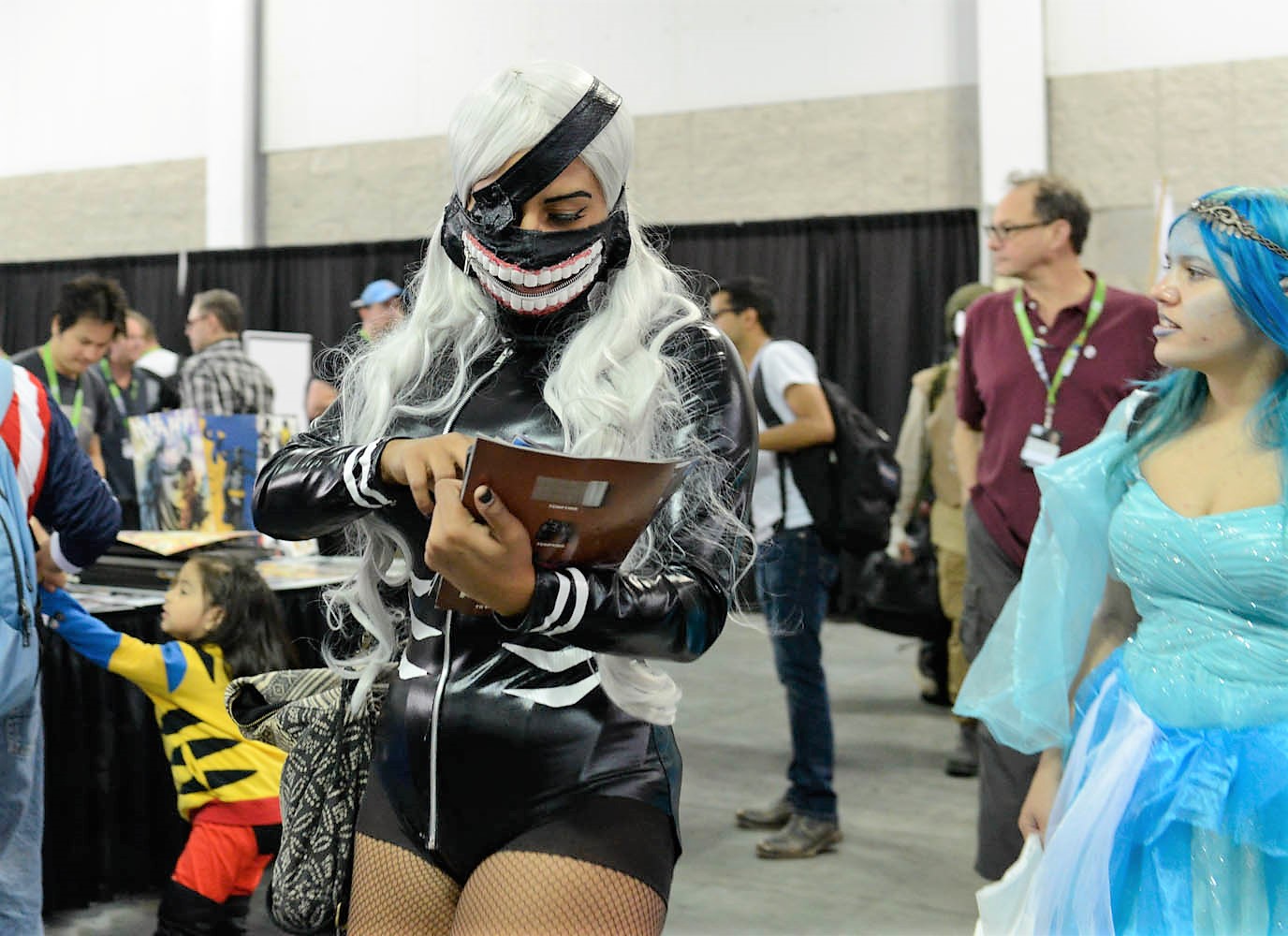
If you've ever stood on 11th Avenue in mid-October, you’ve seen it. Thousands of people in foam armor and spandex, shivering in the Hudson River breeze while clutching overpriced chicken tenders. It’s chaotic. It’s loud. New York Comic Con is basically the East Coast’s answer to San Diego, but with a grittier, faster, "get out of my way" New York energy that makes it a completely different beast.
Last year, the Javits Center saw over 200,000 attendees. Think about that for a second. That is more people than the entire population of Salt Lake City crammed into a glass box on the West Side Highway.
People think it's just about the celebrities. Sure, seeing Ewan McGregor or Oscar Isaac in person is cool, but that’s not why people wait in line for six hours. They wait because it's the only place where being a "nerd" is the default setting. Honestly, the real magic happens in the basement—Artist Alley—where you’re literally inches away from the people who drew your childhood.
The Massive Logistics of New York Comic Con
ReedPop, the company that runs the show, has turned this into a science. But even with all that corporate backing, things go sideways. Remember 2021? The first year back after the pandemic? It was weird. The energy was nervous. By 2024 and 2025, though, the floodgates didn't just open—they burst.
The Javits Center expanded recently, adding more space, yet somehow it still feels like a sardine can.
Why the North Wing Matters
The newer building expansion—the North Wing—has changed the flow. It’s where many of the big activations live now. If you're looking for the massive Netflix or Disney+ booths, you’re walking. A lot. Most people don’t realize that New York Comic Con isn't just one building anymore; it’s a multi-block marathon. Wear sneakers. Serious ones. If you show up in brand-new cosplay boots with zero arch support, you will be questioning your life choices by 2:00 PM.
The Ticket Lottery Stress is Real
Let’s talk about the "Fan Verification" system. It’s a hurdle. You can’t just log on and buy a ticket like it’s a movie. You have to create a profile months in advance, wait for an email, and then pray to the server gods that you get a spot in the virtual queue.
- Fan Verification usually happens in late spring.
- The actual sale is a digital hunger games.
- Pro-tip: Don't buy from scalpers on eBay. ReedPop is aggressive about canceling badges that are resold unofficially.
If you miss the four-day pass, don't panic. Thursday and Sunday are actually better. Thursday is the "industry" day where you can actually breathe and see the floor. Sunday is family day. It’s cuter, slower, and the exhibitors often drop prices on merch because they don't want to ship it back to their warehouses.
Beyond the Main Stage: What Most People Miss
The Main Stage is where the Marvel stars and "Star Wars" icons live. It’s great. But the heart of New York Comic Con is actually the Empire Stage and the smaller rooms on the lower levels.
I’ve seen panels on "The Physics of Superheroes" or "How to Break into Voice Acting" that were infinitely more interesting than a 30-minute promotional fluff piece for a movie that doesn't come out for two years. The diversity of content is staggering. You might find a panel of indie comic creators discussing the struggles of self-publishing, followed immediately by a high-budget anime reveal from Crunchyroll.
Artist Alley is the Soul of the Show
Located in Hall G, Artist Alley is the most important part of the event. It’s where legends like Jim Lee or emerging talents like Peach Momoko sit at folding tables. You can buy original sketches. You can just talk to them.
Honestly, it’s the most "human" part of the convention. In a world of digital everything, holding a physical piece of art that a human hand drew three feet in front of you is special. It’s also where you’ll spend the most money. Budget for it. Those $20 prints add up fast, and before you know it, you’ve spent $400 on 11x17 cardstock.
The Cost of Being a Fan in NYC
It’s expensive. Let's be real.
A badge is around $70 to $200+ depending on how many days you go. A hotel in Midtown during Comic Con? You’re looking at $400 a night minimum. Food inside the Javits is... well, it’s convention food. It’s $18 for a mediocre burger.
How to save money at New York Comic Con:
- Eat at the 7-Eleven or Target on 10th Ave. It’s a 5-minute walk. You’ll save $50 over the weekend.
- Take the 7 Train. It drops you right at 34th St-Hudson Yards. Don't try to Uber to the front door; the traffic is a nightmare and you'll spend 20 minutes just sitting there while the meter runs.
- Bring a reusable water bottle. There are hydration stations. Use them. New York air in October is surprisingly dry, and you’re talking a lot.
Cosplay: The Unofficial Main Attraction
You'll see everything. From $5,000 screen-accurate Iron Man suits to someone wearing a cardboard box painted like a Minecraft block. Both are equally welcome.
The "Cosplay is Not Consent" rule is strictly enforced here, which is great. It means people can express their fandom without being harassed. If you want a photo of a cosplayer, just ask. Most of them have spent months on these outfits and are thrilled to pose for a second.
Just don't stop in the middle of a high-traffic aisle. The "Cosplay Repair Stations" are also a godsend. If your hot glue melts or a strap snaps, there are dedicated areas with tools to help you fix your gear. It’s a community.
Navigating the "Hidden" New York Comic Con
There is a whole world of "off-site" events. You don't even need a badge for some of them.
Companies like Paramount or HBO often take over nearby parking lots or galleries to create "immersive experiences." In past years, we’ve seen full-scale recreations of sets from The Last of Us or Star Trek bridges. These usually require a separate reservation, but they’re often free.
The nightlife is also a thing. After the floor closes at 7:00 PM, the parties start. Places like Sonic Boom or various bars in Hell's Kitchen host themed nights. If you’ve ever wanted to drink a themed cocktail with a bunch of people dressed as the X-Men, this is your time.
The Reality of Post-Con Blues
By Monday morning, you will be exhausted. Your feet will hurt. Your bank account will be crying. But the "Con Blues" are a real thing—that weird feeling of returning to a world where not everyone knows what a "variant" is or why a certain manga ending was controversial.
New York Comic Con isn't just a trade show. It's a massive, sweaty, expensive, exhilarating cultural touchstone that proves that "geek culture" is just... culture now.
Actionable Steps for Your Next Trip
- Audit Your Tech: Bring two portable power banks. The Javits Center is a dead zone for signal sometimes, and your phone will drain its battery trying to find a tower.
- The App is Mandatory: Download the official NYCC app. It has the maps and the schedule updates. If a panel moves or a signing is canceled, that's where you'll see it first.
- Check the Reservations: For the biggest panels (Empire and Main Stage), you usually have to "reserve" a spot online a few weeks before the con. Having a badge does NOT guarantee you entry into the top-tier panels.
- The "One Bag" Rule: You will get tons of free posters and swag. Bring a tube or a sturdy folder so they don't get crushed in your backpack.
- Shipping Merch: If you buy a massive statue or a huge haul of books, there is a FedEx office inside the Javits. Use it. It's better than trying to lug a 40-pound box through the subway or onto a plane.
New York Comic Con is a test of endurance as much as it is a celebration of fandom. Plan for the chaos, expect the lines, and leave room for the unexpected discovery in the back of the hall. That's usually where the best stories happen anyway.