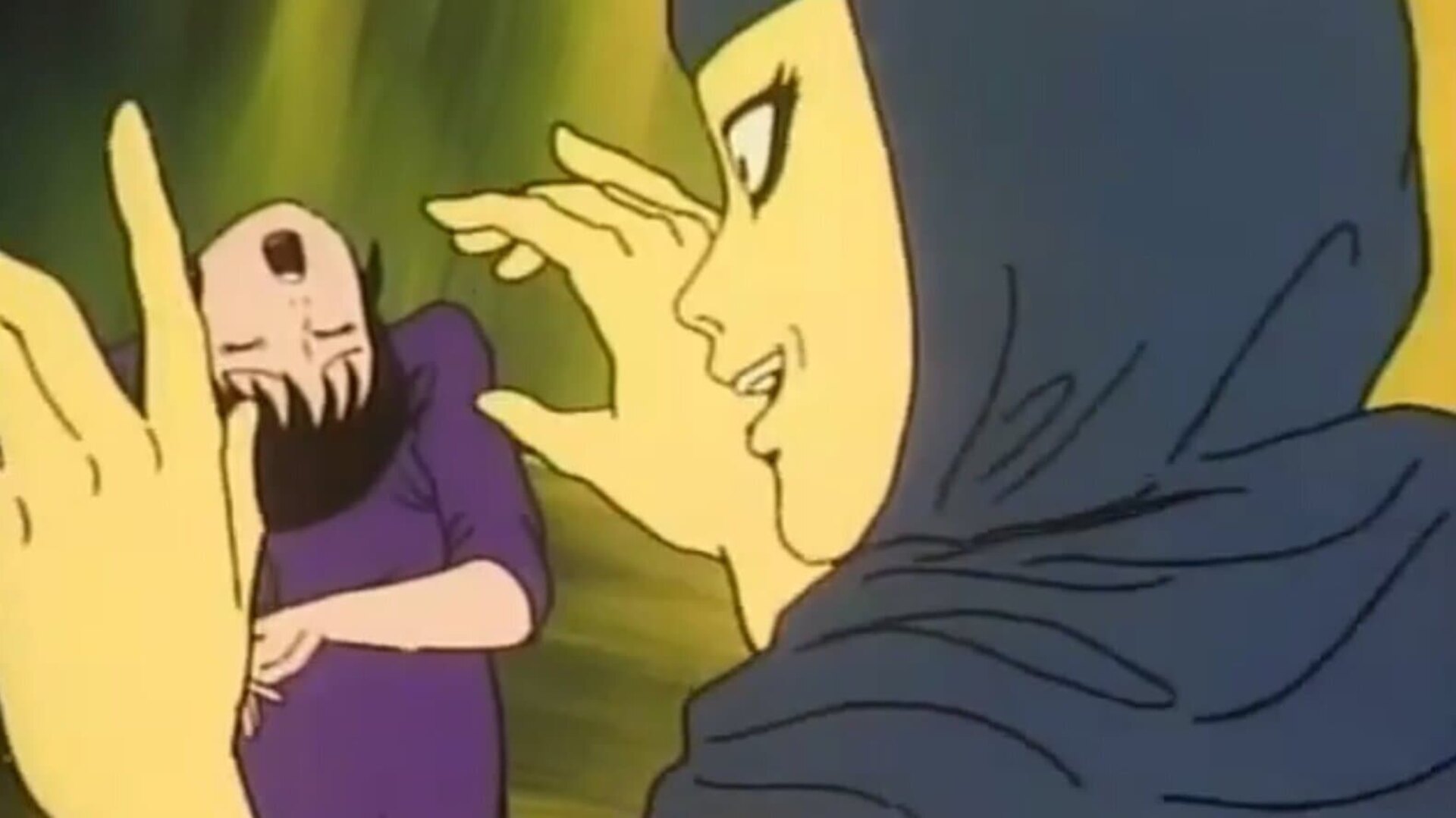
If you’ve spent any time in the darker corners of the anime community, you’ve heard the name. Midori, also known as Shoujo Tsubaki or Mr. Arashi's Amazing Freak Show. It’s a title that carries a sort of heavy, cursed energy. For decades, it was the "forbidden" film—the kind of thing you’d only find on grainy bootlegs or hidden behind password-protected forums.
It’s uncomfortable. Honestly, it’s meant to be.
The Midori Shoujo Tsubaki anime isn't just a movie; it's a historical artifact of Japanese counterculture that somehow survived total destruction. Directed by Hiroshi Harada and released in 1992, it’s a grueling adaptation of Suehiro Maruo’s 1984 ero-guro manga. But the story of how it was made—and why it was banned—is almost as disturbing as the content of the film itself.
The One-Man Descent into Madness
Most anime are made by studios. Huge teams of animators, clean desks, and corporate backing. Midori? Not a chance.
Hiroshi Harada spent five years of his life hand-drawing every single frame of this movie. He couldn't get funding. Nobody wanted to touch a story about a young girl sold into a freak show who suffers systematic abuse. Investors saw the script and essentially ran the other way. So, Harada used his life savings. He lived in poverty. He drew 5,000 sheets of paper by himself, pouring a level of obsessive, raw detail into the frames that you just don't see in modern, streamlined productions.
The animation isn't "smooth" in the way a Ghibli film is. It’s twitchy. It’s jittery. It feels like a fever dream because it basically was one. Harada wasn't just making a movie; he was trying to capture the specific, grotesque aesthetic of the kamishibai (paper theater) tradition and the "ero-guro nansensu" (erotic grotesque nonsense) movement.
When you watch the Midori Shoujo Tsubaki anime, you aren't just watching a story. You're watching one man’s fixation. That’s why it feels so intimate and, frankly, so gross. There’s no corporate filter to dull the edges.
What Actually Happens in the Midori Shoujo Tsubaki Anime?
Let’s be real: the plot is a nightmare.
Midori is an innocent girl whose mother dies. Left with nothing, she's "tricked" into joining a traveling circus—a freak show. This isn't the Greatest Showman. It’s a collection of desperate, mutilated, and cruel individuals. She is subjected to physical and psychological torture. It’s relentless.
Then comes Kanabun, the magician. For a moment, you think he’s the hero. He uses his powers to create illusions, making Midori believe she’s in a beautiful, safe world. But the movie doesn't do "happy." The line between illusion and reality blurs until the ending—which I won’t spoil in detail—leaves you feeling completely hollowed out.
People often ask if it’s just "torture porn."
That’s a fair question. But critics who study the genre, like those who analyze Suehiro Maruo’s work, argue that it’s a biting critique of post-war Japan’s treatment of the vulnerable. It’s a subversion of the shoujo (young girl) genre. Usually, shoujo is about first loves and school festivals. Maruo and Harada took that innocence and threw it into a meat grinder to show how the world actually treats the weak.
The Legendary Bans and the "Cursed" Film Strips
The censorship history of the Midori Shoujo Tsubaki anime is the stuff of legend.
When it premiered in 1992, it wasn't shown in theaters. Harada toured it around Japan like an actual freak show. He would set up tents and play the film. Because it was so extreme—showing things that violated every decency law in the book—the Japanese Eirin (censorship board) eventually stepped in.
They didn't just ask for cuts. They basically tried to erase it.
Legend has it that original film strips were seized and destroyed. For years, the version that circulated was a heavily censored edit. Scenes were blacked out. Sequences were shortened. It became the ultimate "holy grail" for collectors of the macabre. You’d hear rumors of a "lost" 56-minute cut that no one could find.
It wasn't until much later that restored versions began to surface, though even today, finding a truly "raw" original version is difficult depending on which country you’re in. The film was banned in several regions, and in others, it remains unrated or restricted to adult-only boutiques.
Why Does It Still Matter?
In 2026, we’re used to shock value. We have the internet. We’ve seen everything. So why does Midori still get under people’s skin?
It’s the art style.
Suehiro Maruo’s influence on the Midori Shoujo Tsubaki anime cannot be overstated. He uses a style called Muzan-e, which dates back to the Edo period. It’s "bloody pictures." It combines the refined, delicate lines of traditional Japanese art with the most horrific imagery imaginable.
There’s a weird cognitive dissonance in seeing a character who looks like she belongs on a 1950s candy tin being subjected to Lynchian horrors. It creates a psychological friction that stays with you long after the credits crawl.
Also, it’s a reminder of what independent animation used to look like. Today, "indie" usually means a small team using digital tools. Harada’s work was physical. You can practically see the sweat and the ink stains on the cells. It’s a level of dedication to a "disturbing" vision that is rarely seen in an era of algorithm-friendly content.
Common Misconceptions About the Movie
A lot of people think this is a "dark" version of The Little Mermaid or something. It’s not. It’s not a fairy tale gone wrong. It’s an exploration of the "Guro" subculture.
Another big misconception is that the movie is illegal to own. While it was banned from public screenings in many places, owning a copy isn't a crime in most territories, though it is incredibly hard to find a legitimate physical release. Most "official" DVDs from the early 2000s are long out of print and cost hundreds of dollars on eBay.
Is it "bad" animation?
Some people watch it and think it looks cheap. They’re missing the point. The "jankiness" is intentional. It’s meant to feel like a puppet show. It’s meant to feel artificial and unsettling. If it were fluid and Disney-like, the horror wouldn't work. The stiffness is part of the nightmare.
The Cultural Legacy of Shoujo Tsubaki
The influence of Midori spreads surprisingly far. You can see echoes of its aesthetic in the works of other avant-garde creators. Masaaki Yuasa (the mind behind Devilman Crybaby) and even some of the more surreal moments in Perfect Blue owe a tiny bit of DNA to the ground Harada broke.
It also paved the way for the live-action adaptation in 2016. While the live-action film is "cleaner" and uses a lot of CGI to mimic the manga’s art, it lacks the raw, grimy soul of the 1992 anime. The anime remains the definitive version for anyone who wants to understand why this story has such a grip on the cult fringe.
Actionable Steps for the Curious (and Brave)
If you're planning on diving into the world of the Midori Shoujo Tsubaki anime, you need to go in prepared. This isn't a casual Friday night watch.
- Check Your Mental State: Seriously. This film deals with heavy themes of sexual violence, animal cruelty, and child abuse. If those are hard triggers for you, skip it. There is no shame in that.
- Seek Out the Restoration: If you’re going to watch it, don't watch a 240p YouTube rip from 2008. Look for the "French Release" or recent digital restorations that have tried to clean up Harada’s original cells. The detail in the backgrounds is where the real "beauty" (if you can call it that) lies.
- Read the Manga First: Suehiro Maruo’s Mr. Arashi's Amazing Freak Show is a masterpiece of illustration. Reading the source material helps you appreciate what Harada was trying to replicate on a shoe-string budget.
- Contextualize the Era: Research the Ero-Guro movement of the 1920s and 30s in Japan. Understanding that this is part of a century-old artistic tradition makes it feel less like "pointless shock" and more like a piece of transgressive art.
The Midori Shoujo Tsubaki anime is a relic. It represents a time when a single person could spend half a decade creating something the world explicitly told them not to make. It is ugly, beautiful, cruel, and tragic. It is the definition of "cult classic"—something that most people will hate, but a small, dedicated group will study forever.
Just don't say you weren't warned. It’s a long way down.