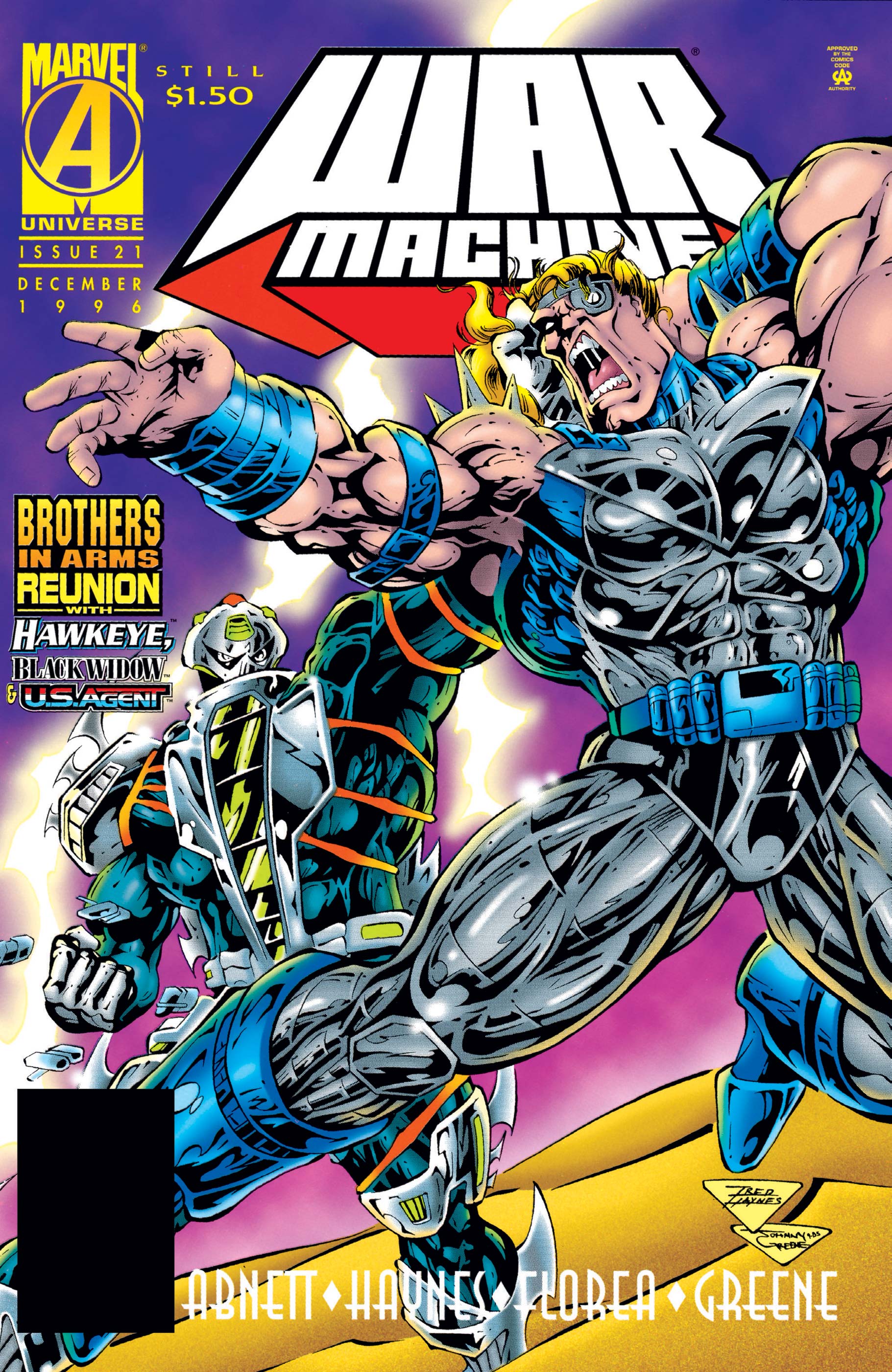
James Rhodes is a badass. Honestly, if you grew up thinking he was just a "palette swap" for Tony Stark, you were probably reading the wrong books. He isn't some corporate sidekick. He’s the guy who has to pick up the pieces when the genius billionaire goes on a bender or disappears into a wormhole. Marvel Comics War Machine represents something far more grounded and, frankly, far more intimidating than the shiny gold-and-red Avenger.
Rhodey didn’t inherit a company. He earned his wings in the Marines.
The suit reflects that. It's bulky. It’s loud. It carries enough ordinance to level a small country without needing to fire a single "uni-beam." While Tony Stark is an artist who treats his suits like high-fashion sports cars, James Rhodes treats the War Machine armor like a tank. It’s a tool for a specific job: winning wars.
The Pilot Who Became a Legend
Rhodey first appeared in Iron Man #118 back in 1979. David Michelinie and John Byrne didn't start him off as a superhero. He was just a pilot Tony met in Vietnam (later retconned to Siancong to keep the timeline from aging him out). Their friendship is the bedrock of the entire Iron Man mythos. It’s built on mutual respect and shared trauma.
Think about Iron Man #170.
Tony is hitting rock bottom with his alcoholism. He can’t fly. He can’t function. He’s basically a walking disaster zone. What does Rhodey do? He doesn't call a lawyer. He puts on the armor. He becomes Iron Man because someone has to do the right thing, even if he doesn't have the genius-level IQ to fix the repulsors when they glitch out. He did it for years. That’s the real grit of the character. He fought the Mandarin and the Masters of Evil while suffering from massive headaches and physical strain because the suit wasn't calibrated for his brain waves.
He stayed in the fight anyway.
Why the Armor is Built Different
We need to talk about the "Variable Threat Response Battle Suit." That’s the formal name for the Marvel Comics War Machine Mark I. It debuted in Iron Man #281. This wasn't Tony being nice; it was Tony building a weapon specifically designed to handle the "Masters of Silence," a group of high-tech assassins.
It’s all about the ballistics.
While Stark loves his lasers and fancy energy shields, Rhodey carries a literal gatling gun on his shoulder. It’s tactile. It’s visceral. In the comics, the suit is often depicted as having "unibeams" that are less about precision and more about raw, concussive force. It’s built for durability. The plating is thicker. The systems are redundant. If a piece of the armor gets ripped off in a dogfight, there’s usually a backup hydraulic system keeping Rhodey in the air.
He’s a soldier, not a scientist. His combat style reflects that—it’s linear, aggressive, and incredibly efficient.
The Cyborg Era: A Strange Turn
The 2008 War Machine solo series by Greg Pak is probably the most metal thing Marvel has ever published. Rhodey gets blown up. Like, really blown up. To save him, they basically turn him into a cyborg. We’re talking about a guy who could interface with a satellite and "download" a tank into his own prosthetic limbs.
It was dark.
He was essentially a walking weapon system, hunting down war criminals across the globe. This period highlighted the inherent tragedy of James Rhodes. He gives everything. He gave his body, his military career, and his peace of mind to a cause that usually doesn't thank him. You see him struggling with his humanity while literally being made of titanium. It’s a nuance you don't always get with the "invincible" Tony Stark.
The Political Weight of Rhodey
Being a Black man in a high-ranking military position while moonlighting as a vigilante creates a lot of friction. Marvel hasn't always handled this perfectly, but when they do, it’s fascinating. In the Iron Man 2.0 run by Nick Spencer, we see Rhodey dealing with the "military-industrial complex" from the inside.
He’s a bridge.
He connects the world of government oversight with the world of superhero lawlessness. He’s been a Liaison to the Avengers, a member of the Secret Avengers, and a commander of the Sentinel Squad ONE. He’s the guy who tells the Generals no when they want to weaponize superhero tech, and he’s the guy who tells the heroes when they’re crossing a line that’ll get them arrested.
Civil War II and the Fallout
The death of Rhodey in Civil War II was a massive turning point. It felt cheap to some fans—using him as a "motivating death" for Carol Danvers and Tony Stark—but it showed just how much he mattered to the Marvel Universe. When he died at the hands of Thanos, the entire community felt it.
The grief was real.
Fortunately, this is comics, and nobody stays dead for long. Tony used his "Stark-level" tech to bring him back, but the trauma remained. Rhodey came back with a severe case of PTSD regarding the armor. For a while, he steered clear of the suit, piloting a giant "Manticore" mech instead. It was a rare, honest look at the psychological toll of being a hero for forty years.
Key Stories You Should Actually Read
If you want to understand why people love this character, don't just watch the movies. Go to the source.
- The Armor Wars: This is essential. Rhodey is there every step of the way, helping Tony hunt down stolen tech.
- War Machine (2008) by Greg Pak: This is the "cyborg" run. It's violent, political, and very intense.
- Iron Man #170-200: The "Rhodey as Iron Man" era. It’s classic 80s Marvel and shows his struggle to fill Tony's shoes.
- Force Works: A 90s team book where War Machine takes a leadership role. It's very "of its time," but it’s great for seeing how he interacts with a team.
The Verdict on James Rhodes
He’s not the "other" Iron Man. He’s the better soldier. James Rhodes brings a sense of duty and accountability to the Marvel Universe that most geniuses simply lack. He isn't trying to change the future or "privatize world peace." He’s just trying to make sure the person next to him gets home alive.
That’s why he’s a fan favorite.
He’s the heavy hitter. The moral compass. The guy who keeps the most powerful man in the world honest. Whether he’s in the classic silver-and-black armor or the high-tech "Iron Patriot" suit, the mission remains the same.
To get the most out of your deep dive into Rhodey's history, start by picking up the War Machine by Greg Pak trade paperback. It’s the definitive modern take on the character's lethality and inner turmoil. After that, look into the Iron Man: Director of S.H.I.E.L.D. era to see him acting as a global operative. If you're interested in his current status, follow the Invincible Iron Man run by Gerry Duggan, which deals with the fallout of the Stark-Orchis war and Rhodey's role in the new status quo for armored heroes.