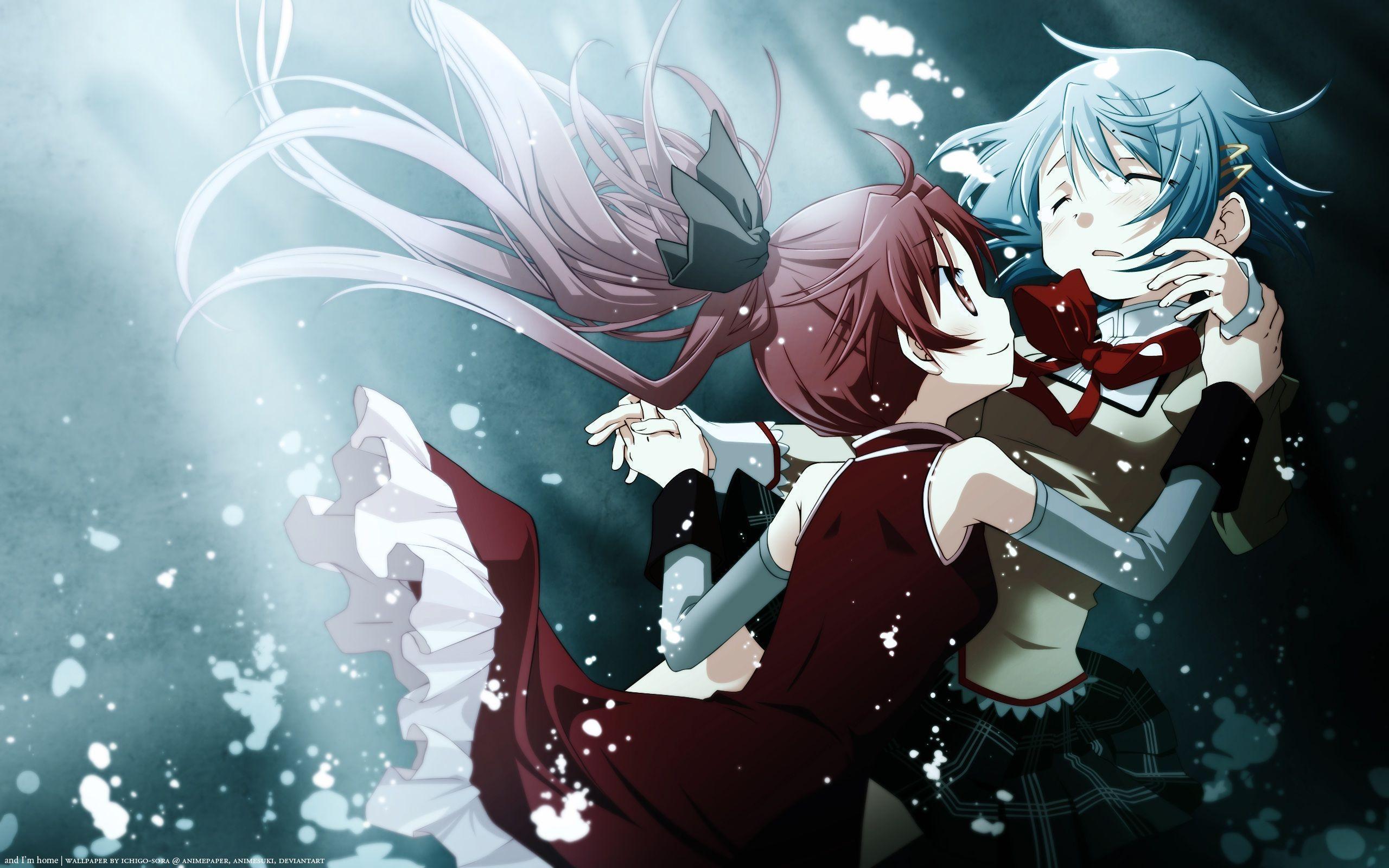
It happened on a Friday. January 21, 2011, to be exact. At that point, Puella Magi Madoka Magica looked like another sugary, bubblegum-pink deconstruction of the magical girl genre, or maybe just a high-budget clone of Cardcaptor Sakura. Fans were mostly chatting about the gorgeous Ume Aoki character designs and the trippy, collage-style art of Gekidan Inu Curry. Then Madoka Magica episode 3 aired, and the entire internet collectively lost its mind.
I’m not exaggerating. If you were on 4chan’s /a/ board or any anime forum back then, you remember the "before" and "after." It was a cultural reset. Gen Urobuchi, the writer—appropriately nicknamed "The Urobucher"—had successfully baited a massive audience into thinking they were watching a show about friendship and sparkles, only to rip the rug out in the most violent way possible. It wasn't just about the shock factor, though. It was about how that one single episode fundamentally changed how we talk about "subverting expectations" in media.
The Mami Tomoe Incident: More Than Just a Meme
The episode is titled "I'm Not Afraid of Anything Anymore." Honestly, looking back, the title is a cruel joke. Mami Tomoe, the veteran magical girl who had been acting as a mentor to Madoka and Sayaka, finally feels like she’s found a family. She’s lonely. She’s been fighting witches in isolation for years. When Madoka tells her she wants to fight by her side, Mami glows. She enters the Labyrinth of the witch Charlotte with a renewed sense of purpose.
She fights with grace. Her theme music, "Credens Justitiam," is triumphant and orchestral. She binds the witch, prepares her finishing move, "Tiro Finale," and... well, you know.
The witch transforms. A giant, worm-like entity emerges from the small, doll-like shell. In a matter of seconds, Mami is caught. The screen cuts to a wide shot, the crunch of a bite echoes, and she is gone. No last words. No heroic sacrifice that saves the day. Just a sudden, clinical death.
What makes Madoka Magica episode 3 so brutal isn't just the decapitation. It’s the silence that follows. The music cuts out. The bright colors of Mami’s ribbons turn into grey, lifeless threads. Seeing her Soul Gem shatter—the very item that gives these girls their power—was the moment we realized that the "magical girl" contract wasn't a gift. It was a death sentence.
Why the Three-Episode Rule Exists Because of This Show
We talk about the "Three-Episode Rule" constantly now. You give a show three episodes to prove its worth before you drop it. While the rule existed in some form before 2011, Madoka Magica codified it. SHAFT (the animation studio) and producer Atsuhiro Iwakami intentionally marketed the show as a standard moe series. They even kept Urobuchi’s involvement somewhat quiet initially because his reputation for "dark" stories (like Fate/Zero and Saya no Uta) would have tipped people off.
By the time Madoka Magica episode 3 finished, the mask was off.
It changed the stakes. Suddenly, every conversation between Kyubey and the girls felt predatory. Those wide, unblinking eyes that seemed cute in episode one now looked like the eyes of a shark. The "contract" became a legal trap. When you rewatch those first two episodes, the foreshadowing is everywhere, but it’s buried under layers of soft lighting and school life fluff.
- The way Homura Akemi stares with cold, dead eyes.
- The ominous warnings that "being a magical girl isn't what you think."
- The abstract, terrifying nature of the witches' labyrinths compared to the "heroic" girls.
The Psychological Weight of Kyubey’s Silence
A lot of people focus on the gore, but the real horror of Madoka Magica episode 3 is the lack of empathy from the universe. Kyubey, the creature offering these deals, doesn't even flinch when Mami dies. He just looks for the next candidate. It’s a cold, utilitarian view of human life.
Think about the mechanics of the Soul Gem. We don't fully understand it yet in episode 3, but we see it break. The realization that their souls are literally tied to these fragile little eggs is a slow-burn nightmare. Most magical girl shows treat the transformation item as a trinket. Here, it’s a vital organ.
The episode also serves as a turning point for Sayaka Miki. Watching her mentor die in front of her should have been a deterrent. Instead, it creates this toxic cocktail of guilt and a "hero complex" that eventually leads to her own downfall. It’s masterful writing. It uses a single event to trigger three different character arcs in opposite directions.
Misconceptions About the "Dark" Turn
Some critics argue that Madoka Magica is just "grimdark" for the sake of being edgy. I disagree. If you look at the series as a whole, episode 3 is a necessary pivot to explore the themes of hope versus despair. If there was no risk, the "hope" at the end of the series wouldn't mean anything.
It’s also worth noting that the animation in this episode was significantly touched up for the Blu-ray release. If you’re watching a low-quality stream of the original TV broadcast, you’re missing out on some of the subtle visual cues in Charlotte’s Labyrinth. The Blu-rays added more detail to the "sweets" theme of the witch, making the contrast between the sugary environment and the visceral death even more jarring.
The Legacy of Charlotte and the "Mami-ing" Meme
For years after this aired, "Mami-ed" became a verb in the anime community. It described any character who was unexpectedly killed off right after a moment of character development.
But beyond the memes, Charlotte remains one of the most iconic witch designs in the franchise. The duality of her forms—the tiny, pathetic "Pyorn" and the massive, predatory "Nagisa"—is a direct reflection of the magical girl's life. You start small, cute, and hopeful. You end as a monster that consumes everything.
How to Approach a Rewatch Today
If it’s been a decade since you’ve seen it, or if you’re a newcomer who somehow managed to avoid the spoilers until now, go back and watch Madoka Magica episode 3 with a focus on the background art. Gekidan Inu Curry used a technique called "Scrapbook Architecture."
In Mami’s final fight, notice the hospital equipment, the pills, and the needles integrated into the witch's barrier. It tells a story that the dialogue doesn't. It hints at the girl the witch used to be. It’s environmental storytelling at its peak, and it’s something most modern anime still struggle to replicate.
Actionable Insights for Fans and Creators
If you are analyzing this episode for your own writing or just trying to understand why it worked so well, keep these points in mind:
- Contrast is King: The horror works because the first two episodes spent time establishing a "safe" status quo. Without the fluff, the bite has no impact.
- Audio Silence: Pay attention to the lack of sound immediately following the climax. In an era of over-produced media, silence is the loudest tool you have.
- The Mentor Trap: Mami’s death is the ultimate "Hero's Journey" subversion. Usually, the mentor dies late in the second act. Killing her in the first act leaves the protagonists (and the audience) completely unmoored.
- Rewatch for Foreshadowing: Look at Kyubey’s positioning in every frame. He is rarely in the center; he lingers in the corners like a predator waiting for an opening.
To truly appreciate the impact, compare this to the "magical girl" shows that came after it, like Day Break Illusion or Magical Girl Raising Project. Most of them try to replicate the shock of Madoka Magica episode 3, but they often forget to build the emotional connection first. Mami didn't just die; she died right when she finally felt like she belonged. That’s the real tragedy.
Next time you watch a "dark" reboot of a classic genre, ask yourself if it earned its twist. Madoka did. It used episode 3 to stop being a "magical girl show" and started being a psychological thriller that just happened to feature ribbons and lace.
If you're revisiting the series, the best way to experience it now is through the 4K theatrical cuts (Beginnings and Eternal), which polish the animation of episode 3 to a terrifying sheen. Or, if you want the full weight of the trauma, stick to the original 12-episode TV run. Either way, the "Mami incident" remains the gold standard for how to break an audience's heart in under twenty minutes.