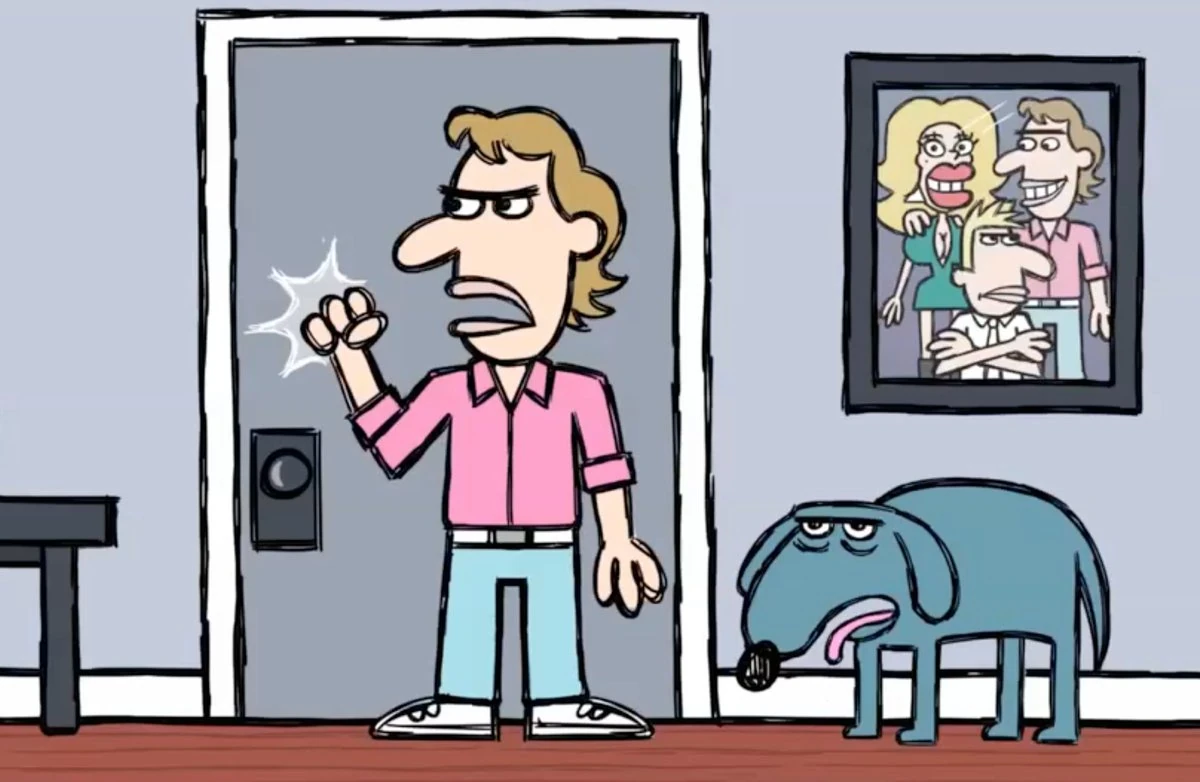
Honestly, it’s kinda weird how much people have forgotten about the chaos that was Legends of Chamberlain Heights. It feels like a fever dream from 2016. If you weren't watching Comedy Central late at night back then, you missed out on one of the most unapologetically vulgar, strangely insightful, and visually jarring animated shows ever to hit cable. It didn't last long—just two seasons—but it left a dent.
Most people just saw the art style and bailed. It was rough. It looked like a doodle on a high schooler's notebook that somehow gained sentience and started swearing. But beneath that jagged animation was a show that understood the intersection of basketball culture, racial dynamics, and the sheer desperation of being "not quite good enough" in high school. It wasn't trying to be the next South Park, even if everyone compared it to that. It was its own beast.
The Milkcrate Dreams of Grover, Milk, and Jamal
At its core, Legends of Chamberlain Heights is about three benchwarmers. That’s the hook. Grover, Milk, and Jamal aren't the stars of the team. They aren't the guys getting the girls or the NIL deals—well, NIL wasn't a thing back then, but you get the point. They are the guys who live for the glory of the 15th man on the roster.
Gover is the "leader," or at least he tries to be. He's the one most grounded in reality, which makes his failures hurt a little more. Then you have Milk. Milk is... a lot. He’s a white kid who is convinced he’s the most "authentic" person in the room, constantly overcompensating and leaning into every stereotype he can find. It’s a risky character archetype that usually fails, but here it worked because the show made him the butt of the joke, not the hero. Jamal is the wild card. He's a bit slower, a bit more eccentric, and usually the catalyst for things going off the rails.
Brad Ableson, Mike Quinn, and Quinn Hawking (who actually played college ball together at Chapman University) created this based on real vibes. You can feel that. The dialogue doesn't sound like it was written by a 50-year-old in a corporate suit trying to "act young." It sounds like three idiots talking trash in a locker room.
Why the Animation Style Pissed So Many People Off
Let's talk about the elephant in the room. The art. Bento Box Entertainment handled the production, and they went for a "paper-cutout" look that felt unfinished. It was deliberate.
Some fans loved the DIY aesthetic. Others thought it looked cheap. In an era where Rick and Morty was pushing the boundaries of what TV animation could look like, Legends of Chamberlain Heights went the opposite direction. It went lo-fi. It felt gritty. That grit matched the tone of the writing.
If the show had been polished and shiny, the jokes wouldn't have landed. The humor was mean. It was cynical. It took shots at everyone from LeBron James to local legends who never made it out of the neighborhood. The "ugliness" of the animation was a shield; it allowed the writers to be as offensive as they wanted because nothing about the show felt "precious" or "preachy."
The Social Commentary Most People Missed
People love to categorize this show as just another "stoner comedy" or a "Black version of South Park." That’s lazy.
The show actually grappled with some heavy stuff. It looked at the pressure of the American Dream through the lens of sports. For Grover and his friends, the NBA isn't just a career path; it's the only path they think they have. When the show mocks their lack of talent, it’s also subtly mocking a system that tells kids from neighborhoods like Chamberlain Heights that they’re only valuable if they can dunk or rap.
The Cameo Culture
The show leaned hard into pop culture. It wasn't afraid to name names. You'd see caricatures of Kevin Durant, Drake, or Kanye West popping up in ways that were definitely not "brand-safe."
In one episode, they deal with a "spirit animal" that happens to be a very disgruntled version of a certain superstar. It was reckless. It was the kind of writing that feels like it would get killed in a pitch meeting today because of "legal concerns." But in 2016-2017, Comedy Central was still willing to let creators go off the rails.
The Tragic Fate of Season 3
So, what happened? Why did Legends of Chamberlain Heights disappear after 20 episodes?
The ratings weren't stellar, sure. But the real kicker was the timing. The show premiered during a massive shift in how we consume adult animation. It was the "bridge era" where cable was dying, and streaming hadn't quite figured out how to market niche animated comedies that weren't Family Guy.
Comedy Central actually renewed the show for a second season before the first even premiered. They had faith. But by the time Season 2 wrapped up in late 2017, the landscape had changed. The show's brand of "edgy" humor was starting to face more scrutiny, and the production costs—despite the "cheap" look—weren't justified by the viewership numbers. It was quietly canceled, leaving fans with a cliffhanger that never got resolved.
The Cultural Legacy and Where to Find It Now
You can't really talk about modern sports-adjacent animation without giving a nod here. While Legends might not have the massive fanbase of The Boondocks, its influence is visible in how creators approach sports satire. It paved the way for more diverse voices in the "adult toon" space that didn't rely on the tropes established by The Simpsons.
The show is currently a bit of a nomad. It pops up on various streaming platforms like Paramount+ or Hulu depending on licensing deals, but it doesn't get the "Classic" treatment it probably deserves. It’s a time capsule of the mid-2010s.
How to Actually Enjoy the Show Today
If you’re going back to watch it, don't expect a serialized masterpiece. It’s an episodic grind. Here is the best way to approach it:
- Ignore the first ten minutes of the pilot. Every show takes a second to find its legs. This one takes a full episode.
- Watch for the background details. The "blink and you'll miss it" signs and posters in the background of Chamberlain Heights are often funnier than the main dialogue.
- Listen to the voice acting. Josiah Johnson and Quinn Hawking (who voice the leads) have a natural chemistry that you can't fake. It's real friends talking.
Final Verdict on the Legends
Legends of Chamberlain Heights was a flawed, loud, and often brilliant experiment. It was a show made for the people who actually spent their Saturdays at the local park trying to hit a jumpshot that was never going to get them a scholarship. It was for the benchwarmers.
It didn't need to be "important." It just needed to be funny. And for a brief, flickering moment in the late 2010s, it was the funniest thing on television that nobody was talking about.
Next Steps for Fans and Newcomers
If you want to dive deeper into the world of Chamberlain Heights or similar adult animation, start by tracking down the "25th Hour" episode. It's arguably the peak of the series' writing. After that, look into the creators' current projects; Josiah Johnson has become a massive voice in "NBA Twitter" and sports media, proving that the DNA of the show—the sharp, fast-paced sports commentary—is still very much alive in the culture today. Check out the official Comedy Central YouTube archives for deleted scenes and shorts that never made the broadcast air, as they often contain the rawest versions of the show's humor.