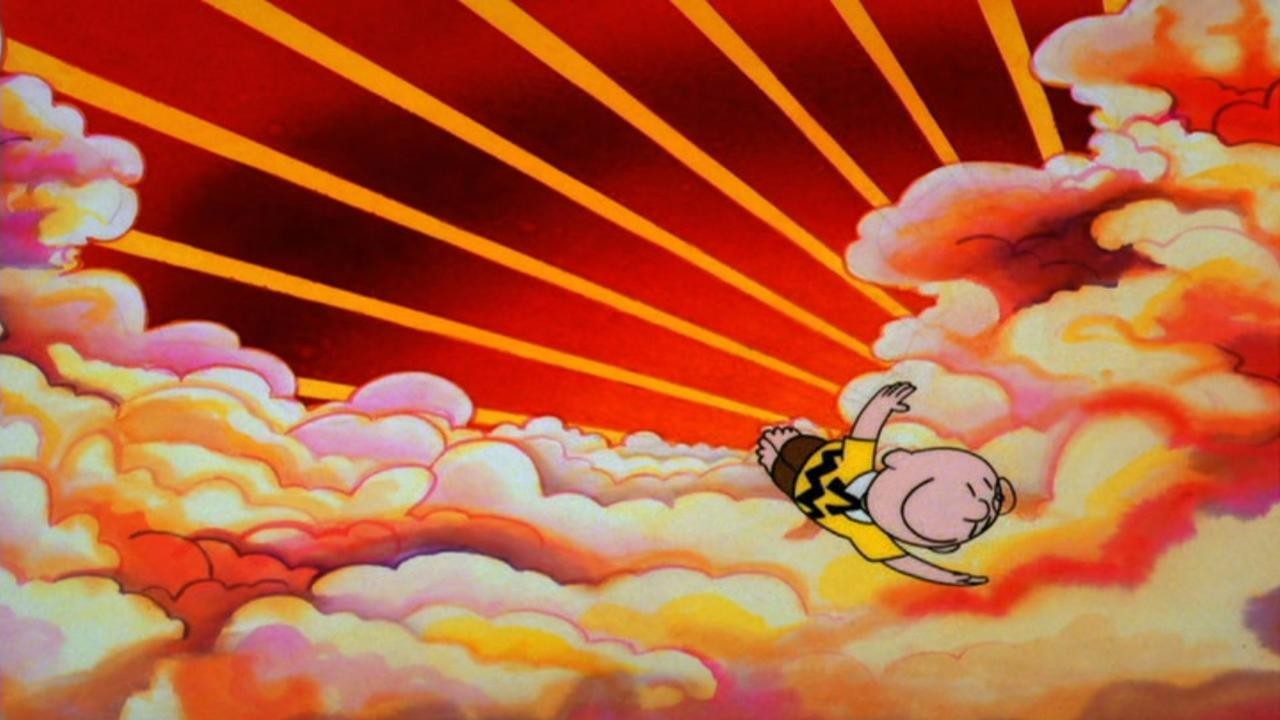
It happened in 1977. Charlie Brown finally won. Or he should have.
If you grew up watching the holiday staples, you know the formula by heart: Lucy pulls the football, Charlie Brown lands on his back, and the universe remains in balance. But It's Your First Kiss, Charlie Brown took a sharp turn into a weird, experimental, and surprisingly cruel territory that fans still argue about on forums today. It is easily the most controversial piece of Peanuts media ever aired.
The special originally broadcast on CBS on October 24, 1977. It wasn't just another cartoon. It was a massive moment for the franchise because it introduced Heather—the "Little Red-Haired Girl"—in the flesh for the very first time. Before this, she was a ghost. A figment of Charlie Brown's pining imagination. Suddenly, she had a face, a name, and a role as the Homecoming Queen.
The Football Incident That Sparked a Fan Revolt
Usually, when Lucy pulls the football away, it’s a private joke between two "friends" in a vacant lot. In It's Your First Kiss, Charlie Brown, the stakes are upgraded to a high school-style homecoming game. Charlie Brown is the kicker. Lucy is the holder.
She pulls the ball. He misses. The team loses.
But here’s why this specific iteration felt different: the sheer mean-spiritedness of the dialogue. In the original 1977 broadcast, the characters—specifically Peppermint Patty—absolutely laid into Charlie Brown. They blamed him for the loss with a vitriol that felt genuinely out of character for the "security blanket" vibe of the series.
- Fans were so upset by the bullying that Charles Schulz and the producers actually had to go back and edit the audio for later airings.
- They softened Peppermint Patty’s lines because the backlash was loud.
- Even with the edits, the episode remains a sore spot for those who think the Peanuts gang should be "wholesome."
Honestly, it’s uncomfortable to watch. Seeing a stadium full of people groan at a kid who was clearly sabotaged by a teammate (who didn't get any blame, by the way) feels less like a gag and more like a fever dream.
Meeting the Little Red-Haired Girl
For decades, she was an enigma. Schulz famously kept her off-screen because he felt no drawing could ever match the idealized version in Charlie Brown’s (or the audience's) head.
Then came 1977.
She's named Heather here. She has a blue dress. She’s pretty, sure, but the mystery was gone. This special broke a fundamental rule of Peanuts storytelling. By giving her a physical presence, the show shifted from a psychological exploration of unrequited love to a standard "guy tries to get the girl" plot.
The plot is basic. Charlie Brown is chosen to escort her to the dance and, as is tradition, give the Queen a kiss. He’s terrified. He spends the whole special in a state of high-functioning anxiety.
That Ending: Was it a Dream?
The climax of It's Your First Kiss, Charlie Brown is a total blur. Literally.
Charlie Brown finally makes it to the dance. He approaches Heather. He actually kisses her on the cheek. It’s the win of a lifetime! The big moment!
Then he wakes up the next morning.
He remembers nothing. Linus has to explain to him what happened. Linus tells him he did it—he kissed the girl and he didn't even faint (well, he did, but after the fact).
This narrative choice is baffling. It robs the audience of the catharsis. We see him do it, but the protagonist doesn't get to "own" the memory. It’s a classic Schulz move—the "Good Grief" philosophy where even when Charlie Brown wins, he loses the ability to enjoy the victory. Some viewers find it poetic. Most find it infuriating.
The Production Weirdness of the Late 70s
You can see a shift in the animation style during this era. Bill Melendez and Lee Mendelson were still at the helm, but the colors are more saturated, the backgrounds a bit more detailed, and the pacing is... off. It feels like a transition between the classic 60s specials and the more commercialized 80s versions.
One thing people forget? The music. Vince Guaraldi, the genius behind the iconic Peanuts jazz sound, had passed away in 1976. This was one of the first specials to move forward without his specific touch. Ed Bogas took over the score. It’s fine, but it lacks that soulful, melancholic "Christmastime Is Here" DNA that defined the earlier works.
Why It Still Matters (and Why You Should Rewatch It)
Despite the controversy, It's Your First Kiss, Charlie Brown is a fascinating artifact. It represents a time when the creators were willing to break their own rules.
- It challenged the "unseen character" trope.
- It pushed the boundaries of how "mean" the kids could be to each other.
- It gave Charlie Brown a genuine, documented win, even if he was too traumatized to remember it.
If you’re a Peanuts completionist, you can’t skip it. It’s the missing link between the innocent 60s and the more structured, character-heavy specials that followed. It shows a creator struggling with the pressure to give the audience what they want (the girl) while staying true to the theme of the "lovable loser."
Actionable Takeaways for Peanuts Fans
If you want to dive deeper into this specific era of Peanuts, don't just stop at the TV special.
- Compare the Broadcast Versions: If you can find the original 1977 audio on YouTube or archive sites, listen to Peppermint Patty’s original dialogue. It’s shocking compared to the "sanitized" version on modern DVDs.
- Read the Strip Context: Look for the 1970s Sunday strips where the Little Red-Haired Girl is mentioned. Notice how Schulz never actually drew her there, even after this special aired. He treated the TV specials and the comic strips as two slightly different universes.
- Check the Credits: Pay attention to the voice acting. This was the era where the voices started to sound a bit "older" as the child actors aged out and were replaced with kids who had slightly different inflections.
The special is currently available on various streaming platforms (usually Apple TV+) and as part of "Deluxe Edition" DVD sets. Watching it through a modern lens, it’s less of a "failed" special and more of a bold, if slightly miscalculated, attempt to evolve a masterpiece.
Go back and look at the football scene again. Watch the background characters. The animators put a lot of work into the "crowd" during the game, which was rare for Peanuts. It’s a glimpse into a high-budget version of Sparky's world that we rarely got to see.
Next Steps for Your Peanuts History Fix:
- Track down the "Happy Anniversary, Charlie Brown" documentary for behind-the-scenes clips of the 70s production era.
- Compare Heather’s design in this special to her appearance in the 2015 The Peanuts Movie—the differences in how she is characterized say a lot about how our view of "the dream girl" has changed over 40 years.