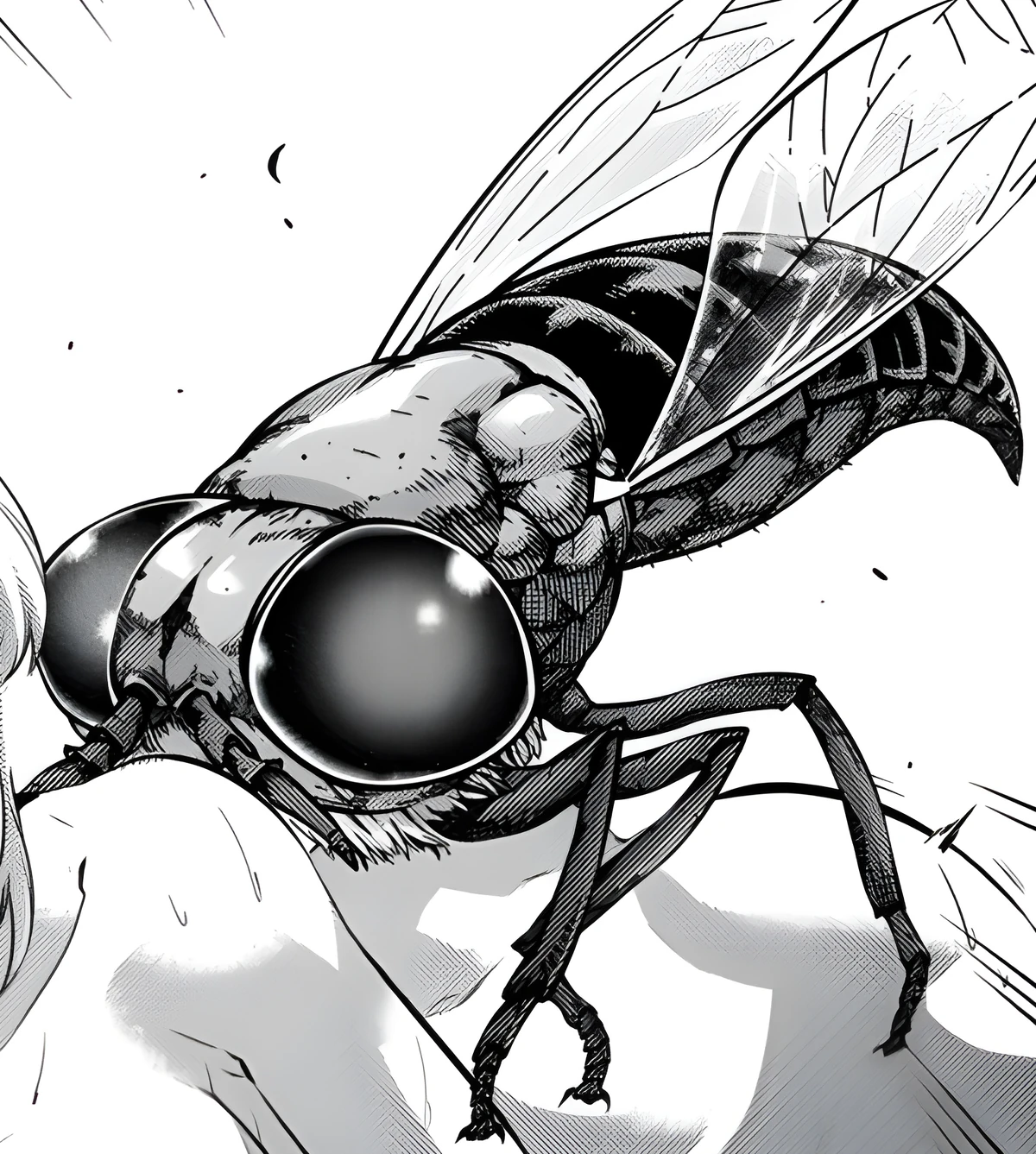
Mutant bugs. Absolute chaos. That’s the Island of Giant Insects manga in a nutshell, and honestly, it’s a lot to process. Most people who stumble upon Yasutaka Fujimi’s work (with art by RED ICE and later Shu Hirose) usually go in expecting a standard survival thriller and come out feeling like they need a shower. It is visceral. It is uncomfortable. It is, quite frankly, one of the most unapologetic examples of "survival horror" ever put to paper.
But here’s the thing. While many critics dismiss it as mere "trashy" entertainment, there’s a weirdly specific level of biological accuracy buried under all that gore.
What Actually Happens in the Island of Giant Insects Manga?
The setup is classic trope territory. A plane crashes. A group of students is stranded on a remote island. But instead of Lord of the Flies style psychological breakdowns, they’re immediately hunted by oversized arthropods. We’re talking dragonflies the size of helicopters and butterflies that aren’t nearly as pretty when they’re trying to melt your skin.
Mutsuumi Oribe is our protagonist, and she is basically the only reason anyone survives the first ten chapters. She’s an insect nerd. While everyone else is screaming and running in circles, she’s the one explaining—with terrifying detail—exactly how a giant wasp is going to paralyze them before laying eggs in their living torsos.
It's a weird dynamic.
You have these high-stakes, life-or-death moments interrupted by mini-lectures on entomology. The Island of Giant Insects manga leans heavily into the "creature feature" vibe of the 1950s but updates it with the modern "seinen" edge where nobody is safe, and the deaths are incredibly creative in their cruelty.
Why the biological horror hits different
Most horror manga relies on ghosts or slashers. This relies on the fact that insects are already nightmares; we’re just lucky they’re small. When you scale a tick up to the size of a beanbag chair, the mechanics of how it feeds become body horror of the highest order.
The author, Yasutaka Fujimi, clearly did his homework. Whether he's discussing the pheromone trails of ants or the predatory habits of the assassin bug, the science (mostly) checks out, minus the "giant" part. This groundedness makes the more "out there" moments feel earned. You start looking at the flies in your own kitchen a little differently. It's that specific blend of educational and traumatic that keeps readers coming back, even when the plot gets a bit messy.
The Problem With the Characters (And Why It Might Not Matter)
Let’s be real. Most of the cast is unbearable.
In many survival stories, you want to root for the survivors. Here? You’re often waiting for the more annoying ones to get eaten. There is a lot of infighting. There is a lot of questionable decision-making. Some readers find the fan-service elements—which are frequent and often occur during life-threatening situations—to be a major turn-off. It’s a valid critique. The manga often oscillates between "serious survival guide" and "gratuitous exploitation."
However, if you view it through the lens of a "B-movie," it works. It’s campy. It’s over the top. The Island of Giant Insects manga doesn't want to be Akira or Monster. It wants to be that movie you find on a late-night cable channel that makes you say, "I can't believe they actually filmed that."
The shift to The Island of Giant Insects: Die
Later on, the series transitioned into a sequel/rebrand titled The Island of Giant Insects: Die (Kyochuu Rettou: Die). This is where things get even more intense. The stakes ramp up, the gore gets dialed to eleven, and the scope of the island's mystery expands. If you finished the original run and felt like it didn't go far enough, Die is basically the answer to that prayer.
It’s also worth noting the art shift. While the original had a certain grit, the later chapters and the sequel feel a bit more polished, which actually makes the insect designs more repulsive. The detail on the mandibles and the multifaceted eyes is enough to trigger genuine arachnophobia or katsaridaphobia in anyone.
Comparing the Manga to the Anime
If you’ve only seen the OVA or the movie, you haven’t actually experienced the Island of Giant Insects manga.
The anime adaptation had a... let’s call it a "troubled" reception. The CGI used for the insects was often criticized for looking stiff and out of place against the 2D characters. It lost a lot of the claustrophobic dread that the manga’s heavy ink work provides. In the manga, the insects feel like part of the environment. In the anime, they often feel like they’re floating on top of it.
If you want the true experience, the paper version is the only way to go. The pacing is better, the "science" segments feel less rushed, and the horror actually has room to breathe.
What Most People Get Wrong About the Series
People often assume this is just "cheap" horror.
While it’s definitely not high art, there is a level of cynical commentary on human nature that gets overlooked. The way the "popular" kids immediately try to establish a hierarchy, or how the "smart" characters are ignored until it's too late, mirrors a lot of real-world frustrations. It’s a cynical look at how quickly civilization collapses when the food chain gets flipped upside down.
Also, it’s not just about "bugs getting big." There’s a persistent mystery regarding why the island is like this. It’s not just a freak accident of nature. There are hints of human interference, medical experimentation, and a larger conspiracy that elevates the story from a simple monster mash to a corporate thriller—sort of.
Is it actually "good"?
That depends on your definition of good.
- If you want deep character arcs and poetic prose? No.
- If you want a visceral, fast-paced nightmare that teaches you how a parasite works? Yes.
It’s a niche. It’s a very specific itch for people who miss the "extreme" manga of the 90s. It’s unapologetic about what it is. In an era where many series try to be everything to everyone, there’s something refreshing about a manga that just wants to show you a giant praying mantis decapitating a teenager.
How to Approach Reading It
Don’t binge it all at once. The constant state of high-alert and the graphic nature of the deaths can lead to "gore fatigue."
- Start with the original run. Get through the first major arc to see if the tone sits right with you.
- Pay attention to Oribe’s dialogue. A lot of the survival tips are actually based on real entomology and botany.
- Expect the unexpected. The plot takes some turns that are genuinely baffling, but that's part of the charm.
The Island of Giant Insects manga is a wild ride. It’s messy, it’s gross, and it’s occasionally brilliant in its depiction of the natural world’s cruelty. Just don’t read it while you’re eating.
Next Steps for the Horror Enthusiast
If you’ve already finished the main series, look for the spin-offs like Giant Bug Mountain (Daikyochuu Rettou). It expands the lore and proves that the "bug apocalypse" isn't just limited to one unlucky plane crash. You should also check out Yasutaka Fujimi’s other works if you find you have a taste for his specific brand of biological terror. Just remember to keep a can of bug spray nearby—mentally, at least.
The best way to experience the series now is through official digital platforms or by hunting down the physical volumes, which often include bonus "insect encyclopedias" that add more flavor to the world-building. Dive in, keep your eyes on the trees, and maybe stay off small planes for a while.