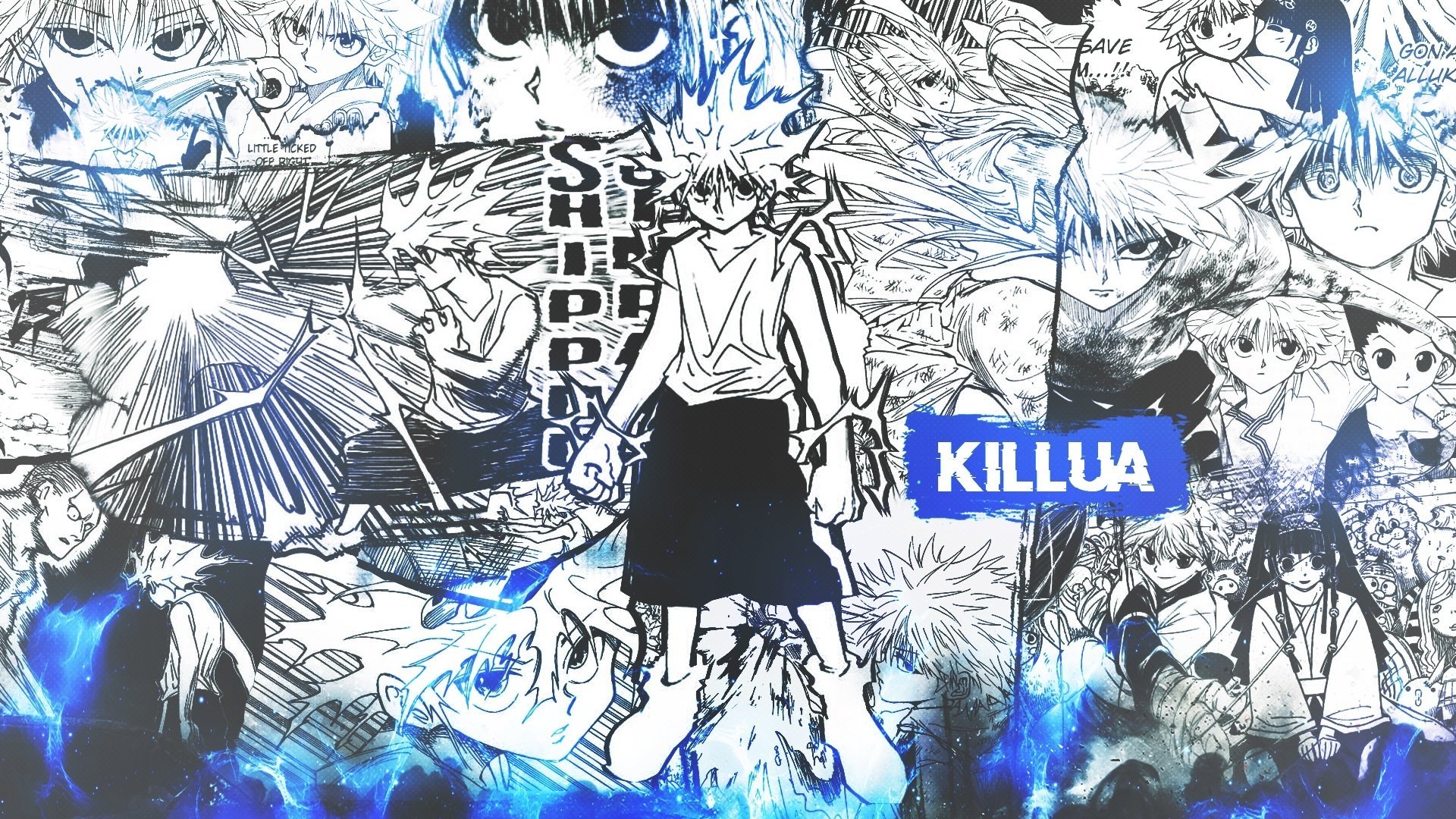
You know that feeling. You're scrolling through social media and a single, black-and-white image stops you dead. Maybe it’s a kid with spiky hair looking terrifyingly blank, or a silver-haired boy crying in a way that feels a bit too real for a comic book. We're talking about gon and killua manga panels. Yoshihiro Togashi isn't just a writer; he’s a master of the "unspoken." While the Hunter x Hunter anime did a stellar job—both the 1999 grit and the 2011 polish—there is something raw in the original ink that gets lost in translation. It’s the scratchiness. The intentional white space. The way a single line can make a character look like they’ve aged a decade in one second.
If you’ve spent any time in the fandom, you’ve seen the "Grown Gon" transformation or the heartbreaking "Killua's breakdown" panels shared a million times. But why? Honestly, it’s because Togashi uses the manga medium to subvert every trope we expect from a shonen duo. These aren’t just cool action shots. They are psychological snapshots of a friendship that is, frankly, pretty codependent and occasionally devastating.
The Visual Evolution of the Iconic Duo
Early on, gon and killua manga panels feel light. Fun. You’ve got the Hunter Exam arc where Togashi’s lines are clean, almost round. Gon looks like a classic protagonist. Killua looks like a mischievous cat. But if you look closely at those early chapters, the seeds of their darker arcs are already there.
Check out the panels during the Zoldyck Family arc. The way Togashi draws Killua’s eyes when he’s dealing with his brother, Illumi, is haunting. The pupils shrink. The shading gets heavy. It’s a stark contrast to the way he looks when he’s racing Gon through the forest. This visual storytelling is why the manga remains the gold standard. You don't need a narrator to tell you Killua is terrified; the linework does the heavy lifting.
As the series progresses into Yorknew City and eventually Greed Island, the art matures. It gets more detailed, then strangely more minimalist. This is a Togashi trademark. He isn't afraid to leave a background completely blank to force your eyes onto the characters' expressions. It creates this sense of isolation. You feel like Gon and Killua are the only two people in the world, which—let's be real—is exactly how they feel about each other most of the time.
That Chimera Ant Arc Shift
We have to talk about it. The Chimera Ant arc changed everything. If you're looking for the most impactful gon and killua manga panels, this is where the treasure is buried.
There is a specific panel of Gon sitting in a chair, waiting for Pitou to finish healing Komugi. It is horrifying. Togashi uses heavy, jagged blacks. Gon’s eyes aren't even eyes anymore; they’re just voids. It’s a total inversion of the "optimistic hero" trope. Usually, the main character gets a power-up fueled by love and friendship. Here? Gon is fueled by pure, unadulterated spite.
And then there’s Killua.
The panels showing Killua’s perspective during this arc are some of the most emotional in manga history. There’s a specific page where he’s sprinting, trying to reach Gon, and the paneling becomes frantic. The boxes are tilted. The borders are breaking. It perfectly mimics his mental state—the feeling of losing your best friend to the darkness and being powerless to stop it.
People often debate which version is better: the manga or the anime. Look, the anime’s music and voice acting are top-tier. But the manga panels have a "stillness" that makes the violence feel more visceral. When Gon finally transforms, the scale of that panel—the sheer height of his hair and the muscularity that looks unnatural on a child—is a masterclass in body horror.
Why the "Simple" Panels Matter Most
Everyone remembers the big fights. But the gon and killua manga panels that stick with me are the quiet ones.
Think about the end of the Election arc. The "goodbye" at the World Tree. It’s not flashy. There are no explosions. It’s just two boys standing on a branch. Togashi uses very light lines here. It feels airy. It feels like a weight has been lifted, but there’s also a lingering sadness.
- The way Killua looks at Gon when Gon isn't looking.
- The small smiles during the Greed Island training montages.
- The shared meals.
These moments build the stakes. Without the panels of them just being kids, the panels of them suffering wouldn't hurt nearly as much. Togashi knows that. He baits you with the cute "friendship" aesthetic and then uses that same aesthetic to twist the knife.
Dealing with the Hiatus and the "Rough" Art
It’s no secret that Togashi has struggled with severe back pain for years. This led to some chapters being published in Weekly Shonen Jump that looked like rough sketches. Some fans complained. They called it "lazy."
They were wrong.
When you look at those "sketchy" gon and killua manga panels in the context of the story, they often add a layer of raw emotion. In the volume releases, Togashi usually goes back and touches them up, but there’s a certain energy in the original manuscripts. It feels like a diary. It feels personal. Even at his "worst" technically, Togashi’s sense of composition is better than 90% of the artists in the industry. He knows exactly where to place a character in a frame to make you feel their loneliness or their resolve.
Identifying Authentic Panels vs. Fan Art
If you're searching for these panels to use as tattoos, wallpapers, or for your own collection, you’ve gotta be careful. The Hunter x Hunter fan art community is massive and incredibly talented. Sometimes, a piece of fan art gets circulated so much that people think it’s an original Togashi panel.
How can you tell the difference? Look at the eyes. Togashi has a very specific way of drawing "dead eyes"—it’s a lack of highlights and a specific shape to the lower eyelid. Fan art often makes the characters look too "pretty." Togashi’s Gon and Killua can look ugly. They look sweaty, tired, and sometimes genuinely creepy. That’s the magic.
Impact on Modern Manga
You can see the DNA of these panels in almost every modern hit. Jujutsu Kaisen? Huge Togashi influence. Chainsaw Man? Definitely. The way Gege Akutami or Tatsuki Fujimoto use paneling to convey psychological distress is a direct descendant of the work Togashi did with Gon and Killua.
The "Gon vs. Pitou" buildup set the blueprint for the "deconstruction of the shonen hero." We see it now in characters like Denji or Yuji Itadori. They aren't just fighting monsters; they’re fighting their own crumbling mental health. And we see that through the art.
Practical Steps for Collectors and Fans
If you want to truly appreciate gon and killua manga panels, don't just look at low-res crops on Pinterest.
- Buy the Physical Volumes. Specifically, look for the Chimera Ant arc (Volumes 18-30). The ink quality on paper is vastly different from a glowing screen. You see the textures Togashi intended.
- Study the Panel Borders. Notice how Togashi breaks the borders when a character is experiencing an overwhelming emotion. It’s a subtle trick that makes the character feel like they are "overflowing" from the story.
- Compare the 1999 and 2011 Anime to the Manga. Pick a specific scene—like the "Join me in the forest" moment—and see how the manga handles the pacing compared to the screen.
- Look for the Shonen Jump "Remastered" Digital Editions. These often have cleaner lines if you prefer a more modern look, though many purists prefer the original grit.
The relationship between Gon and Killua is the heart of Hunter x Hunter. It’s a beautiful, messy, complicated bond that redefined what "best friends" look like in fiction. By diving deep into the original manga panels, you aren't just looking at art; you're looking at the blueprint for modern storytelling.
Togashi’s health might keep the series on frequent hiatuses, but the work he’s already put on the page is enough to last a lifetime. Go back and read the Palace Invasion chapters again. Pay attention to the shadows. You'll see something new every single time.
Actionable Insight: To get the most out of your Hunter x Hunter experience, track down the "Kanzenban" or specialized volume releases if available, as they often preserve the original magazine-sized art better than standard tankobon. When analyzing panels, pay attention to the "negative space" (the empty white areas)—Togashi uses this more effectively than almost any other mangaka to signal a character's internal isolation.