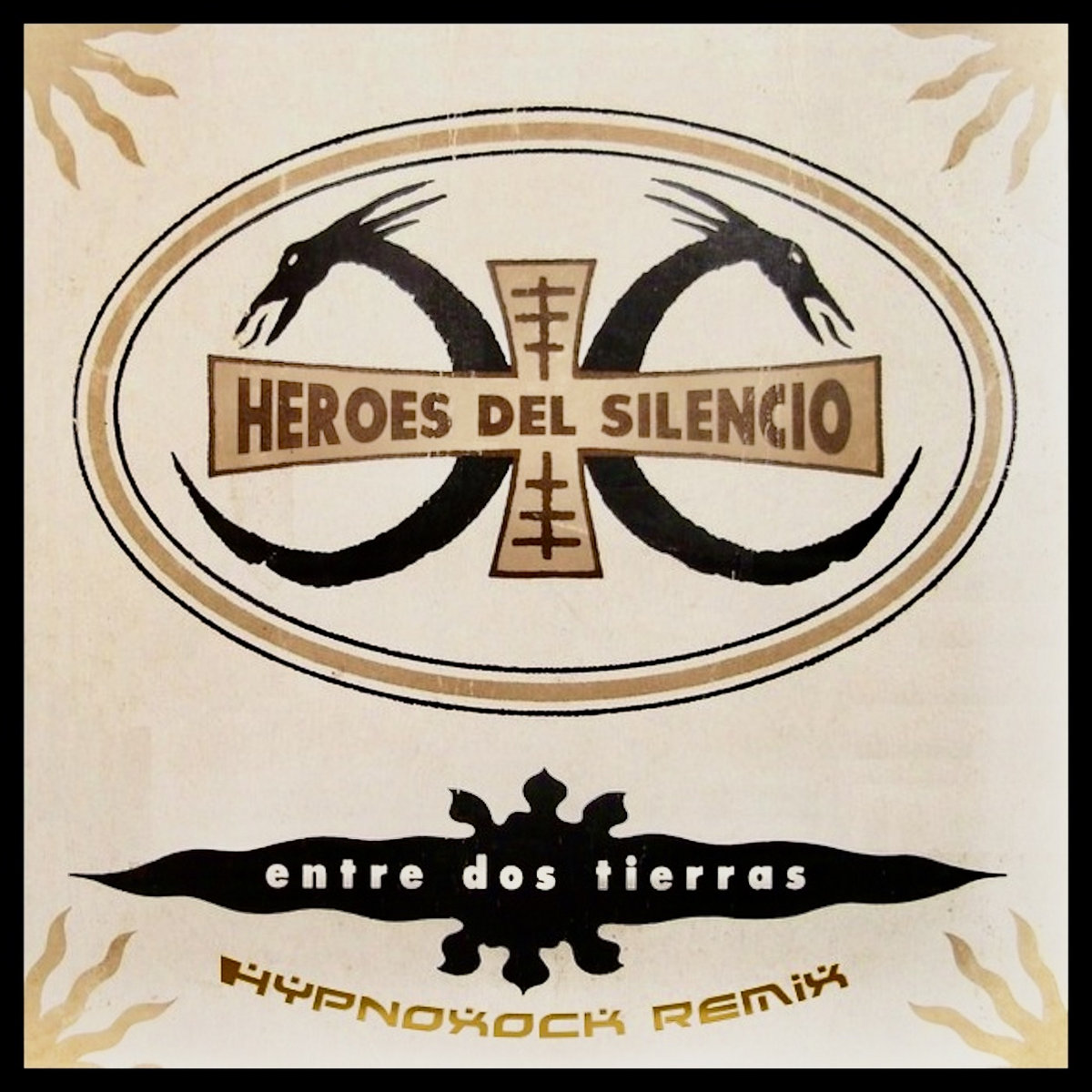
You know that opening riff. It’s a clean, chorused delay that feels like cold water hitting a hot engine. Before Enrique Bunbury even opens his mouth to growl about being "between two lands," you’re already sucked in. Entre dos tierras isn’t just a song; it’s the moment Spanish rock stopped trying to copy the British and started leading the pack.
Released in 1990 as the lead single for their second album, Senderos de Traición, the track catapulted a bunch of kids from Zaragoza into the stratosphere. Honestly, it's kind of wild how well it holds up. While other 90s tracks feel like dated time capsules, this one still sounds dangerous. It has this weird, frantic energy. It’s gothic but stadium-ready. It’s hard rock but somehow catchy enough to dominate German radio charts for weeks—which, if you know anything about the German music market in the early 90s, was no small feat for a band singing entirely in Spanish.
The Zaragozan Sound That Broke Europe
Héroes del Silencio didn't just stumble into success. They were outsiders. In the late 80s, the Spanish music scene was still largely dominated by "La Movida Madrileña," which was all about pop, synth, and a certain kind of colorful hedonism. Héroes were the opposite. They were dark. They wore leather. They had long hair and looked like they spent their weekends reading Nietzsche and Baudelaire.
When they walked into the studio with producer Phil Manzanera—yeah, the Roxy Music legend—they had something to prove. Manzanera was the secret weapon. He saw that héroes del silencio entre dos tierras had a specific tension that needed to be preserved. He didn't over-polish it. He let Juan Valdivia’s guitar breathe. That galloping rhythm section of Joaquín Cardiel and Pedro Andreu provides the "horseback" feel that makes the song feel like a chase scene.
It’s easy to forget how much people hated them at first. The Spanish press was brutal. They called them pretentious. They mocked Bunbury’s theatrical delivery. But the fans? The fans didn't care. They saw a band that treated rock and roll like a matter of life and death. By the time they toured Germany, Switzerland, and Italy, the band was playing to tens of thousands of people who didn't understand a single word of Spanish but screamed every syllable anyway.
Decoding the Lyrics: What is Bunbury Actually Talking About?
People have spent decades trying to figure out the "true" meaning of the lyrics. Is it about drugs? Is it about a girl? Is it about the band’s internal politics?
Bunbury has always been a bit cryptic, which is part of his charm. The phrase "entre dos tierras estás y no dejas de airear tu balbuceo" (you are between two lands and you won't stop airing your babbling) sounds like a direct attack. Many insiders and biographers, including Pep Blay in his work Enrique Bunbury: Lo demás es silencio, suggest it was aimed at people who couldn't commit to a path. It’s a critique of indecision and hypocrisy.
The "two lands" could represent the bridge between the old Spain and the new, or perhaps the struggle between being an underground artist and a commercial success. Or maybe it’s just about a toxic person who refuses to take a stand. That’s the beauty of it. It’s aggressive enough to be a breakup song, but philosophical enough to be a manifesto.
The imagery of "dropping a stain of red wine" on a rug is such a specific, visceral detail. It grounds the high-concept metaphors in a messy reality. You've probably felt that exact sentiment—that frustration with someone who is stuck in the middle, dragging you down with their lack of conviction.
The Technical Brilliance of Juan Valdivia
We need to talk about the guitar. If Bunbury is the soul of the band, Juan Valdivia is the nervous system. The guitar work on entre dos tierras is a masterclass in using effects to create atmosphere without losing the "crunch."
Valdivia used a combination of Vox AC30 amps and a very specific delay setting. It’s not the "wall of sound" approach that a lot of American grunge bands were using at the time. Instead, it’s intricate. It’s arpeggiated. It owes as much to The Cult and The Mission as it does to traditional Spanish folk structures.
- The Intro: A dotted-eighth note delay that creates a rhythmic "gallop."
- The Solo: It’s not about speed; it’s about melody and sustain. It feels like it’s crying.
- The Dynamics: Notice how the guitar drops out or cleans up during the verses to let the bass carry the weight, then explodes in the chorus.
This technical precision is why the song became a staple for guitarists across Europe and Latin America. It’s fun to play, but it’s incredibly hard to get the "feel" exactly right. If you’re a millisecond off on the delay, the whole thing falls apart.
Impact on the Global Rock Scene
Héroes del Silencio did something that very few Spanish-language bands had done before: they achieved genuine "crossover" success without compromising their language. They refused to record in English. They felt it would kill the soul of the music.
This decision actually made them more popular in places like Germany and France. It felt authentic. Héroes del silencio entre dos tierras became an anthem for the disenfranchised. It was played in rock clubs from Berlin to Mexico City.
The song's legacy is visible in the way Latin Rock evolved. You can hear its echoes in bands like Soda Stereo (who were contemporaries but had a very different vibe) and later in the heavier movements of the late 90s. It proved that Spanish rock could be heavy, intellectual, and commercially massive all at once.
Common Misconceptions and Trivia
Sometimes people think this was their first hit. It wasn't. They already had El Mar No Cesa, but that album was much more "pop-new wave." Entre Dos Tierras was the pivot point. It was the moment they found their true identity.
Another myth is that the band broke up because they hated each other. While there was definitely tension—mostly because they were spending 24 hours a day together on a tour bus for years—the reality was more about creative exhaustion. You can’t maintain that level of intensity forever. When you listen to the song now, you can hear that intensity. It’s the sound of a band burning at both ends.
Did you know there are dozens of covers? From metal bands like Axxis to electronic remixes, the song has been reimagined hundreds of times. But nobody quite captures the "sneer" in Bunbury’s voice when he hits that final "¡Uhhh!"
How to Experience the Track Today
If you’re just discovering the band, don’t just watch the music video on YouTube (though the 90s aesthetic is a trip). Listen to the remastered version from the Senderos de Traición anniversary editions. The separation between the instruments is much clearer.
If you really want to feel the power of the track, look for the live version from the 2007 reunion tour. Even after a decade apart, the chemistry was terrifyingly good. The crowd noise when that opening riff hits is enough to give you chills.
What to do next:
- Check out the live footage: Specifically the "Tour 2007" recording at the Foro Sol in Mexico. The scale of the crowd's reaction explains the song's power better than any essay could.
- Explore the producer: Look into Phil Manzanera’s other work with the band. He produced Senderos de Traición and El Espíritu del Vino, which are essentially the "Golden Era" of the group.
- Analyze the "Arpegio": If you’re a musician, look up the tab for the main riff. It’s a fantastic exercise in timing and using a delay pedal as an instrument rather than just an effect.
- Listen to the full album: Don’t stop at the single. Tracks like "Maldito Duende" and "La Carta" provide the necessary context for the headspace the band was in during the 1990 sessions.
The song remains a benchmark for Spanish rock because it refuses to age. It’s arrogant, it’s melodic, and it’s unapologetically loud. It’s the sound of a band standing between two lands—the past and the future—and choosing to conquer both.