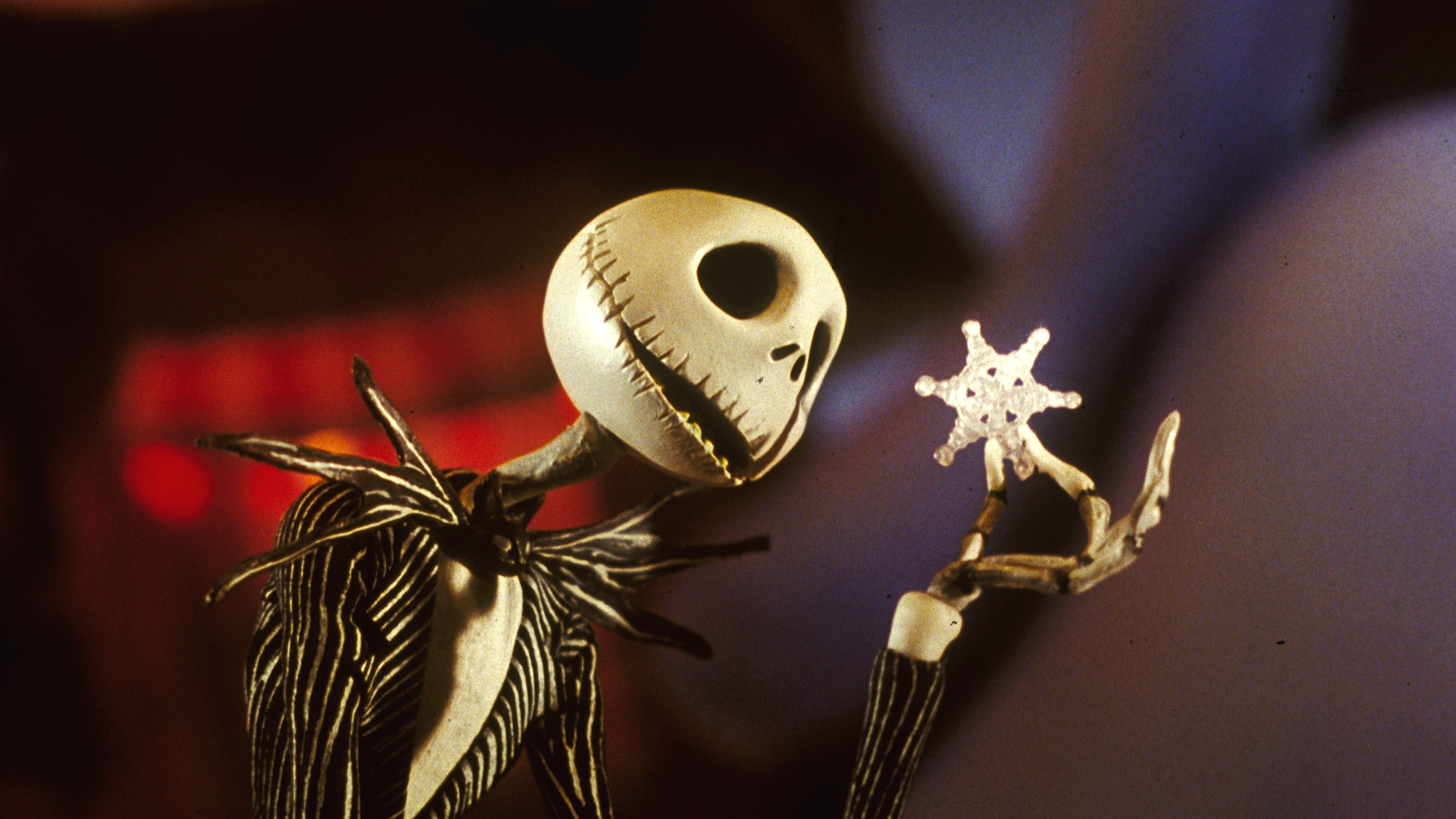
He’s the guy who literally zips his own skull open to scratch his brain. If you’ve seen the movie, you know exactly who I’m talking about. Dr. Finklestein, the resident nightmare before christmas scientist, is way more than just a grumpy guy in a motorized wheelchair. Most people just see him as the obstacle Sally has to poison with deadly nightshade to get some freedom. But if you actually look at the character design and his role in Halloween Town, he's basically the intellectual backbone of the entire operation. Without him, Jack Skellington's Christmas would have stayed a fever dream.
Finklestein is a classic mad scientist, but with a weirdly domestic twist.
He’s cranky. He’s possessive. He’s obsessed with his own creations. Honestly, he reminds me of those old-school Universal monsters mixed with a bit of a controlling father figure. While Jack is out there being the "Pumpkin King" and having existential crises in a graveyard, Finklestein is in the lab actually doing the heavy lifting of reanimating the dead. You have to wonder how he ended up in Halloween Town in the first place, or if he was "born" there like the monsters. The movie never tells us. It just drops us into his lab, surrounded by bubbling beakers and a very distinct aesthetic that screams German Expressionism.
The Science of Halloween Town
What does a nightmare before christmas scientist actually do? In Finklestein’s case, it’s a mix of robotics and necromancy. Think about Sally. She’s a ragdoll, sure, but she’s a sentient, thinking, feeling being made of literal scraps. That is a massive scientific achievement. He didn't just stitch her together; he gave her a soul, or at least a consciousness. And let’s not forget he’s the one who builds the skeletal reindeer that allow Jack to fly his coffin-sleigh.
He’s the engineer of the holiday.
Henry Selick, the director, and Tim Burton, the producer, clearly wanted a character that bridged the gap between the supernatural and the mechanical. Finklestein represents the "how" of Halloween Town. When Jack wants to understand Christmas, he doesn't go to a wizard. He goes to his own room and tries to use scientific method—beakers, microscopes, and logic—because that is the standard for "truth" in their world, largely thanks to the doctor's influence. It's funny because Jack fails miserably at the science, while Finklestein succeeds at making things that actually function, even if they're horrifying.
Why he’s actually a tragic figure
Most fans hate how he treats Sally. It’s understandable. He keeps her locked up. He treats her like an object he owns. But if you look at it from his perspective—and I’m not saying he’s a "good guy"—he’s a creator who is terrified of being alone. Every time Sally leaves, he’s left in that massive, cold laboratory by himself. He’s a pale, fragile man who can’t even move without his chair. His obsession with Sally isn't just about control; it’s about a desperate, toxic need for companionship.
When he eventually creates a second mate for himself at the end of the film—the one he shares his own brain with—it’s both gross and kind of perfect. He stops chasing Sally because he realizes he can't force someone to love him. He has to literally engineer a partner who is compatible with his own mind. Literally.
The Design Genius Behind the Wheel
The look of the nightmare before christmas scientist is iconic for a reason. His mouth looks like a ventriloquist dummy's. His head flips open. He’s got those tiny, dark goggles. According to production notes from the 25th-anniversary retrospectives, the animators had a tough time with his character because his movements were so restricted by the wheelchair. They had to convey all his emotion through his spindly arms and that hinged jaw.
It’s a masterclass in stop-motion.
If you watch closely during the scenes in his lab, the background details are insane. There are jars labeled with things like "Frog’s Breath" and "Worm’s Wort." This isn't just set dressing. It’s a reflection of his personality. He’s a hoarder of information and ingredients. He is the only character in the movie who seems to understand the chemical makeup of their world. Everyone else is just vibes and scaring people. Finklestein is the one measuring the dosage.
The Voice Behind the Madness
We can't talk about the doctor without mentioning William Hickey. His voice is what makes the character. It’s raspy, impatient, and sounds like it’s coming from someone who hasn’t slept since the 1800s. Hickey, who was an Oscar-nominated actor (for Prizzi's Honor), brought a level of gravitas to a character that could have just been a silly caricature. He makes you feel the doctor's annoyance. When he yells "Sally!" it's not just a command; it's a plea from a man who is constantly being ignored by his own creation.
Interestingly, Hickey passed away a few years after the movie came out. His performance remains one of the most quoted parts of the film for die-hard fans. "Nothing's more suspicious than frog's breath!" is a line that lives rent-free in the heads of anyone who grew up in the 90s.
Is Finklestein Based on a Real Person?
Sorta. He’s a riff on Dr. Frankenstein, obviously. But there’s also a lot of Dr. Strangelove in there. The way he maneuvers his chair and his general demeanor feels like a nod to Peter Sellers' iconic character. There’s also a bit of the "mad scientist" trope from 1930s cinema. You see it in the way his lab is laid out—high ceilings, lightning-rod vibes, and a total lack of safety protocols.
But Burton’s twist was making him part of a community. In most movies, the mad scientist lives on a hill away from everyone. In Halloween Town, Finklestein is a valued citizen. Jack respects him. The Mayor relies on him. He’s the town’s CTO. He’s the guy you call when you need the impossible built on a deadline.
The "Brain" Scene: A Breakdown
Let’s talk about the brain-scratching scene. It’s the one thing everyone remembers. Jack comes in to ask for help, and Finklestein literally opens his skull. It’s such a bold character choice. It tells you everything you need to know: he’s a man of logic who is literally irritated by his own thoughts.
It also highlights the "undead" nature of the characters. In any other movie, that’s a death scene. In this one, it’s just Tuesday. It’s a bit of body horror that fits perfectly within the whimsical, dark atmosphere of the film. It shows that for the nightmare before christmas scientist, the body is just a vessel. It’s a machine to be tweaked, opened, and modified.
How to Appreciate the Doctor Today
If you’re revisiting the movie, pay attention to the subtext of his relationship with Jack. Jack is the dreamer; Finklestein is the realist. Jack says "What if?" and Finklestein says "Here is how much power that will require." It’s a classic dynamic that mirrors the relationship between art and technology.
Sally’s rebellion against him is also more nuanced than it looks. She doesn't just hate him; she outsmarts him. She uses his own poisons against him. She uses the very herbs he keeps in his lab to facilitate her escape. It’s a beautiful irony—he taught her too well. He gave her a brain that was sharp enough to realize she deserved better than a tower.
What you can learn from Finklestein’s role:
- Logic has its limits: He can build a reindeer, but he can't understand the "feeling" of Christmas.
- Creation requires letting go: His biggest failure wasn't Sally's design; it was his inability to let her be her own person.
- Details matter: Look at his lab equipment next time you watch. The level of craftsmanship in the stop-motion props is staggering.
- Function over form: His wheelchair is clunky and loud, but it gets him exactly where he needs to go.
Final Perspective on the Madman
The nightmare before christmas scientist isn't a villain in the traditional sense. He's not Oogie Boogie. He's not trying to ruin things for the sake of being evil. He’s just a man obsessed with his craft, struggling with the social cues of a world that is moving a bit too fast for him. He’s a reminder that even in a world of ghosts and goblins, you still need someone who knows how to use a wrench.
Next time you watch the film, don't just wait for the songs. Look at the corners of the screen. Look at the way Finklestein interacts with the world. He’s the anchor that keeps the movie’s logic from floating away into pure fantasy. Without his grounded, grumpy, scientific perspective, Halloween Town wouldn't have nearly as much character.
To really get the most out of the character's legacy, check out the original concept art by Tim Burton. You'll see that Finklestein was always meant to be this fragile, cerebral counterpoint to Jack's lanky, energetic frame. It’s a visual balance that makes the whole movie work. Go back and watch the scenes where he’s assembling the reindeer—the sheer amount of work that went into animating those tiny mechanical parts is the real-world "science" that brought this masterpiece to life.