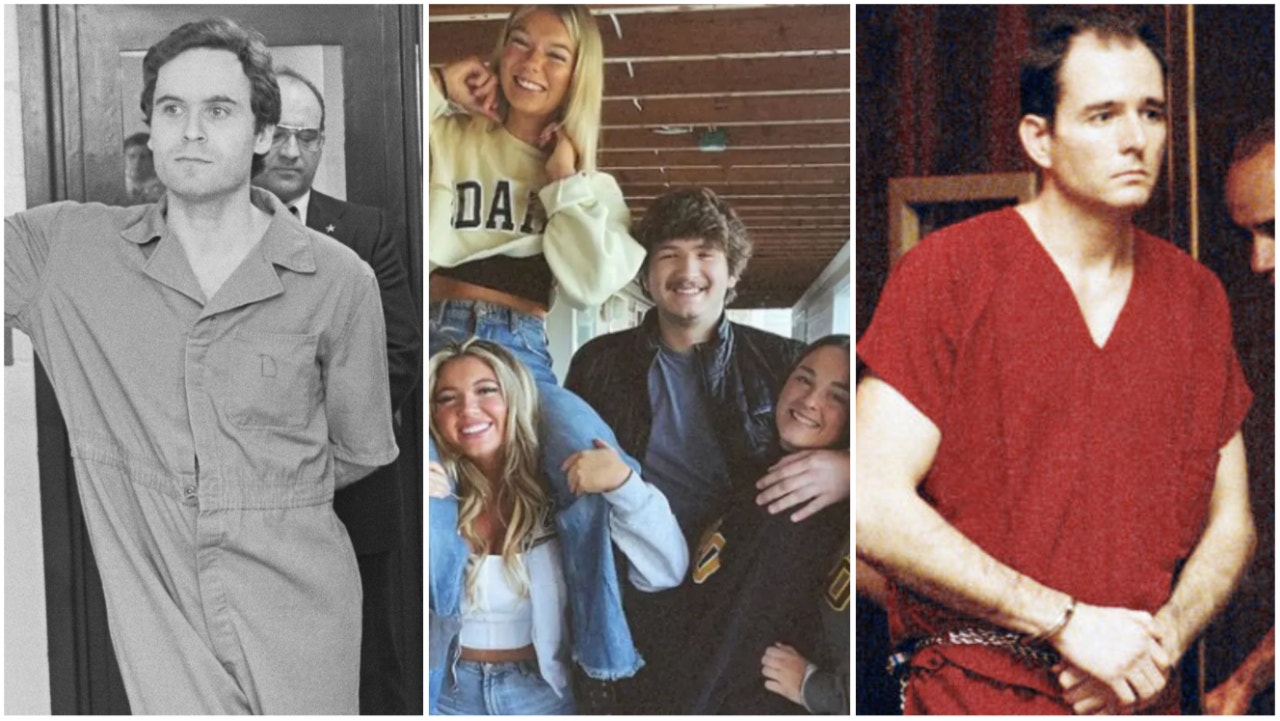
It’s a question that still haunts true crime forums and psychological studies decades after he sat in the electric chair. People often look at the grainy photos of the victims—young women with long hair parted in the middle—and wonder why they were the target. Why did Ted Bundy kill college age girls specifically? It wasn't just a random preference. It was a calculated, pathological choice that defined one of the most terrifying killing sprees in American history.
Bundy wasn't just some monster in the woods. He was a student. He was a political volunteer. He was one of them. That’s what makes the story so deeply unsettling even today. He blended in perfectly on campuses like the University of Washington or Florida State.
The Displaced Rage Against Diane Edwards
To understand the "why," you have to look at Bundy’s own life as a young man. Most criminal psychologists, including those who interviewed him like Dr. Dorothy Otnow Lewis, point back to a specific archetype: Diane Edwards. She was his first serious girlfriend. She was wealthy, sophisticated, and beautiful.
When she broke up with him, he was devastated. He felt inferior.
Years later, when he reinvented himself as a charming, upwardly mobile law student, he won her back. Then, in a chilling display of power, he dumped her. But the resentment didn't go away. Most of his victims bore a striking physical resemblance to Edwards. We’re talking about that classic 1970s aesthetic: long, dark hair, usually parted right down the middle. By targeting college age girls, Bundy was essentially killing the same woman over and over again. It was a symbolic way to reclaim the power he felt he’d lost when he was first rejected.
He wasn't just killing for the sake of violence. He was trying to "fix" a perceived humiliation in his past.
The "Hunting Ground" of the American Campus
College campuses in the 1970s were different. They were places of newfound freedom, but they lacked the security we take for granted now. No cell phones. No blue-light emergency kiosks. No GPS tracking. Bundy knew this. He knew that a girl walking from the library to her dorm at 10:00 PM was vulnerable.
He used the environment to his advantage.
Think about the way he approached people. He would often wear a fake cast on his arm or use crutches. He’d struggle with a stack of books or try to load a sailboat onto his car. He looked like a fellow student who needed a hand. When he asked, "Hey, could you help me with this?" most college girls felt a social obligation to say yes. It was a trap built on the very kindness and trust that campus life encouraged.
Why the "Age" Factor Mattered So Much
It wasn't just about looks. It was about the life stage. College age girls are in a transition. They are independent but often still possess a level of trust in authority and peers. Bundy was in his late 20s during the height of his killings. He could play the role of the "cool older student" or the "earnest professional" with ease.
He didn't want to target children, and he didn't want to target older women. He wanted women who represented the peak of social and reproductive vitality. This is a common theme in predatory psychology. There's a power dynamic involved in taking someone who has their "whole life ahead of them." It gave him a sick sense of god-like control.
Ann Rule, who worked alongside Bundy at a suicide hotline and later wrote The Stranger Beside Me, noted that Bundy seemed to thrive on the contrast between his victims' bright futures and the darkness he forced upon them.
The Florida State Massacre: A Shift in Pattern
By the time he reached the Chi Omega sorority house at Florida State University in 1978, the "why" had evolved. It was no longer just about a specific "type" or a specific resentment. It had become a full-blown addiction.
He entered that house and attacked four women in a matter of minutes. Two died; two survived with horrific injuries.
In this instance, the "why did Ted Bundy kill college age girls" question takes on a more frenzied tone. He wasn't luring them to a car anymore. He was invading their most private, supposedly safe spaces. This suggests that his need for dominance had outgrown his "charming" persona. He had become a predator who no longer cared about the ritual of the lure. He just wanted the kill.
Breaking Down the Psychology of the "Type"
- Physical Mirroring: The middle-parted hair wasn't a coincidence. It was a requirement.
- Socioeconomic Status: He often targeted girls who looked like they came from "good" families, mirroring the status he craved.
- Accessibility: Campuses provided a steady stream of targets with predictable schedules.
- The Lure: He utilized his own status as a "former student" to lower their guard.
He was a necrophile. This is a hard truth many people gloss over because it's so repulsive. His interest in these women didn't end with their deaths. He would often return to the sites where he left the bodies. This behavior reinforces the idea that he viewed these girls not as human beings, but as objects to be possessed and revisited.
The Myth of the "Genius" Killer
One of the biggest misconceptions—and something that honestly fuels the fascination with him—is that he was some kind of mastermind. He wasn't. He was sloppy. He left witnesses. He left bite marks. He was caught because of a routine traffic stop in Utah and again in Florida.
The reason he got away with it for so long wasn't his brilliance. It was the lack of communication between police departments. He moved across state lines. Washington, Oregon, Utah, Colorado, Florida. Back then, cops in one state rarely talked to cops in another. Bundy exploited the cracks in the system.
He targeted college age girls because they were the demographic he understood best—and the one he hated most for the "rejection" they represented in his warped mind.
Actionable Insights for Understanding Criminal Profiles
If you’re studying the Bundy case or looking into criminal psychology, there are several key takeaways that explain how his behavior changed the way we view safety today.
First, recognize the Modus Operandi vs. Signature. Bundy’s MO (the fake cast, the VW Beetle) was how he committed the crimes. His signature (the specific type of victim, the post-mortem behavior) was why he did it. Understanding the difference is crucial for modern profiling.
Second, consider the impact of Victimology. Investigators today look at the lifestyle and risks of the victims not to blame them, but to understand the predator's "comfort zone." Bundy’s comfort zone was the university environment.
Finally, use the Bundy case as a benchmark for how Inter-agency Cooperation has evolved. The "Green River Killer" investigation and others that followed benefited from the failures of the 1970s. Today, databases like ViCAP (Violent Criminal Apprehension Program) exist specifically to stop someone like Bundy from moving between states unnoticed.
To dig deeper into the actual evidence, look for the trial transcripts from the Florida cases. They provide a much more chilling and accurate look at his personality than any stylized Netflix documentary ever could. The bite mark evidence, while controversial in some legal circles today, remains a pivotal moment in the history of forensic odontology.
The reality is that Bundy killed because he could, because he felt entitled to these women’s lives, and because he found a demographic that he could manipulate with terrifying efficiency. He wasn't a hero, he wasn't a genius, and he certainly wasn't the "gentleman killer" some people try to make him out to be. He was a man who exploited the openness of college life to feed a bottomless need for control.