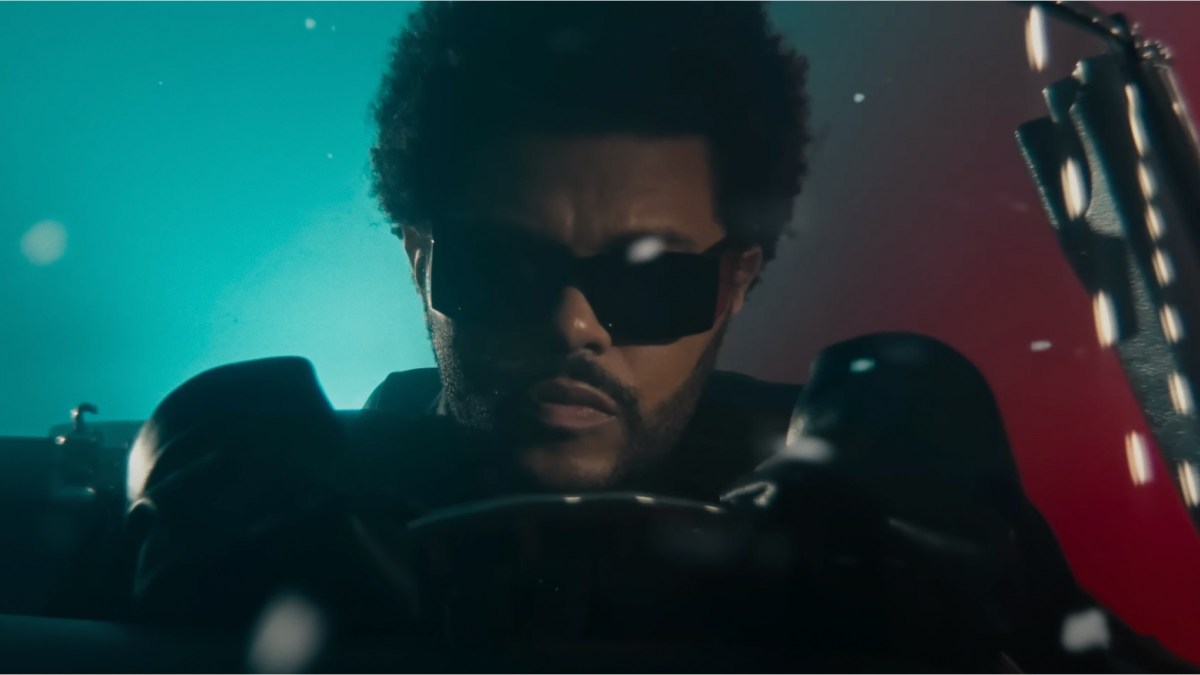
Abel Tesfaye is basically killing off "The Weeknd." It’s a weird thing to say about one of the biggest pop stars on the planet, but that’s the reality of this era. When he dropped Dancing in the Flames, it wasn't just another synth-heavy radio hit. It was a funeral march wrapped in a neon-soaked dance beat.
People keep asking if he’s okay. Honestly? He’s probably better than ever, but he’s definitely finished with the version of himself we’ve known since House of Balloons. If you listen closely to the lyrics and watch that high-speed, chaotic music video, you realize he isn't just singing about a car crash. He’s singing about the end of an identity.
The Raw Energy Behind Dancing in the Flames
The track serves as the lead single for his upcoming album, Hurry Up Tomorrow. This record is the final piece of a trilogy that started with After Hours and continued through the purgatory-themed Dawn FM.
While After Hours was about the self-destructive glamour of Vegas and Dawn FM was the sound of a radio station in the afterlife, Dancing in the Flames feels more grounded. It’s visceral. Max Martin and Oscar Holter are back on production, so you get that polished, 80s-inspired shimmer, but there’s a grit to it that feels new.
It's fast.
The tempo mimics a heartbeat during a panic attack. He talks about "indecision" and "trapped in the fire." Most pop songs about fire are metaphorical—usually about passion or heartbreak. With Abel, it feels literal. He’s looking at the wreckage of his past personas and choosing to stay in the heat rather than run away.
Think about the music video for a second. It was shot entirely on an iPhone 16 Pro. Usually, when artists do "shot on iPhone" promos, they look like student films or overly processed tech demos. This one didn't. Director Anton Tammi—the same genius behind the "Blinding Lights" visuals—used the phone’s cinematic capabilities to capture Abel in a rainstorm that looked like it was falling in a different dimension.
The contrast is wild. One minute he’s bathed in this ethereal blue light, and the next, he’s surrounded by the jagged, orange glow of a literal disaster. It’s a metaphor for his career: beautiful, but constantly on the verge of a total breakdown.
Why the Lyrics Hit Different This Time
Some critics say he’s repeating himself. I disagree.
If you look at the bridge of Dancing in the Flames, he’s hitting notes that feel more desperate than the cool, detached vibe of Starboy. He’s vulnerable. He’s admitting that he can’t see the horizon. For a guy who has spent a decade being the "coolest person in the room," admitting he’s lost is a huge narrative pivot.
The Trilogy's Final Act
The fan theories are everywhere. Some people think the "fire" is the industry itself. Others think it’s a specific reference to his transition into film and his desire to be known as Abel Tesfaye rather than a stage name.
- After Hours: The Red Suit. The Night. The Loss of Control.
- Dawn FM: The Old Man. The Purgatory. The Acceptance of Death.
- Hurry Up Tomorrow: The Rebirth. The Fire. The New Name.
There is a specific line about "the world on fire" that feels like a callback to his earlier work, but the perspective has shifted. He’s no longer the one setting the fire; he’s the one surviving it.
The Technical Wizardry of the iPhone 16 Pro Shoot
We have to talk about the tech side for a minute because it actually changed how the song was perceived.
When it was announced that Dancing in the Flames would be the centerpiece of Apple's keynote, some fans were worried it would feel like a commercial. It didn't. Tammi used the 4K 120fps ProRes Video to create this hyper-realistic slow motion.
It makes the rain look like glass shards.
This isn't just "good for a phone." It’s a statement on the democratization of high-end visuals. If the biggest artist in the world can shoot his lead single on a device you carry in your pocket, the barrier for entry in the music industry just evaporated.
But there’s a catch.
You still need Anton Tammi’s eye. You still need Erik Henriksson’s cinematography. The tech is just the tool. The song provides the soul, and the soul of this track is undeniably dark, despite the upbeat rhythm. That’s the "Weeknd Magic"—making you want to dance to a song about a life-altering tragedy.
What Most People Get Wrong About the Transition
The common misconception is that Abel is "quitting" music.
He’s not. He’s just retiring the character.
The Weeknd is a persona built on excess, drugs, and a specific kind of toxic loneliness. You can’t play that character forever without it becoming a caricature. Dancing in the Flames is the bridge between the character and the man.
He’s stripping away the prosthetic makeup and the masks. In the live performances of this track—specifically the massive show in São Paulo—he looked more present than he has in years. He wasn't hiding behind a gimmick. He was just standing there, singing his heart out while the stage literally burned around him.
Actionable Insights for Fans and Creators
If you’re trying to keep up with the lore or apply his strategy to your own creative work, here is how you should approach this era.
Study the visual continuity. Notice how the color palette of his videos has evolved from deep reds to cold blues and now to a mixture of blinding white and orange. If you’re a visual artist, look at how he uses lighting to tell a story without saying a word.
Look at the rollout strategy. He didn't just drop a song; he dropped a tech partnership, a live-streamed concert, and a cryptic social media blackout. It’s a multi-sensory experience. To stay relevant in 2026, you can't just release a file to Spotify. You have to build a world.
Listen to the production layers. If you’re a producer, pay attention to the side-chaining on the bass in this track. It creates a "push and pull" effect that makes the listener feel physically involved in the movement of the song. It’s a masterclass in tension and release.
Accept the change. For the "OG" fans who want Trilogy vibes forever: it’s time to let go. Abel is moving toward something more cinematic and perhaps even more "pop" in the traditional sense, but the darkness is still there—it’s just more refined now.
The fire isn't going out. It's just changing shape. By the time Hurry Up Tomorrow fully lands, the artist formerly known as The Weeknd will likely have completed one of the most successful rebrands in music history. He’s not just dancing in the flames; he’s using them to forge something entirely new.
Keep your eyes on the credits of his upcoming projects. You’ll see "Abel Tesfaye" taking more prominence. This isn't just about a song. It’s about a legacy.
To get the most out of this era, go back and watch the São Paulo performance on YouTube. Pay attention to the transition from "Wake Me Up" into Dancing in the Flames. The sonic narrative is much clearer when you hear them in sequence. It becomes less about a single hit and more about a coherent, albeit chaotic, journey toward the light.