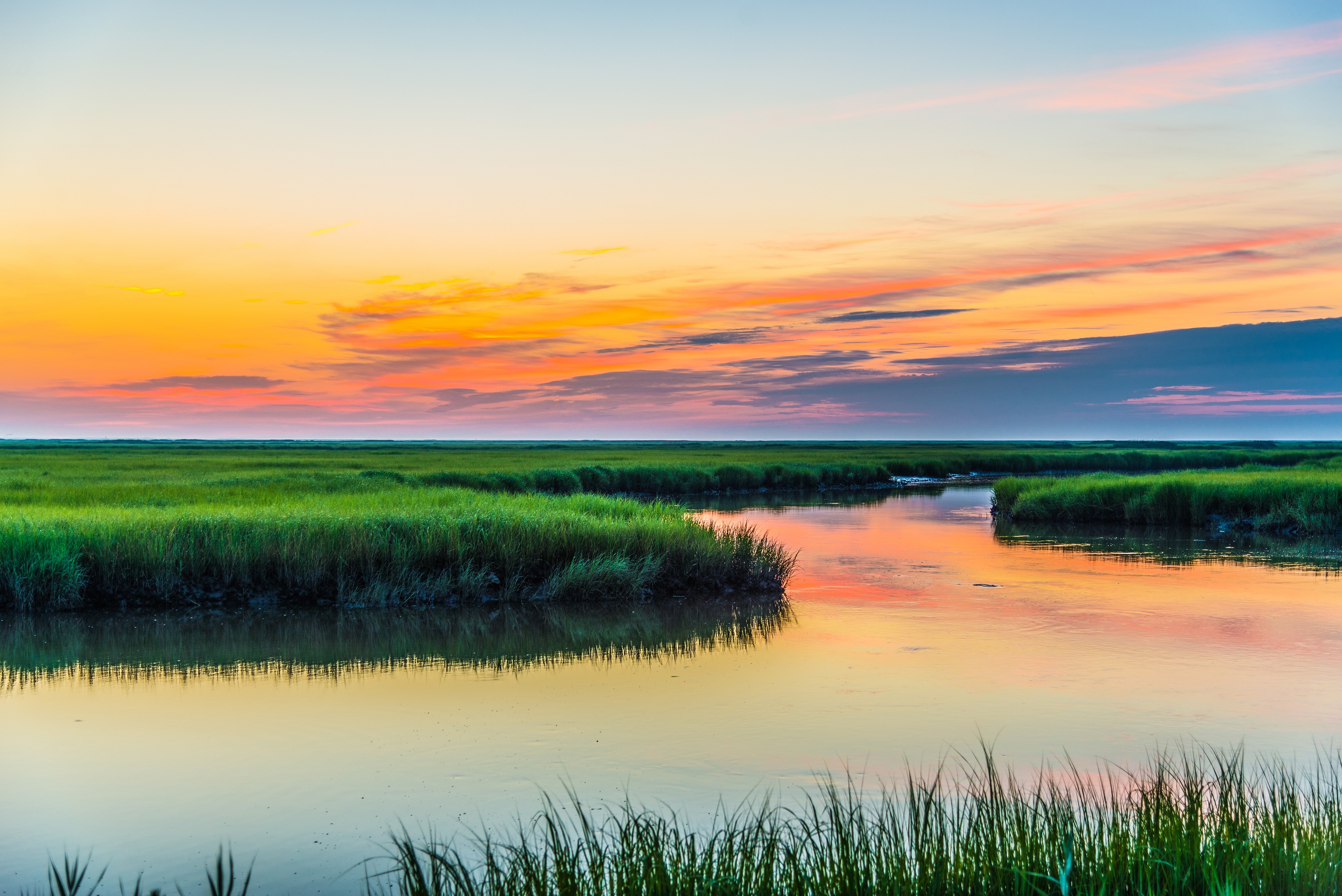
You’re driving down a narrow road in Kent County, Delaware, and suddenly the trees just... stop. Everything opens up. It’s flat, salty, and smells like mud and tide. This is Bombay Hook National Wildlife Refuge, and if you’ve never been, you’re missing out on one of the most raw, strangely beautiful stretches of the Atlantic coast. Most people think of the beach when they think of Delaware. They think of Rehoboth or Dewey. But Bombay Hook is different. It’s 16,000 acres of tidal salt marsh that feels like it hasn't changed since the 1600s. Honestly, it’s kind of a miracle it’s still here.
Back in 1937, the government bought this land using Duck Stamp money. It was a big deal then, and it’s a bigger deal now because so much of the surrounding Mid-Atlantic has been paved over. If you're a birder, this is your Super Bowl. If you're just someone who likes quiet spaces, it's a sanctuary.
The 12-Mile Loop is the Main Event
Most folks start at the visitor center, grab a map, and hit the 12-mile Auto Tour route. It’s easy. You don't even have to get out of your car if you don't want to. But you should.
The loop takes you past fresh and brackish water pools called "impoundments." These aren't just random puddles. They are carefully managed habitats with names like Raymond, Shearness, and Bear Swamp. Depending on the time of year, these pools are either packed with life or eerily still.
I’ve spent hours sitting at Shearness Pool. One time, the water was so thick with Snow Geese that you couldn't see the surface. It looked like a literal blanket of white. Then, something—maybe a Bald Eagle—spooked them. Fifty thousand birds took flight at once. The sound? It’s not a chirp. It’s a roar. It sounds like a freight train passing three feet from your head. You feel it in your chest.
Why Winter is Secretly the Best Time to Go
Everyone wants to visit in the spring. Sure, the shorebirds are migrating, and the weather is nice. But have you ever been to a marsh in June? The "strawberry flies" and mosquitoes will eat you alive. They are relentless. They don't care about your DEET.
Winter is different. It's cold, yeah, but the air is crisp and the visibility is insane. This is when the Northern Harriers come out. You'll see them skimming low over the golden marsh grass, hunting for voles. They have these owl-like faces that help them hear their prey. Watching a Harrier hunt is like watching a masterclass in low-altitude flight.
- The Snow Geese: They usually show up in massive numbers from November through February.
- The Tundra Swans: Look for them in the deeper parts of the impoundments. They’re bigger than the geese and have that high-pitched, melodic "woo-hoo" call.
- Northern Pintails: These are arguably the most elegant ducks in the refuge. Long necks, pointy tails. Very classy.
It’s Not Just About the Birds
While Bombay Hook National Wildlife Refuge is famous for avian life, the mammals here are underrated. If you head out toward the Bear Swamp trail right at dusk, keep your eyes on the edges of the woods. You’ll see White-tailed deer, obviously. But you might also spot a Red Fox or even a River Otter.
The otters are the best. They’re playful, chaotic, and loud. Seeing one slide off a muddy bank into a frozen-over pool is a highlight of any trip.
The Allee House
There’s a brick house on the property that looks like it belongs in a period drama. It’s called the Allee House. Built around 1753, it’s an example of early Flemish bond brickwork. It’s currently closed for interior tours because old houses are expensive to maintain, but you can walk around the grounds. Standing there, looking out over the marsh, you realize that people have been farming this salt-sprayed land for centuries. It puts things in perspective.
Things Most People Get Wrong
A common mistake is rushing. People drive the 12-mile loop in twenty minutes and say, "I didn't see anything." Well, yeah. You were going 25 miles per hour. You have to crawl. Stop the car. Turn off the engine. Listen.
Another misconception? That you need a $5,000 camera lens to enjoy it. You don't. A cheap pair of 8x42 binoculars will change your entire experience. Suddenly, that brown lump on a distant snag isn't a lump—it's a juvenile Bald Eagle tearing into a fish.
The Reality of Climate Change Here
We have to talk about the water. Bombay Hook is on the front lines of sea-level rise. You can see it in the "ghost forests"—stands of dead cedar trees that have been drowned by salt water pushing further inland. The refuge staff is constantly fighting to maintain the dikes that keep the freshwater pools fresh. It’s a constant battle against the Atlantic. It’s worth noting that if sea levels keep rising at the current rate, the entire geography of the refuge could look completely different in fifty years. It might just be open water.
Pro Tips for Your Visit
- Check the Tide Table: If you want to see shorebirds (like Avocets or Hudsonian Godwits), you want to be there when the tide is high in the Delaware Bay. When the bay is deep, the birds are forced into the refuge impoundments where you can actually see them.
- The Tower: Climb the observation tower at Raymond Pool. It gives you the "eagle eye" view of how the marsh connects to the bay.
- Sunscreen and Water: Even in the winter, the reflection off the water will fry your face. And there are no vending machines out on the loop. Pack a lunch.
- Entry Fee: It’s usually about $5 per vehicle, but if you have a Federal Duck Stamp or an America the Beautiful pass, you’re golden.
Bombay Hook National Wildlife Refuge isn't a theme park. It’s not curated for your comfort. It’s muddy, it can be smelly, and sometimes the wind will bite right through your coat. But it’s one of the few places left where the wild feels actually wild.
What to Do Next
- Download the Merlin Bird ID App: It’s free and it will help you identify what you’re looking at in real-time.
- Check the Recent Sightings: Go to eBird.org and search for Bombay Hook. Local birders post what they saw that morning, so you know exactly which pool has the rare stuff.
- Pack Layers: The wind off the Delaware Bay is significantly colder than it is five miles inland.
- Clean Your Windows: Seriously. If you're doing the Auto Tour, you'll be looking through glass half the time. A clean windshield makes a huge difference.