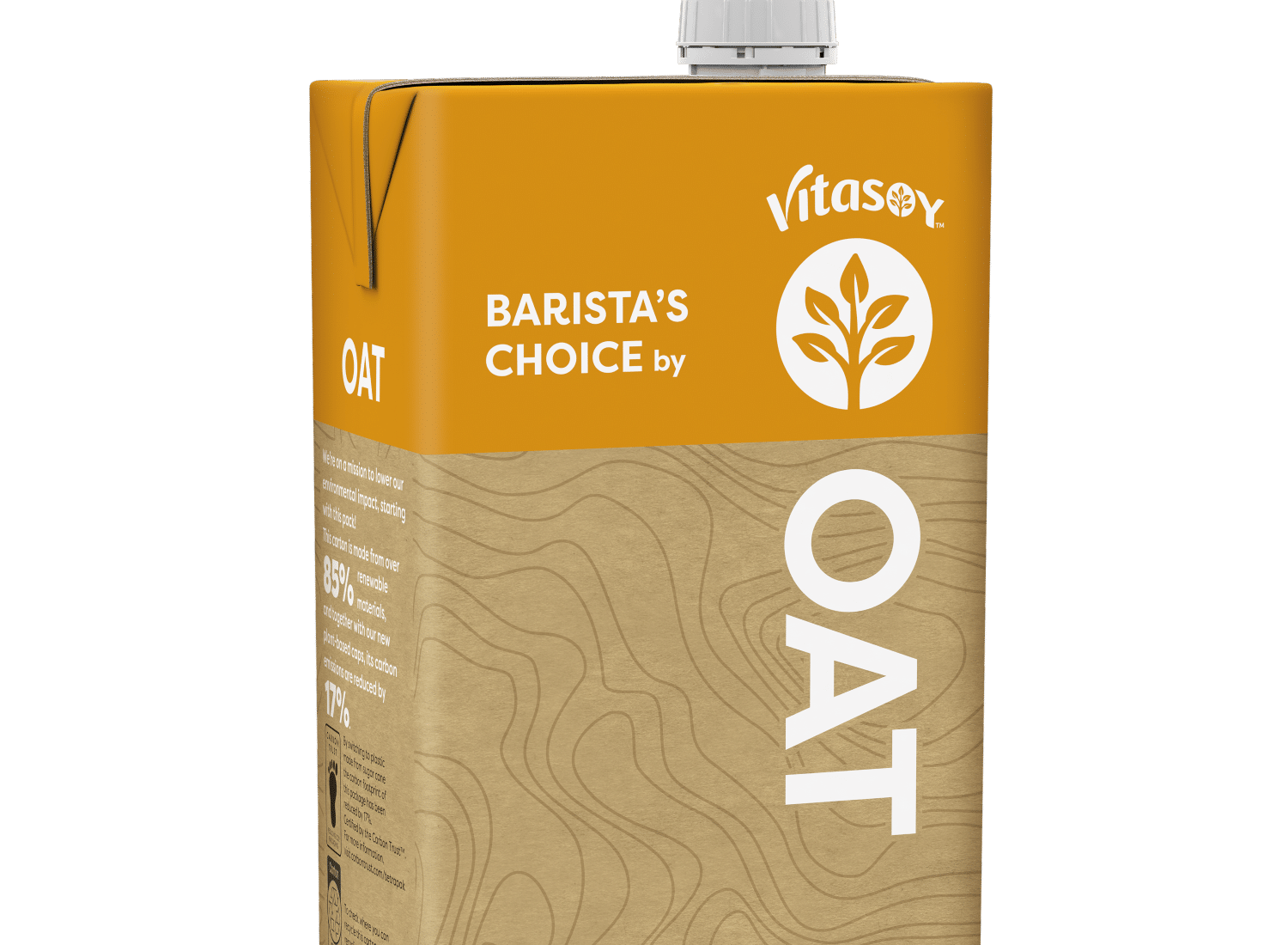
Ever stood in the dairy aisle staring at a dozen different cartons of oat milk and wondered why one costs three dollars more because it says "barista" on the front? It’s annoying. You might think it’s just a marketing gimmick to get you to spend more on your morning caffeine fix, but honestly, there’s some pretty specific chemistry happening inside those cartons. If you’ve ever tried to froth regular oat milk at home only to have it turn into a watery, gray mess that tastes like wet cardboard, you already know something is up. Barista choice oat milk isn't just about the branding; it’s about fat content, acidity regulators, and how the liquid reacts when it hits a 160-degree stream of pressurized steam.
The truth is, oats are naturally quite lean. Unlike cow's milk, which comes packed with various fats and proteins that create a stable foam structure, oats are mostly starch. When you’re making a latte, you’re looking for "microfoam"—those tiny, silky bubbles that make the drink feel creamy rather than bubbly like soap suds. Standard oat milk usually lacks the structural integrity to hold those bubbles. That’s why the "barista" versions exist. They are literally engineered to mimic the physical properties of dairy milk without the actual cow.
The Science of the "Barista" Label
Most people assume the difference is just more oats. It’s not. In fact, if you look at the back of a carton of barista choice oat milk, you’ll often see a slightly higher fat content than the "original" or "unsweetened" versions. Usually, this comes from rapeseed oil or sunflower oil. I know, "oil in my milk" sounds kinda gross when you first hear it, but it’s essential for the mouthfeel. Without that added fat, the espresso’s acidity would just cut right through the milk, leaving you with a drink that feels thin and sharp.
- Fat content: Usually sits around 3% to 5% in barista blends, compared to maybe 1% or 2% in standard versions.
- Dipatossium Phosphate: This is the big one. It’s an acidity regulator. Coffee is naturally acidic, and when you add plant milk to a hot, acidic environment, it tends to curdle. This salt prevents that from happening, keeping your latte smooth.
- Sugar content: Most barista milks have a bit of "enzymatic" sweetness. Manufacturers use enzymes to break down oat starches into maltose. It’s not "added sugar" in the traditional sense, but it makes the milk taste better when heated.
Oatly, for example, really pioneered this with their "Barista Edition." They realized early on that specialty coffee shops needed something that wouldn't split. If you’ve ever seen a barista pour latte art with oat milk, they’re almost certainly using a specific formulation designed for high-heat stability. You can try it with the stuff in the blue carton from the grocery store, but you’ll probably just end up frustrated.
Why the Texture Matters More Than You Think
Texture is everything in coffee. When you drink a cappuccino, you’re looking for a specific weight on the tongue. Standard oat milk is often too thin; it feels like drinking coffee-flavored water. Barista choice oat milk uses stabilizers like gellan gum or locust bean gum—though not all brands use these—to give the liquid a bit more "body."
Think about it this way: when you steam milk, you are denaturing proteins and stretching them around air bubbles. In dairy, whey and casein do the heavy lifting. In oat milk, we’re relying on a mix of oat protein and those added oils. If the balance is off, the foam collapses in seconds. You want a foam that lasts until the final sip. Brands like Minor Figures or Califia Farms have spent years tweaking these ratios because even a 0.5% difference in fat can change how the milk pours.
Comparing the Big Players
Honestly, not all barista milks are created equal. You’ve got the heavy hitters like Oatly, which has that iconic, creamy, slightly "oaty" flavor that some people love and others find a bit overpowering. Then you have Minor Figures, which is a bit more "coffee-forward." They designed their milk specifically not to mask the flavor of the beans. If you’re spending twenty dollars on a bag of single-origin Ethiopian beans, you probably don't want it to just taste like liquid oatmeal.
Then there’s the Pacific Foods Barista Series. You’ll find this in a lot of "old school" cafes. It’s reliable, but some find it a bit more "processed" tasting than the newer, boutique brands. And let’s talk about the homemade stuff for a second. Can you make your own? Sure. Will it work in a latte? Almost certainly not. Homemade oat milk is notorious for getting "slimy" when heated because the starches gelatinize. Professional barista choice oat milk undergoes a specific heat treatment and enzymatic process to prevent that slime factor.
The Environmental Argument (And Some Nuance)
One reason people flock to oat milk is the planet. It’s widely cited that oat milk uses significantly less water than almond milk and has a lower carbon footprint than dairy. According to research from the University of Oxford, producing a glass of dairy milk results in almost three times the greenhouse gas emissions of any non-dairy milk.
However, it’s not all sunshine and rainbows. The "barista" versions often come in Tetra Paks, which are notoriously difficult to recycle in many municipalities because of the layers of plastic, paper, and aluminum. Plus, the inclusion of industrial seed oils is a point of contention for the health-conscious crowd. If you’re trying to avoid inflammatory oils, the very thing that makes barista choice oat milk taste good is the thing you’re trying to avoid. It’s a trade-off. You get the perfect foam, but you’re also drinking a small amount of refined oil.
How to Use It at Home Like a Pro
If you’ve bought the good stuff, don't waste it. The biggest mistake people make is overheating. If you go past 160 degrees Fahrenheit, the sugars in the oat milk start to burn and the proteins break down. It ends up tasting like burnt popcorn. Keep it between 140 and 150 degrees.
- Shake the carton. Seriously. The minerals and stabilizers can settle at the bottom. Give it a violent shake before pouring it into your pitcher.
- Purge your steam wand. You don't want old water in your milk.
- The "Tear" sound. When you start steaming, you want a gentle "ch-ch-ch" sound—like paper tearing. This is you introducing air. Do this for about 3-5 seconds, then plunge the wand deeper to create a whirlpool.
- Don't wait. Pour it immediately. Oat milk separates faster than dairy. If you let it sit for thirty seconds while you check your phone, you’ll have a puck of foam on top and watery liquid underneath.
Common Misconceptions
People often think "Barista Edition" means it has more caffeine or something weird. It doesn't. It’s just about the chemistry of the liquid. Another myth is that it’s "healthier" because it’s for pros. Actually, the barista version is almost always higher in calories and fat than the regular version. If you’re drinking it for weight loss, you might be better off with the standard unsweetened stuff, even if it tastes a bit thinner.
Also, price doesn't always equal quality. Some store-brand barista milks (like the ones from Costco or Target) are surprisingly good and use almost identical ingredients to the premium brands. It really comes down to whether they’ve included those all-important acidity regulators. Without them, your morning cup is a gamble.
What’s the Best Choice for You?
If you’re just pouring it into cold cereal or a smoothie, don't buy the barista version. You’re paying for technology you aren't using. It’s like buying a Ferrari to drive to the mailbox. But if you’re a home espresso enthusiast or someone who loves a hot café au lait, barista choice oat milk is the only way to go.
Look for brands that list "Dipotassium Phosphate" if you find your coffee is always curdling. If you want a cleaner label, you might have to sacrifice some of that "stretchiness" in the foam. It’s a balance. Some people swear by the Chobani Barista blend because it’s super creamy, while others find it too sweet.
Actionable Steps for Better Coffee
To get the most out of your plant-based coffee experience, stop treating it exactly like dairy. It’s a different beast. Start by testing two or three different brands of barista choice oat milk side-by-side. You’ll be shocked at how much the flavor profile changes—some are salty, some are nutty, some are neutral.
- Check the "Best By" date: Oat milk, especially the barista versions without heavy preservatives, can go off faster than you think once opened. Use it within 7-10 days.
- Temperature control: Buy a cheap milk thermometer. If you’re eyeballing it, you’re probably burning it.
- Storage: Keep it in the back of the fridge, not the door. The door is the warmest part of the fridge, and temperature fluctuations can ruin the stabilizers.
The "barista" label isn't just a fancy word to justify a higher price tag. It's a specific tool for a specific job. Once you find the brand that hits the right notes for your specific coffee beans, you won't go back to the watery stuff. Your morning routine is worth the extra couple of dollars. Just remember to shake the carton first.