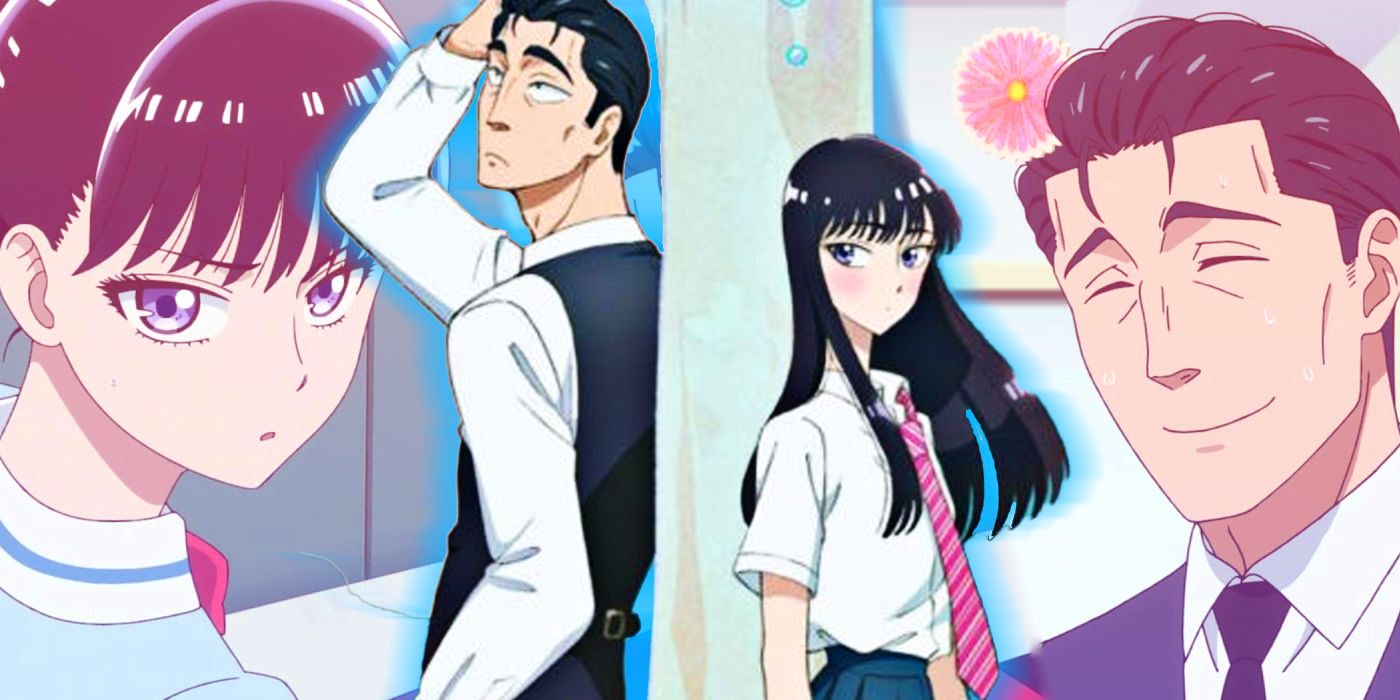
Honestly, if you just look at the cover of the After the Rain manga, you might think you know exactly what’s going on. You see a sharp-eyed, beautiful high school girl and a middle-aged man who looks like he’s given up on life. Your brain immediately jumps to "forbidden romance" or "cringe-worthy age gap story." It’s an easy trap to fall into. But Jun Mayuzuki didn't write a story about a predatory relationship or a lolicon fantasy. She wrote a story about grief.
Specifically, the grief of losing your identity.
Akira Tachibana, the protagonist, isn't just a 17-year-old girl with a crush. She’s a track star whose world ended when her Achilles tendon snapped. When you’ve spent your entire life defined by your speed, what happens when you’re forced to stand still? That’s where the story actually begins. She’s wandering through the rain, literally and metaphorically, and she ends up in a family restaurant called Garden. There, she meets Masami Kondo. He’s 45. He’s divorced. He has a kid. He smells like old books and tobacco.
He’s also incredibly kind for no reason at all.
He gives her a free cup of coffee and a simple, silly magic trick with a cream container. To Akira, this isn't a romantic spark—it’s a lifeline. She sees a man who is "stagnant," much like she feels, yet he carries on with a gentle dignity she can't quite grasp. The After the Rain manga (originally titled Koi wa Ameagari no You ni) is a masterclass in atmospheric storytelling that uses weather to mirror the internal suffocation of its characters.
The Subversion of the Age Gap Trope
Let’s be real. The 28-year age gap is the elephant in the room. In a lesser manga, this would be a story about "fixing" each other through a relationship. Mayuzuki takes a different path. Kondo is painfully aware of how it looks. He’s not a suave older man; he’s a guy who worries about his thinning hair and the fact that he’s "just" a manager at a mediocre restaurant. When Akira confesses her feelings, his reaction isn't excitement. It’s a mix of confusion, terror, and a weirdly paternal desire to protect her—even from her own impulses.
The manga treats Akira’s feelings with respect, but it never validates them as a healthy romantic pursuit. It views her crush as a symptom of her trauma. Because she can no longer run, she has transferred all that intense, youthful energy into this obsession with Kondo. He becomes a vessel for her unspent passion.
Kondo, on the other hand, sees in Akira the ghost of his own youth. He used to want to be a writer. He has shelves of literature and half-finished manuscripts that he’s hidden away because "life happened." Seeing her fire, even if it’s misdirected at him, forces him to look in the mirror. He realizes he hasn't just aged; he's stopped trying. The relationship is less of a romance and more of a mutual haunting. They are two people at different ends of their lives, both stuck in a season of rain, waiting for the clouds to break.
Visual Storytelling and the Power of Silence
Jun Mayuzuki’s art style is distinct. It’s got this 1980s retro vibe mixed with modern, crisp line work. She uses "negative space" in a way that feels heavy. You’ll have entire pages where no one speaks. You just see the steam rising from a bowl of ramen, the blur of a passing train, or the way Akira’s eyes go completely blank when she looks at the track field.
These silent moments are crucial. They communicate the isolation Akira feels from her peers. While her best friend Haruka is still running, still living in the "sunshine," Akira is trapped in the "rain." The manga uses these visual metaphors to show that healing isn't a straight line. Sometimes, you just sit in the rain for a long time before you even think about looking for an umbrella.
Why the Ending Polarized Fans
Without spoiling the specific beats, the ending of the After the Rain manga is where a lot of people got frustrated. If you were reading this for a "happily ever after" wedding, you were reading the wrong book. The conclusion is bittersweet. It’s grounded. It’s adult.
It acknowledges that some people enter our lives just to act as a bridge. They aren't meant to stay. They are there to help us get from one side of a crisis to the other. Kondo realizes his responsibility isn't to be Akira’s boyfriend; it’s to be the adult who reminds her that she still has a future, even if it doesn’t involve running. And Akira, in turn, reminds Kondo that his life isn't over just because he’s middle-aged.
The "rain" stops when they both decide to move forward separately. It’s an incredibly brave way to end a series that was marketed in a seinen magazine (Weekly Big Comic Spirits). It chose emotional honesty over fan service.
Real-World Context: The "Garden" of Lost Dreams
Interestingly, the setting of the "Garden" restaurant feels like a character itself. These family restaurants (famiresu) in Japan are liminal spaces. They are where people go when they have nowhere else to be. You see salarymen sleeping over coffee, students studying for exams they’ll probably fail, and broken athletes like Akira staring out the window.
Mayuzuki captures the mundane reality of Japanese working-class life. Kondo’s struggle isn't just about Akira; it’s about the crushing weight of "average-ness." He’s a "nice guy" in a world that doesn't reward niceness. His passion for literature—specifically his obsession with the author Ryūnosuke Akutagawa—gives him a depth that makes the reader ache for him. You want him to write again. You want him to believe he’s more than a shift manager.
Key Themes to Pay Attention To:
- The Achilles Tendon: It’s not just a physical injury; it represents the "snap" in Akira’s identity.
- Literature vs. Reality: Kondo’s love for books is his escape, but eventually, he has to live a life worth writing about.
- The Scent of the Rain: The manga constantly references smells—the smell of the track, the smell of the restaurant, the smell of Kondo’s old books. It grounds the story in a sensory reality.
How to Read After the Rain Today
If you’re looking to dive into this, the manga is complete. It ran for 10 volumes. In North America, Vertical (now part of Kodansha) released it in beautiful 2-in-1 omnibus editions. These are high-quality, large-format books that really let the art breathe.
Don’t just rush through the dialogue. Look at the backgrounds. Look at the way Mayuzuki draws Akira’s hair—it often looks like it’s flowing underwater, emphasizing her feeling of drowning in her own life.
There is an anime adaptation by Wit Studio, which is gorgeous and features a legendary soundtrack by Ryo Yoshimata, but the manga contains much more internal monologue. The manga lets you sit with the characters’ discomfort in a way the 12-episode anime can't quite replicate. There’s also a live-action film, which is surprisingly decent, but again, the source material is where the soul lives.
Actionable Insights for New Readers
If you're planning to pick up the After the Rain manga, here is how to get the most out of the experience:
- Read for the Subtext: If you find yourself getting annoyed by Akira’s persistence, ask yourself why she is clinging to this man. It’s rarely about him; it’s about what he represents—safety and a lack of expectations.
- Pay Attention to Kondo’s Friends: The character of Yoshizawa (the goofy coworker) and Kayoko (Kondo’s ex-wife) provide essential context. They show who Kondo was before he became "stagnant."
- Don't Rush the "Rainy" Chapters: The middle of the manga slows down significantly. This is intentional. It mimics the feeling of a long, drizzly afternoon. Let yourself feel that boredom and melancholy.
- Check the Literary References: Kondo mentions several Japanese authors. Looking up the themes of those authors (like Akutagawa’s focus on the grotesque and the beauty of the mundane) adds a whole new layer to Kondo’s character.
The story isn't about a girl falling in love with an old man. It's about two people finding the courage to start their lives over when they thought it was too late. It’s about the moment the rain stops and you realize you can finally see the horizon again.
To fully appreciate the depth of this work, start by reading the first two omnibus volumes back-to-back. This covers the initial "crush" phase and moves quickly into the more complex territory of their shared history and personal failures. By the time you reach the midpoint, you'll realize the "romance" was always just a heartbeat in a much larger story about human resilience.