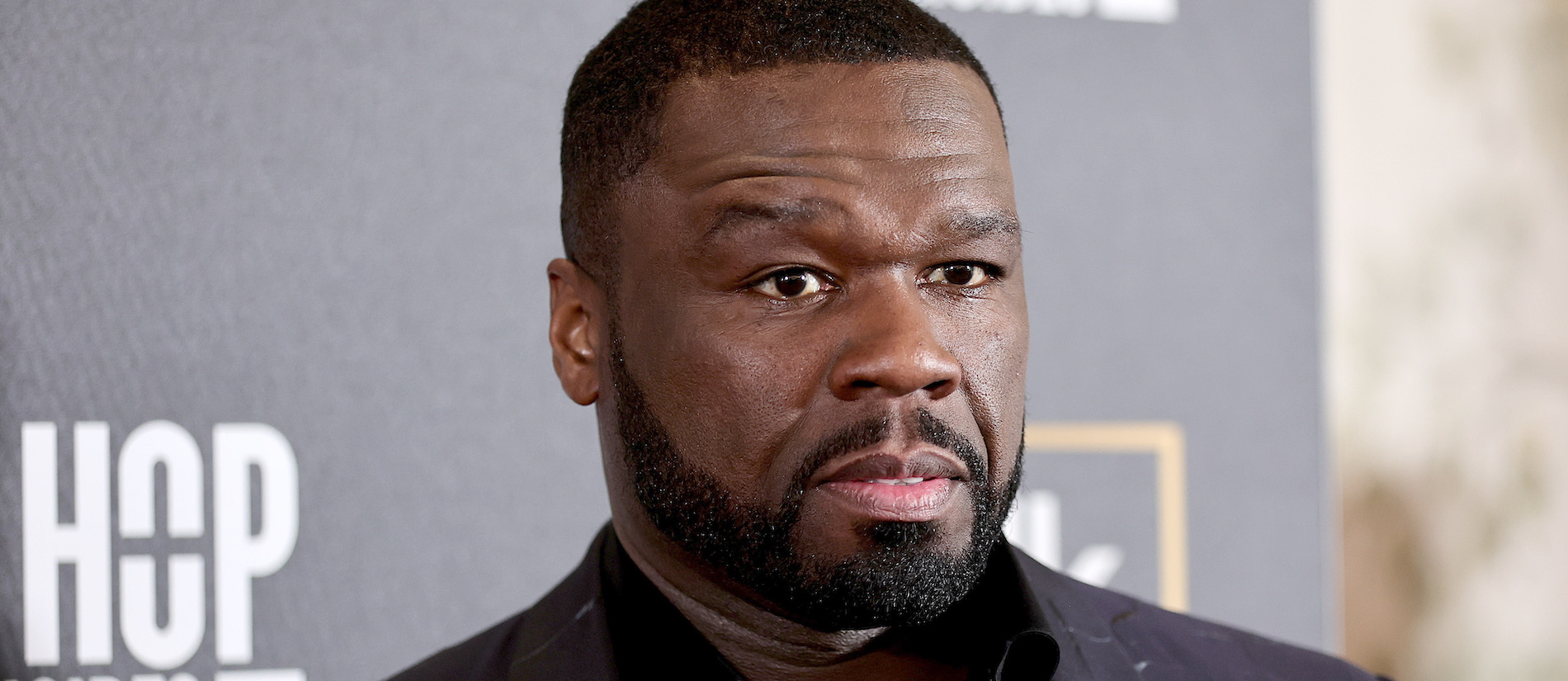
Curtis Jackson, or 50 Cent as most of us know him, wasn't always the guy you’d expect to see in a bespoke pinstripe. Think back to 2003. He was the guy in the bulletproof vest. He was the guy with the headband and the oversized Ecko Unltd. jerseys. But things changed. Honestly, the sight of 50 Cent in a suit became one of the most effective branding pivots in the history of the music industry. It wasn't just about looking sharp for a red carpet; it was a calculated signal that the "Get Rich or Die Tryin'" era was over and the era of the boardroom had begun.
He didn't just change his clothes. He changed the rules of the game.
Most rappers use fashion to show off wealth, sure. They want you to see the diamonds and the designer labels. But for 50, the suit was a weapon of legitimacy. When he walked into the meetings with Vitaminwater executives, he didn't look like a guy who just climbed out of a tour bus. He looked like a guy who was about to own the company. And, well, we all know how that ended—with a payout from Coca-Cola that basically set the blueprint for every celebrity brand deal that followed.
The evolution from the vest to the velvet blazer
It’s easy to forget how jarring it was initially. People were used to the raw, gritty aesthetic of South Jamaica, Queens. When we started seeing 50 Cent in a suit more frequently, especially around the time he started producing Power, it felt like a graduation. It wasn't just a gimmick. You could tell he was studying the fit. He wasn't wearing those baggy, four-button Steve Harvey suits from the late 90s. He was wearing tailored, slim-cut Italian wool.
This shift wasn't just about him. It influenced an entire generation of artists who realized that if they wanted to be taken seriously as CEOs, they had to dress the part.
You see, the suit acts as a bridge. It bridges the gap between the streets and Wall Street. 50 understood this better than almost anyone. He utilized his physique—that broad-shouldered, 6-foot-tall frame—to command space in a way that a t-shirt simply couldn't. It’s about psychology. When you see a man who has survived what he’s survived, and now he’s standing in a perfectly draped tuxedo at the Golden Globes, the narrative of "thug" evaporates. It is replaced by the narrative of "mogul."
Tailoring as a business strategy
Let’s get into the weeds of the style for a second. Most of the time, 50 opts for peak lapels. Why? Because they accentuate the chest and shoulders, making him look even more formidable. He often sticks to a classic palette: navy, charcoal, and black. It’s conservative but expensive. It screams "old money" even though the money is very much new and hard-earned.
He’s also a fan of the three-piece suit. There’s something undeniably authoritative about a waistcoat. It says you’ve put in the extra effort. It says you aren't in a rush. If you look at his appearances promoting the Power Universe on Starz, he’s almost always in a high-end ensemble. It mirrors his character, Kanan Stark, but with a layer of polish that suggests Jackson has moved far beyond the character he plays on screen.
Why the suit matters for the "Power" brand
The show Power changed everything for how the public perceives 50 Cent. As an executive producer, he wasn't just a name on the credits; he was the face of a burgeoning media empire. Seeing 50 Cent in a suit during press junkets and upfronts was a visual shorthand for his new role. He was the boss. Not the "rap boss," but the television executive boss.
The wardrobe choices in Power itself reflected this. Think about Ghost. James St. Patrick’s entire identity was built on the suit. 50, as a creator, understood that the suit was the armor of the modern businessman. By wearing them himself in real life, he blurred the lines between his fictional world of high-stakes power plays and his real-world business maneuvers.
- The Fit: He usually goes for a structured shoulder.
- The Shirt: Crisp white or light blue, usually with a French cuff.
- The Accessories: Subtle. A high-end timepiece, maybe a silk pocket square. He stays away from the "too much" territory that can make a suit look like a costume.
It’s interesting to note that he often skips the tie these days. The "air tie" look—a suit with an open collar—is a classic mogul move. It says, "I'm professional enough to wear this jacket, but I'm successful enough that I don't have to choke myself with a silk knot." It’s a subtle flex.
Breaking down the "G-Unit" to "GQ" transition
Early in his career, the G-Unit brand was all about sneakers and heavy denim. It was lucrative, sure. But it had a ceiling. You can only sell so many hoodies. When 50 started showing up to court dates, charity events, and business summits in formal wear, he was expanding his market. He was signaling to brands like Effen Vodka or his various television partners that he could play in their league.
The suit became a tool for rebranding. It allowed him to navigate spaces that were previously closed to hip-hop artists. It’s the "Jay-Z effect" but with a more aggressive, Queens-bred edge.
There's a specific image of 50 Cent that often circulates in fashion circles. He’s wearing a grey plaid suit with a black turtleneck. It’s sophisticated. It’s minimalist. It’s a far cry from the man who was once banned from certain venues because of the "energy" his presence brought. The suit is a de-escalation tactic that simultaneously increases his social capital.
Actionable insights for your own wardrobe
If you're looking to take a page out of the 50 Cent playbook, you don't need a rapper's budget, but you do need his mindset. He doesn't wear the suit; he owns it.
- Prioritize the shoulders. 50’s suits always fit perfectly at the shoulder seam. If that’s off, the whole thing looks like a hand-me-down.
- Embrace the dark neutrals. Stick to colors that convey stability. Navy and charcoal are your best friends if you want to be taken seriously in a negotiation.
- The Power of the Turtleneck. When it’s cold, swap the dress shirt for a high-quality knit turtleneck under your suit jacket. It’s a sophisticated look that 50 has mastered, and it works for almost any semi-formal business setting.
- Invest in tailoring. Even a cheaper suit can look like a million bucks if it’s taken to a local tailor to be nipped and tucked in the right places. 50’s suits look great because they follow the lines of his body.
- Confidence is the final layer. The reason 50 Cent in a suit works so well is that his posture never changes. He carries himself with the same "I'm the most dangerous person in the room" energy whether he's in a tank top or a tuxedo.
Ultimately, the transition of Curtis Jackson from a street-level phenom to a suit-wearing titan of industry is a masterclass in personal branding. He used fashion to rewrite his story in real-time. He proved that you can keep your roots while changing your leaves. The suit didn't change who he was; it just changed how the world was allowed to see him.
Next time you have a big meeting or a high-stakes event, think about that shift. Think about the "suit as armor" philosophy. It’s not about conforming; it’s about conquering. 50 didn't put on a suit to fit in with the corporate crowd. He put on a suit so he could eventually buy the building they were standing in. That's the real power move.
Mastering the Mogul Look
To truly emulate this style, start by auditing your current formal wear. Most men wear suits that are at least one size too large. Look for "slim fit" or "athletic fit" cuts that provide enough room in the chest but taper at the waist. If you’re building a wardrobe from scratch, start with a solid navy two-button suit. It is the most versatile piece of clothing a man can own. You can wear the jacket with jeans for a "smart casual" look or the full suit for a wedding or a board meeting.
Avoid the temptation to over-accessorize. Let the quality of the fabric and the precision of the fit do the talking. As 50 Cent has shown us over the last two decades, true power doesn't need to shout; it just needs to be impeccably dressed.