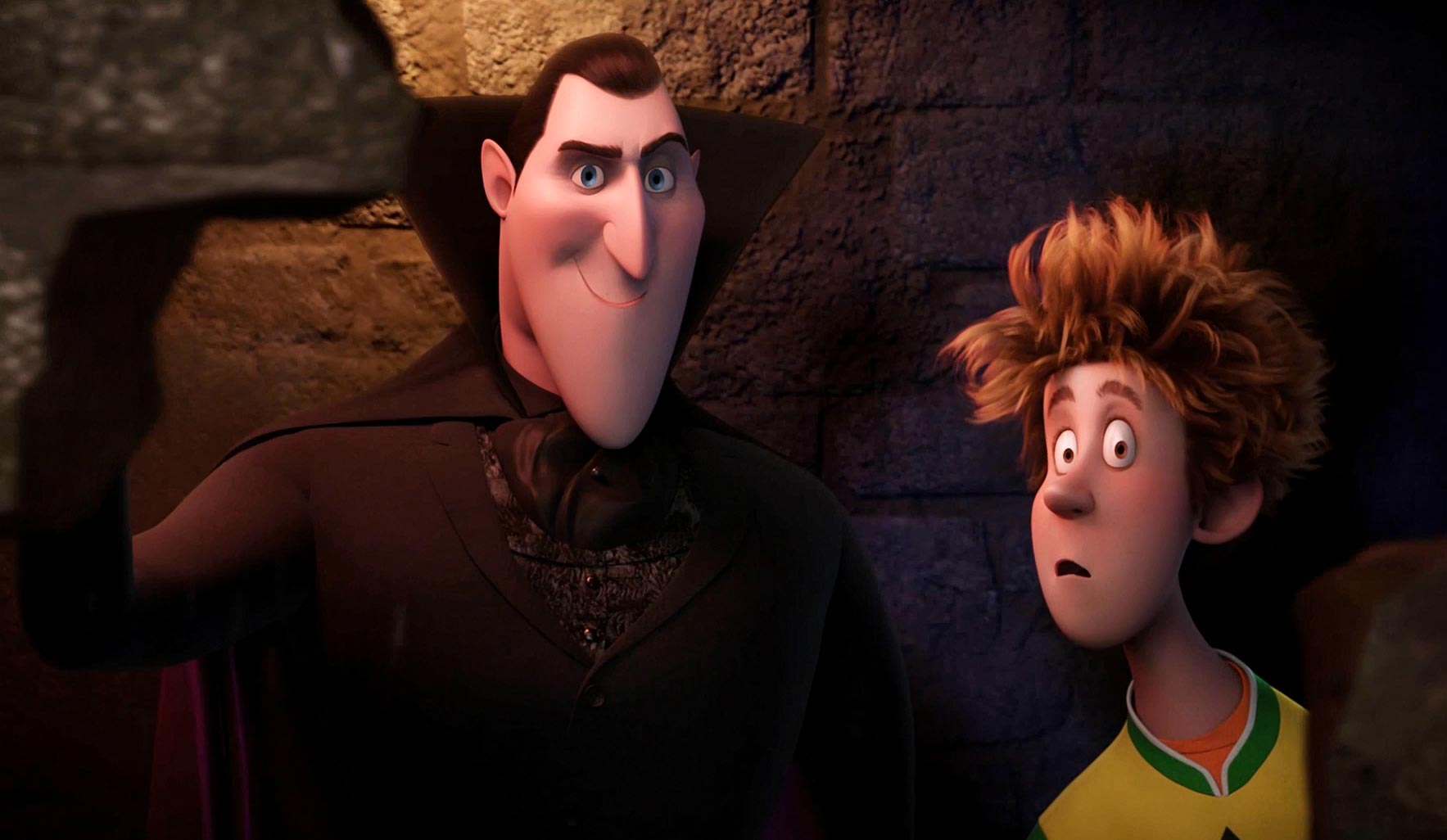
You know that feeling when you're watching a movie and a character pops up who is just... a lot? In the Hotel Transylvania universe, that happens a dozen times an hour. But when people search for the old guy from Hotel Transylvania, they aren't usually talking about Dracula. Drac is the star. He’s "immortal," sure, but he doesn’t really feel old in the grumpy, ancient, or decrepit sense.
Usually, when someone is trying to put a name to that one specific "old guy," they are thinking of one of two characters who stole the spotlight with their sheer eccentricity. Most of the time, it’s Quasimodo Wilson, the hot-tempered chef from the first film. Other times, it’s Vlad, Dracula’s incredibly old-school (and literal) father who shows up later in the franchise.
Let's be real: Sony Pictures Animation packed these movies with so many background monsters that it’s easy to get them mixed up. But these two? They stand out. One is a culinary genius with a hatred for humans; the other is a vampire from an era when "blah blah blah" wasn't a joke.
The Quasimodo Chaos: Why Everyone Remembers the Chef
If you're thinking of a short, hunched-over, energetic old guy with a giant nose and a chef’s hat, that’s Quasimodo. He’s voiced by David Spade, which honestly explains a lot about the character's snarky, high-strung energy.
Quasimodo isn't just a background cook. In the first movie, he’s basically the primary antagonist within the hotel’s walls. While Dracula is busy trying to hide Jonathan (the human) from the other monsters, Quasimodo is the only one whose "human-dar" is actually working. He spent years perfecting his senses. He smells a human and immediately wants to turn them into a pot pie.
It’s kind of dark when you actually think about it.
His sidekick, Esmeralda the rat, is his eyes and ears. They have this weird, co-dependent relationship where she sniffs out the "non-monsters" and he goes into a violent culinary frenzy. The scene where he’s trying to cook Jonathan while Dracula tries to stop him using "frozen time" is a masterclass in slapstick. But why does he stick in our brains? It’s the voice. Spade plays him with this weird, faux-French accent that is both annoying and hilarious.
Honestly, Quasimodo represents that classic trope of the "grumpy old employee" who has been at the job way too long and has lost all patience for the boss’s nonsense.
Vlad: The Real "Old Guy" of the Bloodline
If the guy you’re thinking of is much taller, wearing a long cape, and looks like he hasn't seen the sun since the 1400s (even by vampire standards), you’re thinking of Vlad.
Introduced in Hotel Transylvania 2, Vlad is Dracula’s father. He’s voiced by the legendary Mel Brooks. This was a casting stroke of genius. Brooks brings that "Old World" Jewish comedy vibe that fits perfectly with a vampire who thinks his son has gone soft.
Vlad is the definition of "stuck in his ways."
He lives in a cave. He hates humans. He thinks vampires should be scary, not running boutique hotels for tourists. When he shows up to Dennis’s birthday party, he brings a level of genuine menace that the series hadn't really seen yet—at least until he realizes his great-grandson is "human-ish" and starts to soften up.
The interesting thing about Vlad is his design. He’s blue-ish. He’s thin. He has these massive ears and a flat nose that makes him look way more like the traditional Nosferatu than the polished, tuxedo-wearing Dracula. He’s the old guy from Hotel Transylvania that represents the history of the horror genre itself.
A Quick Breakdown of the "Old Guys"
- Quasimodo: Short, wears white, obsessed with cooking humans, has a rat, voiced by David Spade.
- Vlad: Tall, wears black/purple, obsessed with vampire purity, lives in a cave, voiced by Mel Brooks.
- The Gremlin Lady: Okay, not a guy, but if you're thinking of an "old person" who eats everything and has a weirdly calm demeanor, it’s her. She’s the one who says "I didn't do it" after swallowing a whole scooter.
Why the "Old Guy" Archetype Works in these Movies
Genndy Tartakovsky, the visionary director behind the first few films, loves exaggerated shapes. If you look at the character designs for the older characters, they are all sharp angles or extremely round blobs.
The "old guy" characters provide a foil for Dracula’s anxiety. Dracula is a helicopter parent. He’s stressed. He’s "middle-aged" in monster years. When you bring in someone like Vlad, it shows us why Dracula is the way he is. He’s a product of an even stricter generation.
Quasimodo, on the other hand, represents the old guard of the hotel staff. He’s the professional who thinks the new management (Dracula’s softer rules) is ruining the industry. It’s a relatable dynamic, even if it involves a hunchback trying to roast a backpacker.
Misconceptions About the Character Names
A lot of people think the "old guy" is actually just a version of Igor. It’s a fair guess. In classic monster movies, the hunchbacked assistant is almost always named Igor. But in Hotel Transylvania, they went with Quasimodo—traditionally the hero of The Hunchback of Notre Dame—and turned him into a villainous gourmet chef.
It’s a clever subversion. Instead of being the misunderstood soul, he’s just a jerk who happens to be a great cook.
There’s also often confusion about Vlad’s cronies. Vlad is accompanied by Bela, a large, bat-like creature who is actually the one doing the dirty work. Bela is old, mean, and looks like a gargoyle on steroids. If your memory of the "old guy" involves someone being genuinely scary and attacking kids in the woods, you’re thinking of Bela, the servant of Vlad.
Tracking the Animation Style
If you go back and watch the scenes with the old guy from Hotel Transylvania (specifically Quasimodo), pay attention to the "smear" frames. Tartakovsky uses a style that mimics 2D hand-drawn animation.
Quasimodo moves faster than almost any other character. He zips across the kitchen like a pinball. This high-energy movement is part of why he’s so memorable. It’s not just the look; it’s the chaotic kinetic energy he brings to the screen.
Vlad, by contrast, is very still. He moves with a slow, deliberate grace. He’s like a statue that occasionally decides to speak. This contrast between the "old" characters—the hyperactive chef and the frozen-in-time vampire lord—shows the range of the animation team.
The Cultural Impact of Mel Brooks as Vlad
You can't talk about Vlad without mentioning the E-E-A-T (Experience, Expertise, Authoritativeness, and Trustworthiness) of the casting. Mel Brooks is comedy royalty. By having him play the oldest vampire, the movie pays homage to Young Frankenstein and the entire history of monster spoofs.
When Vlad grumbles about how things used to be, it’s not just a script. It’s a wink to the audience who knows Brooks’ work from the 1970s. This layer of meta-humor is why parents actually enjoy these movies. The "old guy" isn't just a gag for the kids; he's a tribute to the legends of cinema.
What Most People Get Wrong About Quasimodo
There's a common theory online that Quasimodo died at the end of the first movie because he was shoved into a freezer or "stuck" in a certain state. Actually, if you watch the credits and the sequels, the monsters are generally fine.
Quasimodo was basically "cancelled" in the monster world for trying to cook a guest. He doesn't return in the sequels as a main player because his story was told. He was the obstacle that forced Dracula to admit Jonathan was a human. Once that secret was out, Quasimodo's role as the "whistleblower" was over.
Practical Takeaways: Identifying Your Character
If you’re trying to settle a bet or find a specific clip, use these identifiers:
- Search for "Quasimodo Hotel Transylvania" if you want to see the kitchen scene, the "human pie" song, or the interaction with the frozen suit of armor.
- Search for "Vlad Dracula's Father" if you're looking for the birthday party scene, the giant bat transformation, or the "Vampire Camp" flashbacks.
- Check the Voice Credits: If it sounds like David Spade, it’s the chef. If it sounds like a grumpy old grandpa with a thick accent, it’s Mel Brooks.
The old guy from Hotel Transylvania might seem like a minor detail in a franchise full of talking wolves and invisible men, but characters like Quasimodo and Vlad provide the friction that makes the story move. They are the link to the "scary" past of monsters, making Dracula’s journey toward acceptance much more meaningful.
Next time you watch, look at the background of the lobby scenes. You'll see dozens of elderly monsters, from shriveled mummies to ancient sea creatures. The hotel is, after all, a retirement home of sorts for those who just want to hide from the pitchforks and torches of the modern world.
What to Watch Next
If you enjoyed the dynamic of the older characters in these films, you should specifically check out the short film Goodnight Mr. Foot, which was also directed by Genndy Tartakovsky. It features a similar animation style and focuses on a big-foot-like creature staying at the hotel, dealing with a very tired, very "done with life" maid who fits that same "grumpy old monster" archetype perfectly.
You can also look into the Hotel Transylvania television series, though keep in mind the voice cast is different and Quasimodo's role is much smaller. The films remain the definitive place to see these characters in their full, chaotic glory.
To dig deeper into the lore, look for the "Art of Hotel Transylvania" books. They show the original sketches for Vlad, which were much more terrifying before they decided to go with a more comedic, "Mel Brooks" look. Seeing those early designs gives you a real appreciation for how much work goes into making an "old guy" look both ancient and approachable.
Ultimately, whether it's the frantic chef or the stern grandfather, these characters prove that even in a world of immortal monsters, there's always someone older, grumpier, and more convinced that "back in my day" was better.