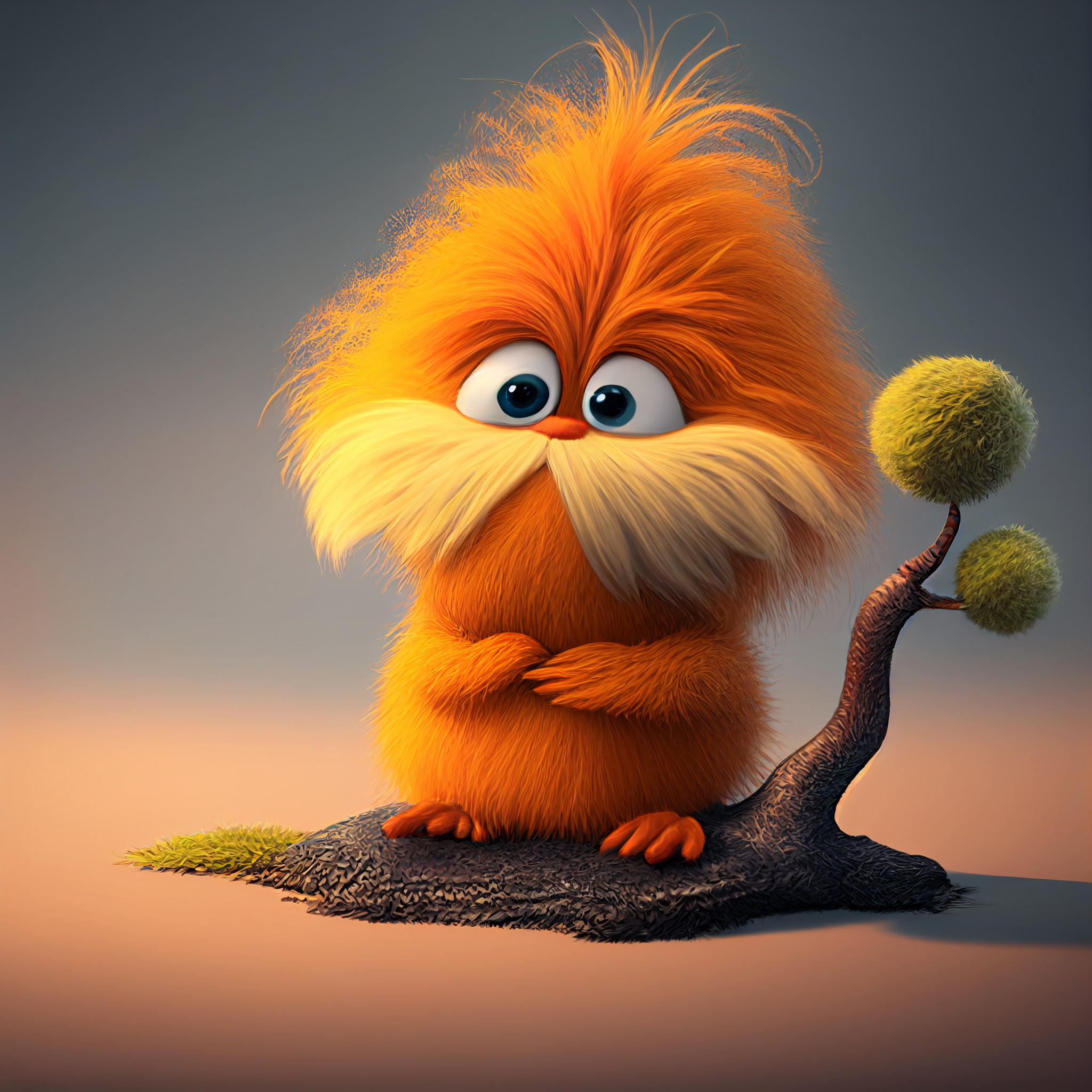
You’ve seen him. Even if you haven't watched the 2012 film The Lorax in a decade, you know exactly who I’m talking about. He’s the guy with the side-swept black hair, the striped tie, and the perpetual look of "I’d rather be at a My Chemical Romance concert." He stands there in the middle of Thneedville, a town made of plastic and corporate greed, looking like he just stepped out of a 2006 Hot Topic. He is the emo kid from The Lorax.
Honestly, it’s kind of wild. Most background characters in Illumination movies disappear into the digital ether the second the credits roll. Not this guy. For years, he’s been a staple of Tumblr aesthetic boards, TikTok fan edits, and Twitter memes. Why? Because in a movie about environmental collapse and hyper-consumerism, the emo kid from The Lorax somehow became the most relatable person in the room. He didn't even have a name in the script—most fans just call him "Cy"—but his impact on internet culture is disproportionately huge.
The Mystery of Cy: Who Actually Is This Guy?
Let's get the facts straight first. Officially, he’s a background character. If you look at the concept art or the credits, he doesn't have a grand backstory written by Dr. Seuss. He’s a Thneedville citizen. In the world of the film, Thneedville is a walled-in city where the air is bottled and sold by a billionaire named O'Hare. Everyone is forced to be happy. They sing. They dance. They buy things they don't need.
And then there's Cy.
He stands out because he’s the only one who looks like he’s actually processed the reality of their situation. While everyone else is singing "In Thneedville," Cy is just... there. He wears a dark vest over a white shirt, a skinny black-and-white striped tie, and that iconic "emo" fringe. He’s the visual antithesis of the bright, neon-colored aesthetic that defines the rest of the movie.
People started calling him Cy because of a fan-run wiki, and the name stuck. Is it canon? No. Does it matter? Also no. To the internet, he is the emo kid from The Lorax, the silent witness to the absurdity of Ted Wiggins trying to find a real tree.
Why the Emo Kid from The Lorax Went Viral
It started on Tumblr around 2013. The "Lorax Fandom" was a real thing, believe it or not. While most of that fandom focused on the Once-ler (don't ask about the "Oncelerst" era unless you want a headache), Cy carved out his own niche.
- The Aesthetic: The early 2010s were the tail end of the "Scene" and "Emo" subculture dominance. Cy fit the "Soft Emo" archetype perfectly.
- Relatability: In a world that feels increasingly fake or corporate, the kid who looks annoyed by it all is a hero.
- The Mystery: Because he has no lines, people could project whatever personality they wanted onto him.
Think about the context of the movie. The Once-ler represents the destruction of nature for profit. O'Hare represents the monetization of basic human needs. In that landscape, being "emo" isn't just a fashion choice; it feels like a protest. The emo kid from The Lorax became a symbol for everyone who felt like an outsider in a forced-happiness society.
The Animation Detail You Probably Missed
If you watch the movie closely—and I mean really closely—you’ll notice that Cy appears in several crowd scenes. He’s not just a one-off asset. The animators at Illumination clearly liked his design enough to keep him around.
In the "Let It Grow" finale, the whole town finally realizes that trees are good and O'Hare is bad. Even then, Cy doesn't suddenly turn into a sunshine-and-rainbows character. He stays true to his brand. He’s there, he’s supportive of the environment, but he’s still the emo kid from The Lorax.
There's a specific shot where he's holding a Thneed. It’s a small detail, but it highlights the irony of his existence. Even the counter-culture kid is stuck in the system. That kind of nuance is probably why adult viewers latched onto him more than the target audience of children.
Impact on Digital Art and Fan Culture
The "Lorax Emo Kid" isn't just a meme; he’s an art prompt. If you go to DeviantArt or Pinterest, you’ll find thousands of pieces of fan art. Some people have written entire "AUs" (Alternate Universes) where he’s the protagonist or Ted’s best friend.
It speaks to the power of character design. You don't need a 20-minute monologue to be memorable. You just need a silhouette and a vibe that resonates with a specific subculture. The emo kid from The Lorax had the perfect storm of timing and visual appeal.
The "Lorax" Legacy in 2026
It’s been over a decade since the movie came out, and yet, here we are. Why does this background character still show up on your FYP?
Honestly? Nostalgia is a hell of a drug. The generation that grew up watching The Lorax is now in their late teens and early twenties. They’re looking back at the media of their childhood and finding things they missed. They’re finding Cy. They’re realizing that the emo kid from The Lorax was basically a pre-cursor to the "Doomer" meme or the "E-boy" aesthetic of the 2020s.
He was ahead of his time.
What You Can Do Next
If you’re falling down the rabbit hole of background characters or just miss the 2012 era of internet culture, there are a few ways to engage with this weirdly specific piece of history:
- Watch the "Let It Grow" sequence again. See how many times you can spot Cy in the crowd. It’s like a depressing version of Where’s Waldo.
- Check out the fan-made "Cy" content. Looking at old Tumblr archives gives you a fascinating look at how internet fandoms create entire lives for characters who don't even speak.
- Re-evaluate the movie’s message. The Lorax is more relevant now than it was in 2012. Look at the corporate satire through the lens of Cy’s cynicism.
The emo kid from The Lorax reminds us that even in a world of plastic trees and bottled air, you can still find a way to be yourself—even if "yourself" is just a guy with a really long fringe and a striped tie.
Next time you’re scrolling through memes and see that familiar black hair, just remember: Cy was the first one to realize Thneedville was a mess. We’re all just catching up to him now.
Practical Takeaway: Character design is often more important than dialogue for long-term cultural staying power. If you’re a creator, look at how Cy’s visual contrast made him a legend while other, more "important" characters were forgotten.