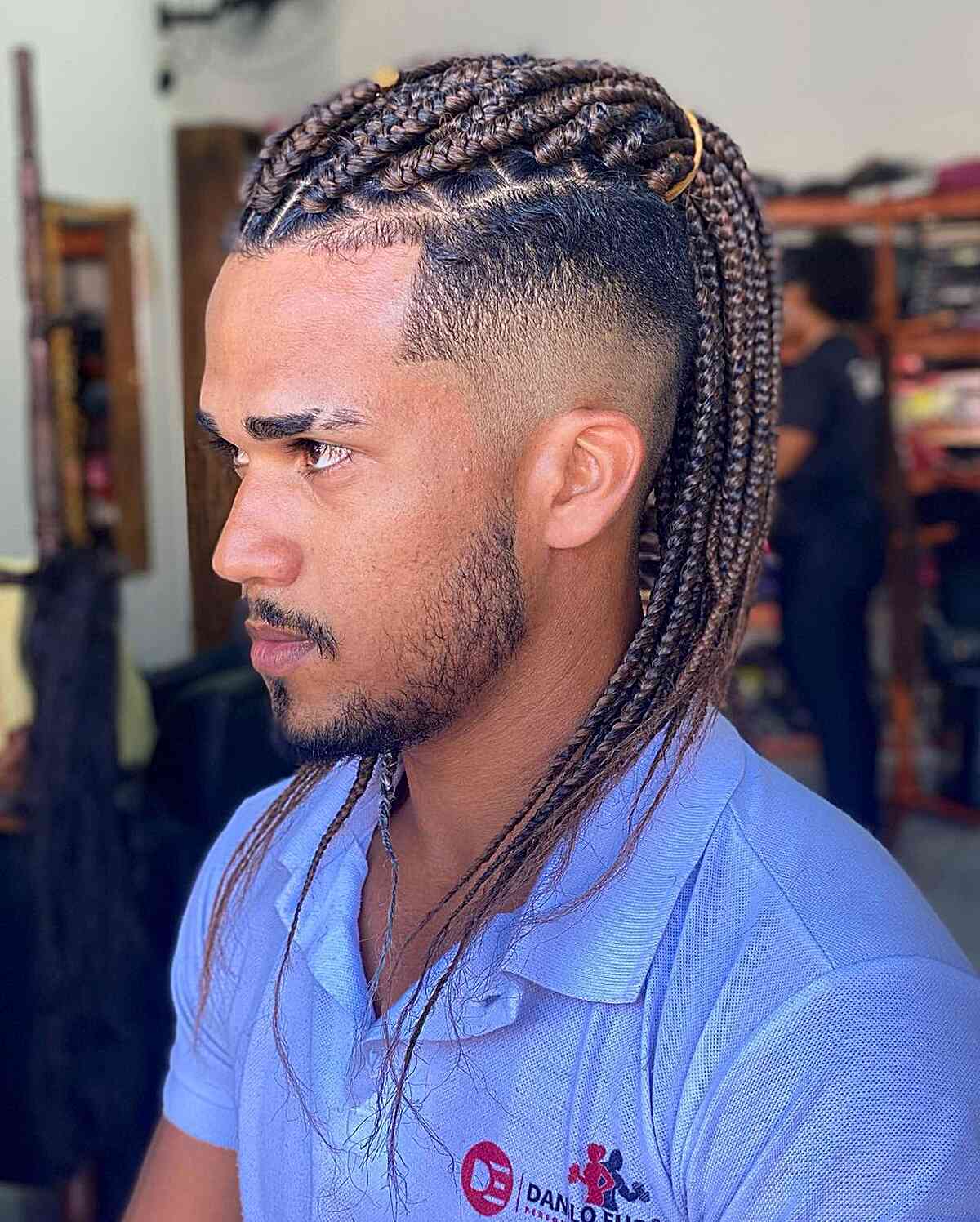
You see it at music festivals. You see it on professional soccer pitches in Europe. Sometimes, you even see it at the local grocery store. A white guy with braids walks by, and suddenly, the air gets a little thick with unspoken questions. Is it just a haircut? Is it a "look"? Or is it a massive social faux pas waiting to happen? Honestly, it’s all of those things at once, and if we're being real, the conversation around it has become a total minefield over the last decade.
Braids aren't new. But the context has changed radically.
The Physical Reality of Hair Texture
Let’s get technical for a second because hair is basically just protein and physics. Most white men have Type 1 (straight) or Type 2 (wavy) hair. This is fundamentally different from the Type 3 and 4 hair textures typically found in the Black community, where braiding traditions like cornrows, box braids, and fulani styles originated.
Why does this matter? Scalp health.
When a white guy gets tight cornrows, the tension on the hair follicle is often way too high for straight hair to handle. Straight hair is usually thinner in diameter and "slippery." To make a braid stay in straight hair without it looking like a fuzzy mess within two hours, a stylist has to pull it tight. Really tight. This leads to something called traction alopecia. It's not a myth. It’s a medical condition where the hair is literally pulled out by the root, sometimes causing permanent scarring and baldness.
I’ve talked to barbers who refuse to do it. They’ve seen the redness, the bumps—which are actually "tension bumps"—and the eventual thinning. If you have fine hair, those braids aren't your friend. They're a shortcut to a receding hairline.
Cultural Appropriation vs. Appreciation
We have to talk about the elephant in the room: cultural appropriation. It's a heavy term, but it’s the core of why this style is so controversial.
Historically, Black people have been—and often still are—discriminated against for wearing protective styles like braids in professional settings. There are countless legal cases, such as those that eventually led to the CROWN Act (Creating a Respectful and Open World for Natural Hair) in the United States, where individuals were fired or sent home from school because their braids were deemed "unprofessional."
When a white guy with braids wears the same style, he often receives a different reaction. He might be called "edgy," "trendy," or "experimental."
That’s the rub.
The "cool factor" is granted to the person who can take the style off at the end of the day without having lived through the systemic bias associated with it. It’s not just about "liking the way it looks." It’s about the history of the aesthetic. Justin Bieber, Post Malone, and even David Beckham back in 2003 have all faced significant backlash for this. Beckham actually later admitted in interviews that it was a mistake, citing his meeting with Nelson Mandela as a moment where he felt particularly out of place with that hairstyle.
The "Viking" Braids Loophole
Lately, there’s been a massive surge in what people call "Viking braids."
Shows like Vikings or The Last Kingdom have popularized a very specific aesthetic: shaved sides, long top, and thick, messy plaits. Guys often use this historical context to justify the look. And yeah, Norsemen did braid their hair. So did Celts.
But there’s a visual difference.
Norse-style braids are typically loose, French-braided, or Dutch-braided styles that utilize the natural volume of European hair. They aren't meant to be "protective" in the way cornrows are. When guys mix these up—calling tight cornrows "Viking braids"—it gets messy. Honestly, most "Viking" styles you see on TV are the creation of modern costume designers, not 9th-century history. Real Vikings likely wore their hair in various ways, but the hyper-stylized look we see today is mostly Hollywood.
Maintenance is a Nightmare (Be Honest)
If you’re a white guy and you’ve decided to go through with it, nobody tells you about the itching.
Straight hair produces oils that travel down the hair shaft easily. When that hair is trapped in a tight braid against the scalp, the oil builds up. Fast. You can’t wash your hair normally because you’ll frizz the braids out instantly. So you’re left with a choice: a smelly, itchy scalp or a hairstyle that lasts exactly three days before looking like a bird’s nest.
And the "fuzz."
Straight hair has "flyaways." Within forty-eight hours, tiny hairs will escape the braid. You’ll end up looking like you’ve been shocked by a Van de Graaff generator. To fix it, people slather on gels and waxes, which just adds to the buildup. It’s a cycle of discomfort.
What to Consider Before Doing It
If you're still thinking about it, you should probably ask yourself a few questions. This isn't about being the "PC police"—it's about moving through the world with a bit of self-awareness.
- What’s the occasion? Is this for a costume? (Bad idea). Is it for functionality, like keeping long hair back while sailing or hiking? (More understandable).
- Who is doing the braiding? If you’re going to a shop that specializes in Black hair, be prepared for some side-eye or a genuine conversation about your hair texture.
- Are you ready for the "look"? People will judge you. Rightly or wrongly, the white guy with braids aesthetic carries a lot of baggage. It often signals a lack of awareness about the history of hair in the West.
The Celebrity Factor
We’ve seen it time and again.
Eminem did it in the 90s. Axl Rose did it. More recently, we’ve seen social media influencers try to bring it back as a "boho" look. The result is almost always the same: a few weeks of "likes" followed by a long-term reputation for being "that guy."
Celebrities have stylists who can manage the damage and the optics. Most regular guys don't. When your braids start to sag and your scalp is peeling from the tension, there’s no glam squad to save the look.
Moving Toward a Better Aesthetic
If you have long hair and want it out of your face, there are plenty of ways to do it that don't involve a cultural tug-of-war.
A simple loose plait or a man-bun (yeah, they're still around) works wonders. Even "man braids" that aren't tied to the scalp—like a single loose braid down the back—avoid the specific issues of appropriation and hair loss.
The goal should be a style that works with your hair, not against it.
Actionable Steps for Hair Health and Style
If you are a white man with long hair looking for a change, follow these practical steps to keep your hair healthy and your style choices respectful:
- Focus on Scalp Health: Before trying any braided style, ensure your scalp is free of dandruff and irritation. Use a clarifying shampoo once a week to remove product buildup.
- Opt for "French" or "Dutch" Styles: If you want braids, go for loose styles that don't put tension on the root. These are much safer for straight hair types and don't mimic specific cultural protective styles.
- Consult a Professional: Don't let a friend "wing it" with your hair. Go to a stylist who understands hair elasticity and can tell you if your hair can actually handle the weight of a braid.
- Limit the Duration: Never leave braids in straight hair for more than a few days. The risk of breakage and matting is too high.
- Research the History: If you're drawn to a specific style, spend thirty minutes Googling its origins. Understanding the "why" behind a look changes how you wear it and how you talk about it.
In the end, hair grows back, but your reputation for being culturally oblivious is a lot harder to trim away. Choose a look that reflects both your personality and a basic respect for the people around you.