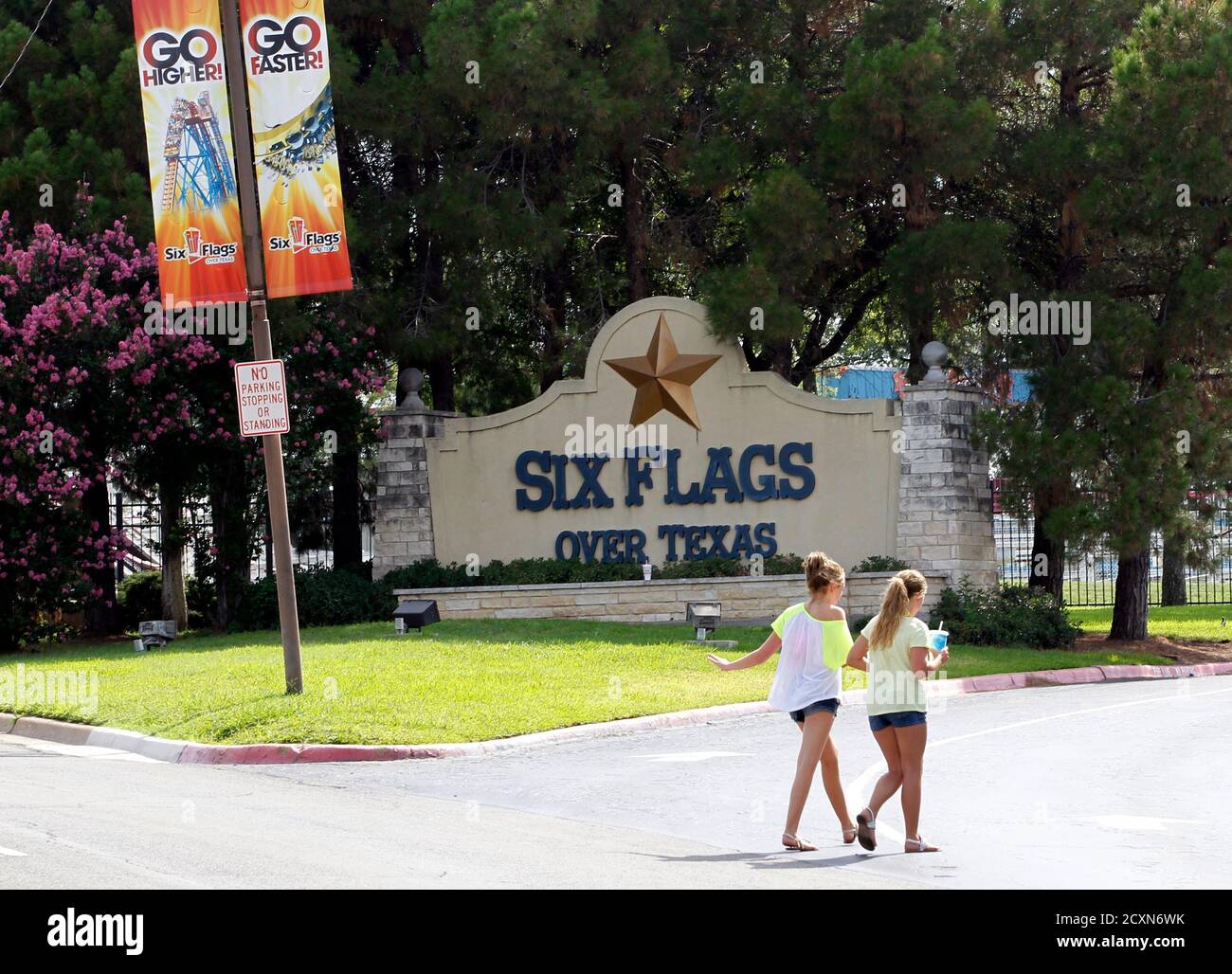
The air in Arlington, Texas, usually smells like popcorn and sunblock during the peak of July. But on July 19, 2013, that summer vibe at Six Flags Over Texas shattered. It happened in an instant. One moment, a 52-year-old mother named Rosa Esparza was strapped into a train on a record-breaking hybrid coaster; the next, she was gone. The Texas Giant roller coaster accident didn't just change one family's life forever. It fundamentally altered how the entire amusement park industry looks at restraint systems and guest safety.
People still talk about it. If you’ve ever felt a bit of anxiety when a ride op pushes down your lap bar, you’re likely tapping into a collective memory of this specific tragedy. It’s the kind of story that sticks in your gut because it feels so preventable.
The Transformation of a Legend
To understand why this happened, you have to look at the ride itself. The Texas Giant wasn't always the steel-on-wood hybrid we know today. When it first opened in 1990, it was a massive, bone-shaking all-wooden beast. It was tall. It was fast. It was also, frankly, getting a bit too rough for its own good as the years ticked by.
Six Flags decided to give it a massive facelift. They hired Rocky Mountain Construction (RMC) to perform what was then a revolutionary procedure: placing steel "I-Box" tracks on top of the original wooden structure. This turned the ride into the New Texas Giant. It was smoother. It was steeper, featuring a 79-degree drop that made riders feel like they were falling off a cliff. It was a massive hit.
But there was a catch.
The new, high-intensity maneuvers required a specific type of restraint. The ride used a hydraulic lap bar system. Unlike the old-school ratcheting bars that go click-click-click, these are supposed to be infinitely adjustable. Sounds safer, right? Not necessarily.
The Moment Everything Went Wrong
Rosa Esparza was at the park with her family. They were having a normal Friday. When they got to the front of the line for the New Texas Giant, she sat in the second row of the car.
Witnesses later described a chilling detail. As the ride was preparing to dispatch, Esparza reportedly expressed concern that her lap bar hadn't clicked into place or didn't feel secure. The ride operator checked it. According to various reports and the subsequent lawsuit, the operator essentially gave the green light, noting that the computer system showed the restraint was locked.
The train climbed the lift hill. 153 feet up.
When the train hit that first massive, steep drop, the forces were intense. As the car crested a hill and experienced "airtime"—that feeling of lifting out of your seat—Esparza was ejected. She fell approximately 75 feet.
It was horrific.
Investigation into the Texas Giant roller coaster accident revealed a cocktail of factors that created a "perfect storm." One of the biggest issues? The design of the restraint itself. The lap bar was intended to sit across the thighs/pelvis. However, due to Esparza's physical proportions, the bar may have been resting against her stomach rather than pinning her hips into the seat. When the coaster exerted negative G-forces, there was nothing physically stopping her body from sliding up and out.
The Legal Fallout and the Silence of Settlements
The aftermath was messy. You had Six Flags Over Texas on one side and Rocky Mountain Construction on the other.
Six Flags basically blamed the manufacturer, saying the ride was designed and built by RMC and they were just the operators. RMC, meanwhile, argued that they provided the equipment but the park was responsible for the daily operation and the training of the staff who checked those bars.
The family sued. They sought at least $1 million in damages, though the actual value of a life in these cases is immeasurable. The lawsuit highlighted a disturbing fact: the ride did not have "redundant" restraints. No seatbelts. Just the lap bar.
Eventually, the parties settled. Terms were confidential. That’s how these things usually end—with a check and a non-disclosure agreement. But the public record is clear enough: the industry knew it had a problem.
How the Texas Giant Accident Changed Your Theme Park Visit
If you go to a major park today, you’ll notice something. Almost every high-thrill coaster now has a "test seat" at the entrance. That’s not just for convenience; it’s a direct result of incidents like the Texas Giant roller coaster accident. It allows guests to ensure the restraint fits their body type before they ever get in line.
More importantly, the New Texas Giant was closed for months. When it finally reopened, it looked different.
- Seatbelts were added. This is the "redundancy" that was missing. Now, even if the hydraulic lap bar fails or isn't positioned perfectly, the belt provides a secondary point of attachment to the car.
- Redesigned lap bars. The pads were modified to better "cup" the rider's legs.
- Stricter "Go/No-Go" rules. Ride operators became much more aggressive about checking the lights on their control boards. If a bar isn't down to a specific degree of closure, the ride simply does not move.
There’s also the "big boy" seat phenomenon. On many coasters, certain rows are now designated for guests with larger chests or waistlines, featuring double-buckle seatbelts or modified harnesses. All of this stems from the realization that "one size fits all" is a dangerous lie in amusement park physics.
The Myth of the "Click"
There is a common misconception that if you don't hear a click, you aren't safe. Honestly, that's not true for modern rides. Many use hydraulic pistons that are completely silent. They are incredibly strong—literally capable of holding tons of pressure.
The problem in Arlington wasn't that the mechanism broke. It didn't. The bar stayed locked. The problem was the geometry. If the bar is locked but there is a gap between the bar and your lap, physics wins. Negative G-forces will pull you out of that gap.
Department of Insurance records in Texas, which oversees ride safety, showed that the Texas Giant had been inspected and cleared multiple times. This tells us that "passed inspection" doesn't always mean "flawless design." It just means the ride is operating as the manufacturer intended. Sometimes, the intention itself is the flaw.
What You Need to Know Before You Ride
Look, roller coasters are statistically safer than the car ride you took to get to the park. Millions of people ride the Texas Giant every year now without a scratch. But you've gotta be your own advocate.
If you feel like a restraint isn't touching your lap, speak up. Don't let a bored 18-year-old ride op pressure you into thinking it's fine just because the light on their panel is green. If you have a unique body shape—whether you're very tall, have a large midsection, or are very thin—use the test seat. It’s not embarrassing; it’s smart.
The Texas Giant roller coaster accident was a tragedy born from a new era of ride design outpacing old-school safety mindsets. The industry has caught up, mostly. But the memory of that July afternoon serves as a permanent reminder that 70 miles per hour and 150 feet of height don't leave much room for "close enough."
Practical Safety Steps for High-Thrill Rides
- Check the Test Seat: Always use the sample seat at the ride entrance if you have any doubt about fit. Most RMC coasters and modern Intamin/B&M rides provide these.
- The "Tug" Test: Once the operator checks your bar, give it a firm upward shove yourself. It should feel like a part of the car, with zero vertical play.
- Positioning Matters: Sit all the way back. Your tailbone should be touching the back of the seat. If you're slouching, the lap bar won't engage your pelvic bone correctly.
- Report Anomalies: If you hear a strange metallic grinding or feel a restraint "slip" during the ride, tell the ride platform supervisor immediately upon return. They are required to log these reports.
Safety isn't just about the machine; it's about the interface between the machine and the human body. The lessons learned from the Texas Giant were bought at a terrible price, but they have undeniably made the midways of the world a more secure place for the rest of us.