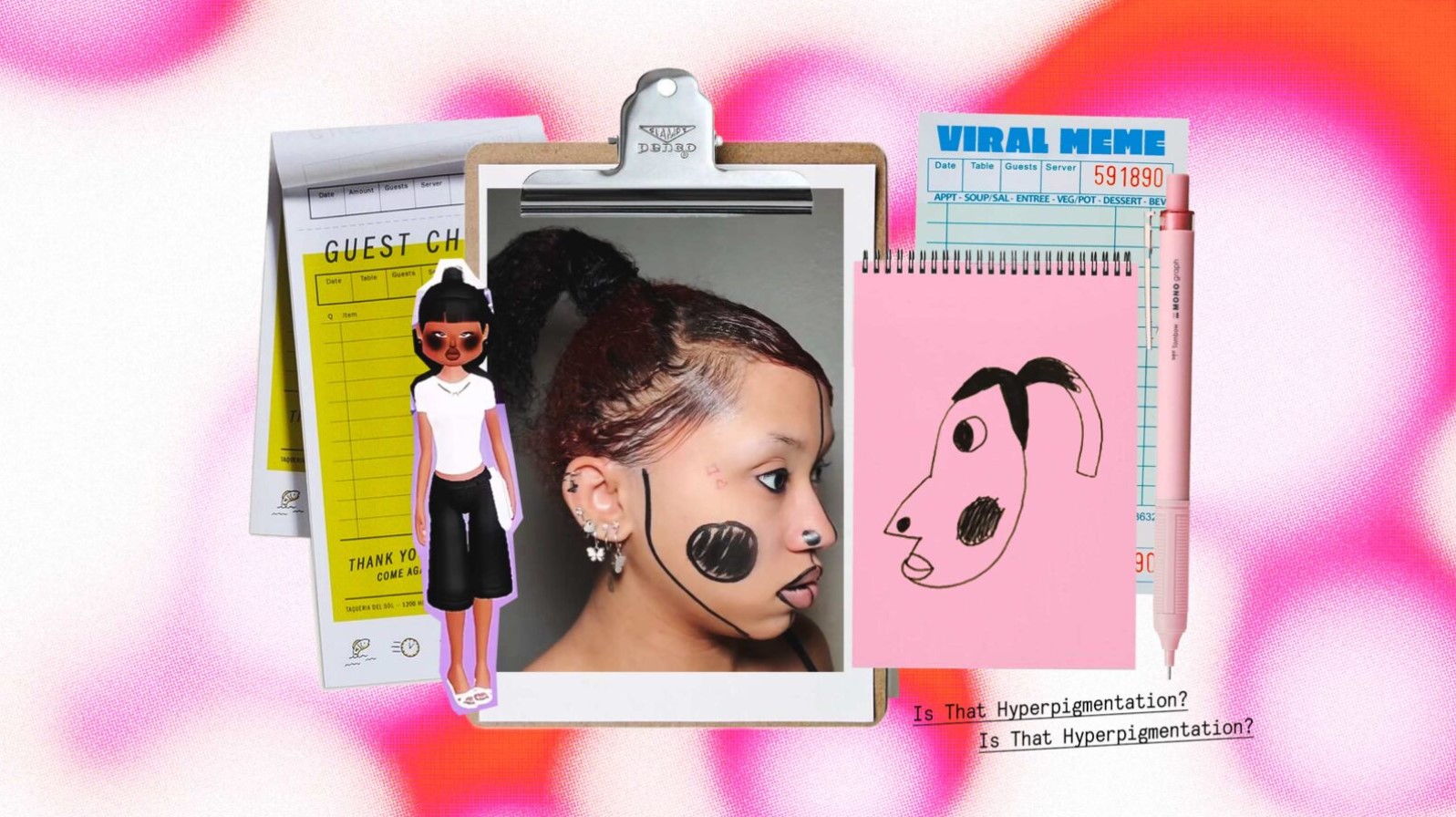
You've probably seen it. A quick scroll through TikTok or a late-night session on "SkinTok" and there it is—a video of someone meticulously applying concealer or a dark spot treatment, often set to a dramatic sound or a self-deprecating joke about "uneven skin tone." But finding the hyperpigmentation meme original video is like trying to trace a single drop of water back to a specific wave in the ocean. It’s not just one video. It’s a collective cultural moment where the internet finally stopped pretending that everyone has airbrushed skin.
Hyperpigmentation isn't a joke, but the internet turned it into one anyway. Why? Because it's relatable. Most of the memes you see today actually stem from a specific era of "relatable content" creators who stopped hiding their post-inflammatory hyperpigmentation (PIH) and started making fun of the struggle of covering it up.
The Viral Roots of the Hyperpigmentation Meme Original Video
The "original" isn't a single file on a server. It’s more of a lineage. Most digital historians and skincare enthusiasts trace the peak of this trend back to a series of videos from 2022 and 2023. One of the most cited "original" clips involves a creator jokingly showing their "mustache"—which isn't hair at all, but the stubborn melasma or darkening that happens around the upper lip.
People started using the sound to show their own "spots." It became a badge of honor. Honestly, it was a relief for millions who felt like their skin was "dirty" or "unwashed" just because they had excess melanin in certain areas.
Then came the transition memes. You know the ones. The creator starts with a bare face, looking slightly tired, pointing at their dark spots with a caption like "me and my hyperpigmentation against the world." Then, a beat drop happens, and they’re fully glammed, but the joke is always that the spots are still there, lurking under the foundation. This specific brand of humor—the "concealer can't save me" trope—is what most people are looking for when they search for the hyperpigmentation meme original video.
Why This Specific Video Blew Up
It wasn't just the humor. It was the timing. We were coming out of an era of heavy Instagram filtering where every face looked like a smooth, beige egg. When creators started showing the reality of PIH—those purple, red, or brown marks left behind after a breakout—it felt like a revolution.
It's kinda funny how a medical condition became a punchline. But that’s the internet for you. If you can’t fix it, you might as well get some likes out of it.
What the Science Actually Says (Beyond the Meme)
While the memes are great for a laugh, the reality of living with these spots is a bit more complex. Experts like Dr. Alexis Stephens, a board-certified dermatologist who specializes in skin of color, have often jumped on these trends to explain why it happens.
Hyperpigmentation occurs when your skin produces extra melanin. This can be triggered by:
- Inflammation (acne, eczema, or even a scratch).
- Sun exposure (the sun is basically an "on" switch for pigment).
- Hormonal changes (the "pregnancy mask" or melasma).
The hyperpigmentation meme original video often misses the nuance that not all spots are created equal. If you’ve got PIH, it’s usually temporary. If it’s melasma, you’re looking at a long-term management situation. It's not just "dark spots." It's a biological response to stress or injury.
The Problem With "Skincare Influencers"
Look, I love a good 10-step routine as much as the next person, but some of the videos piggybacking on the hyperpigmentation meme are... sketchy. You'll see people claiming a $10 lemon scrub fixed their skin in three days. Honestly? That's dangerous.
Using harsh DIY remedies on hyperpigmentation can actually trigger more inflammation, which leads to—you guessed it—more hyperpigmentation. It’s a vicious cycle. The meme is fun; the "hacks" associated with the search results often aren't.
The Cultural Impact of Seeing Real Skin
There is a deep psychological component here. For years, hyperpigmentation was framed as something that needed to be "cured" or "hidden." By turning it into a meme, the original creators shifted the power dynamic.
Instead of being ashamed, people started saying, "Yeah, I have these spots. So what?"
This shift is particularly important for communities of color. Darker skin tones are more prone to PIH because they have more active melanocytes. When the hyperpigmentation meme original video started trending, it gave a voice to a demographic that had been largely ignored by the mainstream beauty industry for decades.
How to Actually Treat the Spots (If You Want To)
If the meme has inspired you to actually do something about your skin instead of just laughing at it, you need a strategy. You can't just throw everything at your face and hope for the best.
- Sunscreen is non-negotiable. If you are treating hyperpigmentation but not wearing SPF 30+ every single day, you are literally wasting your money. The sun will darken those spots faster than any serum can lighten them.
- Tyrosinase Inhibitors. This sounds like a mouthful, but it's basically the gold standard. Ingredients like Kojic Acid, Tranexamic Acid, and Alpha Arbutin help stop the pigment from forming in the first place.
- Patience. This is the part everyone hates. Skin cells take about 28 to 40 days to turn over. You won't see real results for at least two cycles. That's two months of consistent work.
What to Avoid
Don't go chasing "instant" results. Chemical peels can be amazing, but if they're too strong or done incorrectly on dark skin, they can cause "hot spots" or even permanent scarring. Always, always do a patch test.
The Evolution of the Meme
The hyperpigmentation meme original video has evolved. It’s no longer just about the spots. Now, it’s about the "skincare journey."
We see "Day 1 vs. Day 90" videos. We see people documenting their visits to dermatologists. The meme was the gateway drug to a better understanding of skin health. It took something that was once a source of insecurity and turned it into a shared experience.
It's weirdly wholesome when you think about it. Thousands of strangers in the comments sections of these videos are sharing tips, offering encouragement, and validating each other's experiences. That's the power of a viral moment done right.
Moving Forward With Your Skin
The search for the hyperpigmentation meme original video usually starts with curiosity but ends with a realization: you aren't alone. Whether you’re looking for the original sound to make your own video or you’re just tired of seeing "perfect" skin everywhere, the impact remains the same.
Stop checking your skin in the harsh bathroom light every five minutes. It doesn't help.
The best thing you can do right now is simplify. Pick one active ingredient that targets pigment—maybe a Vitamin C serum for the morning and a retinoid for the night—and stick with it. Avoid the "kitchen chemistry" you see on TikTok. Your skin is an organ, not a salad.
If your hyperpigmentation is changing shape, getting itchy, or looks significantly different from your other spots, skip the internet and go see a professional. Memes are for laughs; doctors are for diagnosis.
The real "original" video was just the beginning of a larger conversation about beauty standards. It’s okay to have spots. It’s okay to want to treat them. And it’s definitely okay to laugh about it while you wait for your serums to kick in.
Next steps: Audit your current routine. If you have more than three "brightening" products, you're likely overdoing it. Strip it back to a cleanser, one targeted treatment, a moisturizer, and a high-quality mineral or chemical sunscreen. Give it 60 days of consistency before you decide a product "doesn't work." Real change happens at the cellular level, and that takes time that no viral video can speed up.