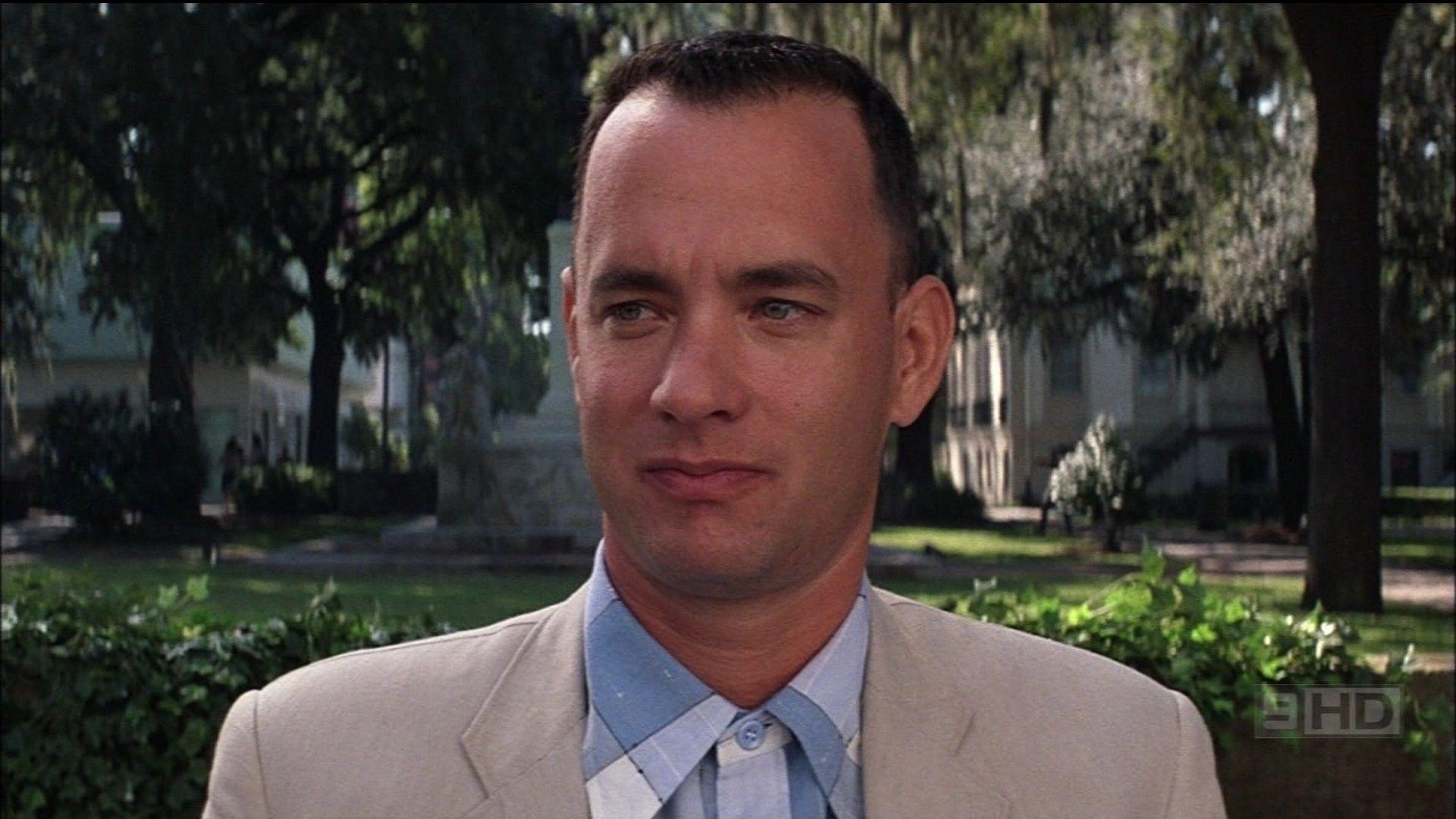
If you grew up in the 90s, there’s a good chance you saw Forrest Gump on a grainy VHS tape while your parents were in the other room. To a lot of people, it feels like a "safe" family movie. It’s got Tom Hanks, a catchy soundtrack, and a bunch of heart-tugging lines about chocolate boxes and running. But if you actually go back and check the box, you'll see it right there: PG-13.
Why?
Honestly, there's a huge gap between how we remember the movie and what’s actually on the screen. People often assume it was rated PG because it’s so sentimental, but the Motion Picture Association of America (MPAA) gave it a PG-13 for some pretty heavy reasons. We're talking drug use, "sensuality," and some surprisingly gritty war violence.
The Breakdown: Why the PG-13 Label Stuck
When Forrest Gump hit theaters in July 1994, the PG-13 rating was still finding its feet. It had only been around for a decade, and it was the perfect "catch-all" for movies that weren't quite R-rated but definitely weren't for little kids.
The official MPAA reasoning for the rating was: "drug content, some sensuality and war violence."
That’s a bit of a clinical way to put it. Basically, the board looked at the Vietnam sequences and Jenny's entire character arc and decided that a 7-year-old probably shouldn't be watching it without a serious talk from Mom or Dad.
The Vietnam Sequence
The war scenes aren't just "action." They’re bloody. When Forrest is running through the jungle to save Bubba and the rest of the platoon, you see soldiers getting hit. You see blood misting in the air from gunfire.
Most notably, there’s the aftermath of the napalm strike. Lieutenant Dan’s legs are mangled—described by some critics at the time as looking like "hamburger." It's visceral. For a movie that starts with a feather floating in the wind, that jump into the mud and gore of Vietnam is a massive tonal shift that the ratings board couldn't ignore.
Jenny’s Tragic Arc and "Sensuality"
Then there’s Jenny. Her storyline is the dark mirror to Forrest’s "innocent" journey. While Forrest is playing ping-pong or meeting Presidents, Jenny is navigating the 1960s counterculture, which involves some very adult themes.
- Child Abuse: The film explicitly implies that Jenny was sexually abused by her father. The scene where she’s throwing rocks at her old, dilapidated house is heartbreaking, but it's also heavy thematic material for a young audience.
- Drug Use: We see Jenny snorting cocaine and her friends using IV drugs (specifically, a scene showing a needle). The "drug content" part of the PG-13 rating is no joke here. It’s not "reefer madness" humor; it’s a depiction of addiction and rock bottom.
- Sensuality: There’s the scene in the college dorm, the "simulated" sex scene with Forrest later in the movie, and a few moments involving nudity (though mostly obscured).
What Most People Get Wrong About the Rating
Kinda funny, but a lot of parents in 1994 actually complained that the movie should have been rated R. On the flip side, some felt it was a "wholesome" American story that deserved a PG.
The reality? It sits in that weird middle ground.
One thing people forget is the language. While there isn't a constant stream of profanity, the film does feature a few "F-bombs" (though one is famously muffled during the anti-war rally speech). Plus, there are several instances of the "S-word," "son of a b-tch," and some period-accurate racial slurs that make modern viewers (and 90s parents) a bit uneasy.
Is it actually "Family Friendly" in 2026?
Looking at it today, the rating holds up, but the context has changed. We’re more aware now of how the movie handles disability and certain historical movements.
Some parents might find the "sexual encounter" between Forrest and Jenny—where Forrest is essentially a "naive" participant—to be more problematic than the violence. Others might find the depiction of the Black Panthers or the anti-war movement to be a bit too "cartoonish" for a serious history lesson.
International Perspectives: Was it Different Elsewhere?
Interestingly, not every country agreed with the US rating.
- United Kingdom: The BBFC gave it a 12 (similar to PG-13), citing "infrequent strong language" and "moderate sex."
- Canada: In Alberta, it was rated PG, though they added warnings for "coarse language" and "substance abuse."
- Australia: It received a M (Mature) rating, which is recommended for people 15 and over but doesn't legally restrict younger viewers.
It seems like regardless of the border, everyone agreed: this isn't The Lion King.
Actionable Insights for Your Next Rewatch
If you’re planning on showing Forrest Gump to a younger audience or just revisiting it yourself, keep these "watch-outs" in mind:
- The "30-Minute Mark": This is where the movie shifts from a whimsical childhood story to the Vietnam War. If you have kids who are sensitive to loud noises or blood, this is the part to preview.
- Jenny’s "Free Love" Era: There are scenes involving a suicide attempt (Jenny on the balcony) and heavy drug use. Be prepared to explain what's happening or skip those few minutes if you're not ready for that conversation.
- Historical Context: The movie uses real newsreel footage and blends Tom Hanks into it. It’s a great teaching tool, but it's worth explaining that Forrest’s perspective is intentionally limited. He doesn't always "get" the gravity of what's happening around him.
Forrest Gump remains a classic because it balances that sweet, almost-fairy-tale vibe with the harsh realities of the 20th century. Just don't let the box of chocolates fool you—it’s got a bit of a bite.
To get the most out of the experience, check the specific content advisories on your streaming service. Most modern platforms now break down exactly which scenes triggered the "violence" or "drug" tags, so you can decide if it's right for your living room tonight.