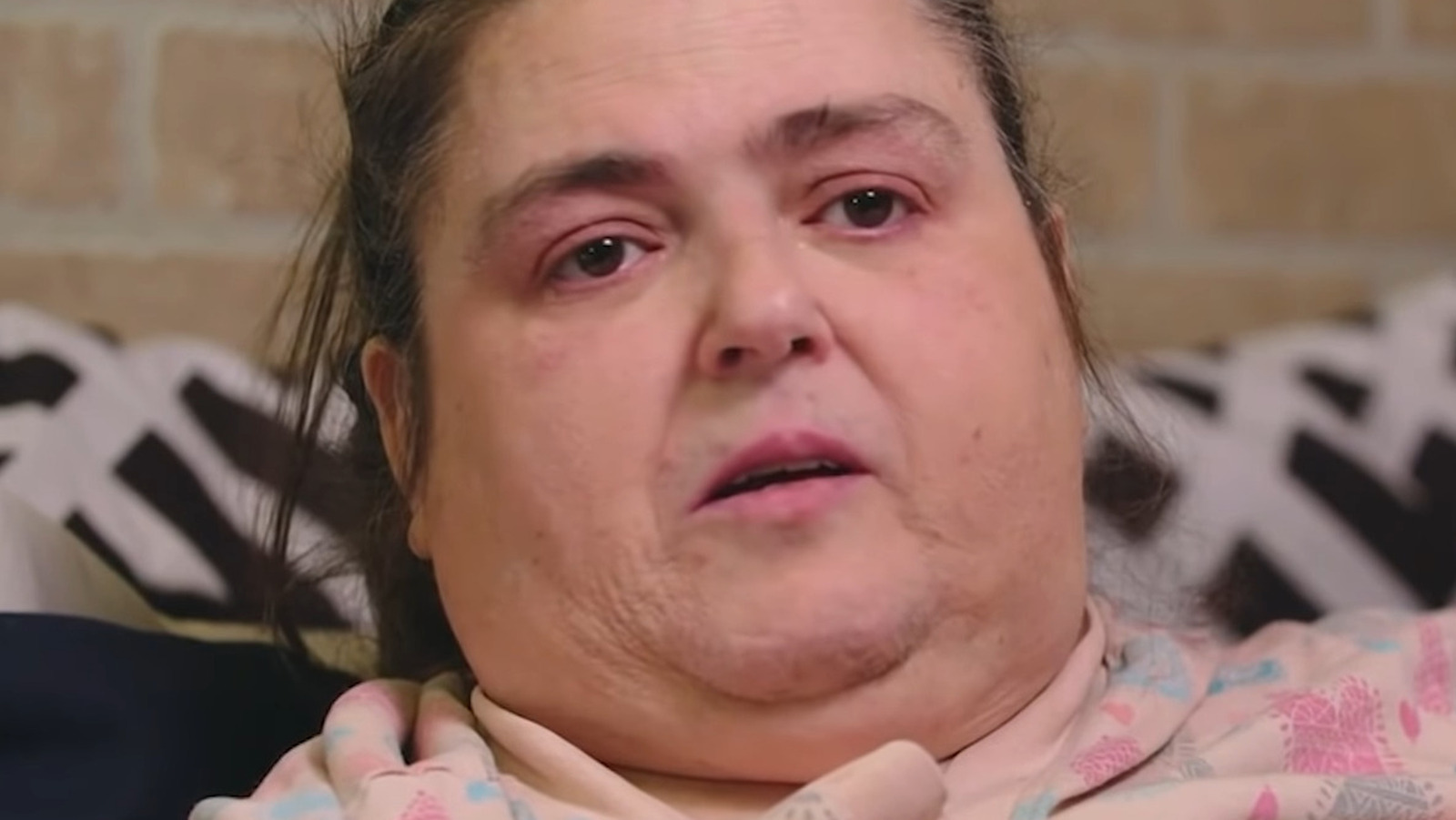
Susan Farmer didn’t just show up on TLC to lose weight; she showed up to keep her legs.
If you remember her episode from Season 3 of My 600-lb Life, you probably remember the sheer terror in her voice when doctors told her that the skin infections and lymphedema on her lower body were reaching a point of no return. Most people watch these shows for the drama or the "shock" factor of the scale, but for Susan, the stakes were basically her ability to ever stand up again. She started her journey at 607 pounds. That’s a heavy number, sure, but in the world of Dr. Nowzaradan’s patients, we've seen higher. What made Susan’s story stick was the absolute grit she showed when things got complicated.
She wasn't just fighting a number. She was fighting a body that was quite literally trying to give up on her.
The Reality of Susan Farmer’s Journey with Dr. Nowzaradan
When we first met Susan, she was living in Eddy, Texas. She was 37. Like so many others featured on the show, her relationship with food was a coping mechanism for a childhood that wasn't exactly easy. She’s been very open about how eating was the only thing that made her feel "full" in an emotional sense. But by the time the cameras started rolling, that "fullness" had turned into a prison.
She couldn't walk to the mailbox.
Dr. Nowzaradan—or Dr. Now, as fans affectionately call the no-nonsense surgeon—didn't go easy on her. He never does. He gave her the standard goal: lose weight on a high-protein, low-carb diet to prove she could handle the gastric bypass surgery. Susan actually did it. She didn't make excuses about "water weight" or the "stress of moving." She just put her head down and dropped the weight needed for the operation.
The Surgery and the Neuropathy Scare
The gastric bypass went well, but then things got scary.
Shortly after her surgery, Susan began experiencing extreme weakness and numbness. It wasn't just "soreness" from being in a hospital bed. It was a condition called chronic inflammatory demyelinating polyneuropathy (CIDP). Basically, her immune system started attacking her nerves.
It was a nightmare scenario. You lose the weight so you can finally walk, and then your nerves decide to stop talking to your muscles.
She ended up in a wheelchair. For a minute there, it looked like Susan Farmer might be one of the tragic stories where the weight comes off but the mobility never returns. It’s a nuance the show doesn't always explore deeply—the fact that losing 300 pounds doesn't automatically fix the structural and neurological damage years of morbid obesity causes.
But she didn't stop. She went to physical therapy. She fought through the pain of her nerves "re-firing." Honestly, it’s probably one of the most underrated comeback moments in the history of the series.
Where is Susan Farmer now?
The question everyone asks is: did she keep it off?
Yes.
Unlike some of her castmates who unfortunately regained the weight or struggled with the "fame" of the show, Susan became a massive success story. By the end of her first "Where Are They Now?" follow-up episode, she had lost somewhere in the neighborhood of 400 pounds. She got the skin removal surgery she desperately wanted, which removed an additional 50+ pounds of hanging skin from her abdomen.
Think about that. The weight of a medium-sized dog was just... removed from her midsection.
She looks like a different person. But more importantly, she acts like one. On her social media, she’s often seen smiling, hanging out with her family, and—most importantly—standing on her own two feet. She’s become a bit of a beacon for people in the "weight loss surgery" community because she didn't just rely on the tool; she changed her entire outlook.
Why Susan’s Story Hits Differently Than Other Episodes
A lot of the time, My 600-lb Life follows a predictable pattern. There’s the initial struggle, the "cheating" on the diet, the confrontation in Houston, and then a moderate success or a total failure.
Susan broke that mold because she was remarkably compliant.
She listened.
She didn't argue with Dr. Now about the calories in a "small" snack. When she faced the CIDP diagnosis, she could have easily turned back to food for comfort. That’s the "addict brain" at work. Instead, she used that fear to fuel her physical therapy sessions.
The Medical Reality of Extreme Weight Loss
We need to talk about the lymphedema.
Susan had a massive growth on her leg that made walking nearly impossible. In the medical world, this is a blockage of the lymphatic system. For Susan, it was a constant source of infection. Even after the weight started falling off, those growths don't just "melt" away. They require specialized surgery.
Seeing her finally get those masses removed was a turning point. It wasn't just about vanity or fitting into smaller jeans. It was about hygiene. It was about not being in a constant state of sepsis risk.
Her journey highlights a few things that people often get wrong about extreme weight loss:
- The Scale isn't the Only Metric: For Susan, the "win" was the first time she could shop for clothes in a regular store, but the real win was being able to stand at the grocery store without needing a motorized cart.
- The Mental Game is Harder: She had to learn to live without her primary coping mechanism. When you take food away from someone who uses it to dull emotional pain, you're essentially stripping them of their armor.
- Complications Happen: The neuropathy she faced is a known risk, sometimes exacerbated by rapid weight loss and nutrient malabsorption. It’s why those vitamins Dr. Now screams about are so vital.
Lessons We Can Actually Use From Susan’s Success
If you're looking at Susan’s story and wondering how she did it when so many others fail, it boils down to a few very un-glamorous things.
Accepting Accountability Without Shame
Susan didn't spend her time on camera blaming her mother or her past for why she was eating a pizza in bed. She acknowledged she had a problem and accepted the solution. There’s a big difference between "I'm a bad person" and "I have a bad habit that is killing me." Susan chose the latter.
Patience with the Process
Weight loss at that scale takes years. It’s not a three-month transformation. She had to undergo multiple surgeries, months of rehab, and a total dietary overhaul. She didn't quit when she hit a plateau or when her nerves started acting up.
Building a Support System
She had people in her corner who weren't enabling her. That’s the "secret sauce." If the people around you are bringing "just one" donut into the house, you're doomed. Susan's environment changed along with her body.
The Long-Term Outlook
Susan Farmer remains one of the most successful participants in the show's history. She’s a reminder that the surgery is just a jumpstart. The real work happens in the years after the cameras leave Eddy, Texas.
She didn't just lose the weight; she found a life.
If you're currently struggling with your own health journey, the takeaway from Susan isn't that you need a famous doctor in Houston. It's that you need to be willing to fight for yourself even when your body feels like it's failing. It’s about doing the physical therapy when you’d rather stay in bed. It’s about choosing the protein shake over the easy comfort of a drive-thru.
Next Steps for Your Own Health Journey:
- Audit Your Environment: Look at your kitchen right now. If there are foods that trigger a binge, get them out. Don't wait until Monday.
- Move for Five Minutes: Susan couldn't walk to the mailbox at first. If all you can do is walk to the end of the driveway and back, do it. Every day.
- Find Your "Why": Susan’s "why" was her legs. She didn't want to lose them. Find a reason that is bigger than your desire for a snack.
- Consult a Professional: If you're over a certain weight, DIY dieting can be dangerous. Talk to a bariatric specialist or a registered dietitian who understands the metabolic complexities of extreme weight loss.
Susan’s story is finished in terms of the "drama," but her life is just beginning. That’s the best kind of ending.