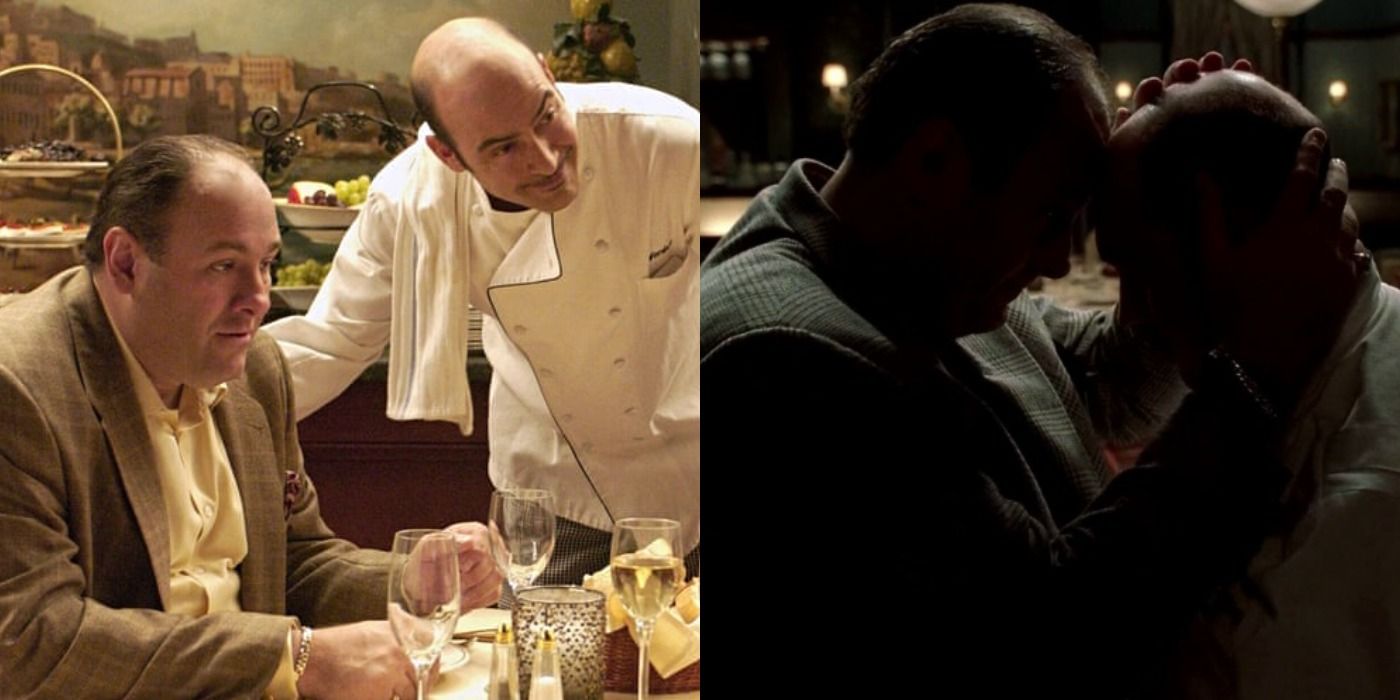
Artie Bucco is the only guy in North Jersey who can get his restaurant blown up by his best friend and still feel like he’s the one who owes an apology. If you’ve watched The Sopranos, you know Artie. He’s the guy perpetually stuck in the "civilian" lane, desperately trying to merge into the fast-paced, high-stakes world of the DiMeo crime family without ever actually paying the toll. But what happens to Artie in The Sopranos isn't just a story of a chef who can't catch a break; it’s a brutal, hilarious, and ultimately redemptive look at what it means to be a "regular Joe" in a world of monsters.
He survived. That’s the short answer. In a show where main characters get popped in diners or strangled in the woods, Artie Bucco makes it to the finish line with his life, his restaurant, and his soul mostly intact. Barely.
The Vesuvio Fire and the Original Sin
It all starts with a match. Or rather, a structural "malfunction" orchestrated by Silvio Dante on Tony’s orders. In the very first season, Tony Soprano decides the best way to prevent Junior Soprano from whacking Pussy Malanga inside Artie’s restaurant is to just... burn the restaurant down.
Artie is devastated. He's a chef. Cooking is his identity. Seeing his life's work go up in smoke sends him into a spiral that lasts for six seasons. Even when he moves to the "New Vesuvio," the ghost of that first fire haunts him. He eventually finds out the truth, of course. He confronts Tony with a hunting rifle in a scene that perfectly encapsulates their relationship. Tony lies to his face—with that terrifyingly sincere "big brother" routine—and Artie, because he needs the friendship more than the truth, chooses to believe the lie.
The Frenchman and the $50,000 Mistake
If you want to understand the darkest point of Artie’s journey, you have to look at Jean-Philippe. By Season 4, Artie is bored. He’s jealous of the easy money Tony’s crew makes. He tries to play "tough guy" loan shark by lending $50,000 to a French liquor distributor to import Armagnac.
It’s a disaster.
Jean-Philippe basically laughs in his face when Artie tries to collect. Artie gets beaten up. He realizes he isn't a predator. He’s a host. The shame of this failure is so sharp that Artie tries to take his own life. He calls Tony, crying, apologizing for the money he can't pay back. Tony's reaction is legendary: he’s more annoyed that he can’t "muscle" the debt back from a dead man than he is worried about his friend's life.
Ultimately, Tony clears the debt in exchange for Artie’s tab at the restaurant. It’s a transaction. Artie stays alive, but he’s "owned" in a way that stings worse than the debt itself.
Charmaine: The Real Hero of the Bucco Saga
We can't talk about Artie without talking about Charmaine. Honestly? She’s the strongest person in the show. She’s the only one with a functioning moral compass that doesn't spin wildly whenever a stack of hundreds is nearby.
Throughout the series, Charmaine acts as the anchor keeping Artie from drifting into the Soprano abyss. She constantly reminds him that they are "working people." She refuses to let the mobsters treat their business like a clubhouse. When Artie flirts with the idea of being a "player," she’s there to remind him he’s a father and a husband. Their marriage hits rocks—hard—especially when Artie develops a pathetic crush on Adriana La Cerva and later a hostess named Martina. But by the end of the series, they’ve reconciled. They are the rare example of a functional, non-criminal family unit surviving the toxicity of the Jersey suburbs.
The Rabbit: Artie’s Final Redemption
The most important thing that happens to Artie in The Sopranos occurs in the episode "Luxury Lounge" in the final season. He’s struggling. A new rival restaurant (Da Giovanni) is stealing his thunder. He’s bitter. He’s picking fights with customers about their choice of wine.
Then, he finds his grandfather’s old recipe book.
In a beautiful, quiet sequence, Artie goes out and hunts a rabbit that’s been eating his garden. He brings it inside, skins it, and prepares an old-school dish for a couple of guests. No ego. No "host" persona with the hand gestures and the fake smile. Just a man and his craft. This is where Artie finds peace. He stops trying to be Tony Soprano and remembers he’s Artie Bucco, a damn good chef.
Why Artie's Ending is the Most "Successful"
While the rest of the cast is either heading to prison, a funeral home, or a permanent state of looking over their shoulder in a Holsten’s booth, Artie is fine.
- He kept his soul: He never killed anyone. He never truly crossed the line into criminality.
- He kept his family: His kids are safe, and his wife is by his side.
- He kept his passion: He returned to the kitchen, which was always his true home.
Artie Bucco represents the "regular" person lured by the glamour of the mafia. He’s a warning about the cost of proximity to power. He gets burned, he gets humiliated, and he loses his hair, but he survives. In the world of David Chase, survival is the only real win.
Actionable Insights for Sopranos Fans
If you're revisiting Artie's arc, keep these things in mind:
- Watch the hands. Artie's constant, nervous hand gestures are a masterclass in character acting by John Ventimiglia. They show his insecurity in every scene.
- Focus on the food. The quality of Artie's food usually reflects his mental state. When he's happy, the food is rustic and traditional. When he's spiraling, he's pushing "fusion" and flashiness.
- Contrast with Tony. Every time Artie fails at being a "tough guy," it highlights why Tony is a monster. Artie has empathy; Tony doesn't. That empathy is Artie's "weakness" in the mob world, but it's his salvation in the real one.
Next time you’re watching, pay attention to the scene where Artie tells Tony his "earrings look good." It’s a tiny, pathetic moment that perfectly sums up their lopsided dynamic. Artie survived because he was too "small" for Tony to bother destroying. Sometimes, being the little guy is the only way to win.