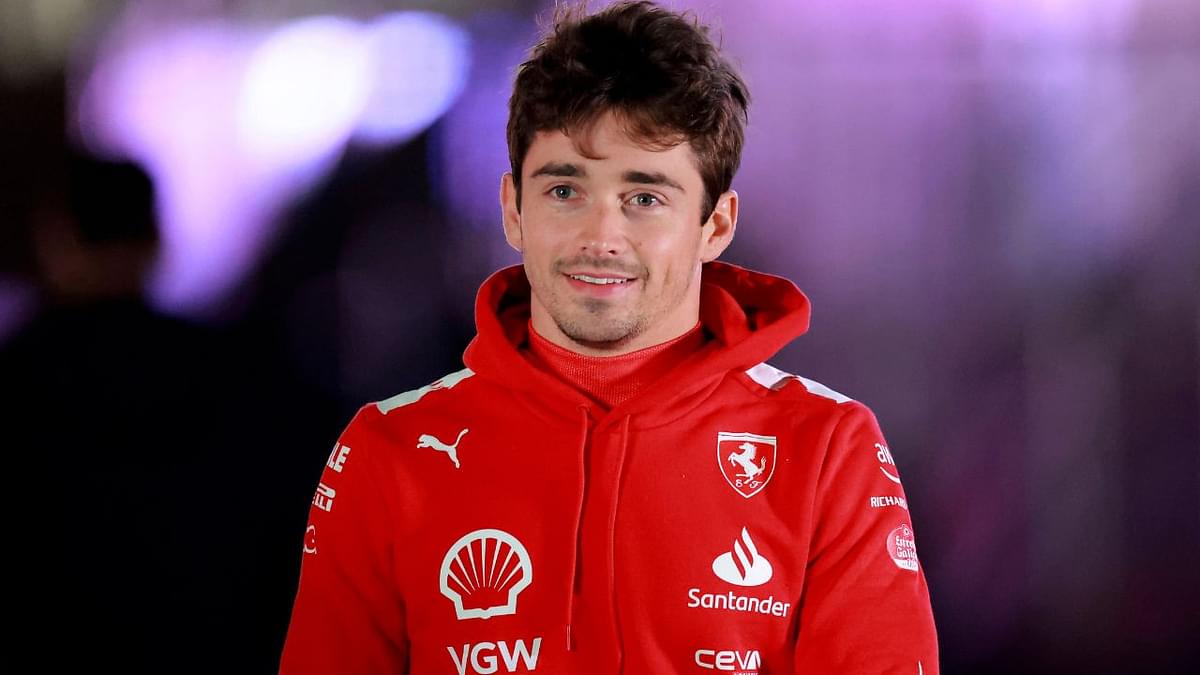
If you’ve ever watched a post-race interview at Monza and heard Charles Leclerc switch from English to Italian without skipping a beat, you probably wondered how he does it. Or maybe you caught him chatting in French with Pierre Gasly on the grid.
It's pretty wild to see. Most of us struggle to order a coffee in a second language, but F1 drivers are a different breed.
So, what languages does charles leclerc speak? Basically, he’s trilingual. He is completely fluent in French, Italian, and English.
There's also a bit of a myth that he speaks Spanish or German. Honestly, "speaks" might be a stretch there. He can definitely survive a conversation in Spanish, but he’s not writing poetry in it. Let’s break down exactly how he learned each one and where he actually uses them in the high-pressure world of Formula 1.
French: The Native Tongue
Charles was born and raised in Monte Carlo.
Since French is the official language of Monaco, it’s his first language. It’s what he speaks with his family, his brothers Arthur and Lorenzo, and his closest friends. If you ever watch his "C²" videos on YouTube with former teammate Carlos Sainz, you'll see him trying to teach Carlos French phrases.
He sounds most "himself" in French. There’s a certain speed and cadence he has that only comes with being a native speaker.
Does he speak Monégasque?
This is a common question. People think because he’s from Monaco, he must speak the traditional local dialect, Monégasque.
The reality? Hardly anyone in the younger generation speaks it fluently. It’s a variety of Ligurian (related to Italian), and while it’s taught in schools in the Principality, Charles has admitted he isn't a speaker. He’s a French speaker through and through.
Italian: The Language of the Heart (and Ferrari)
If you want to drive for Scuderia Ferrari, you better learn Italian. It’s almost a requirement for survival at Maranello.
Charles didn't just pick up Italian when he joined the F1 team in 2019, though. His connection to Italy goes way back to his karting days. He spent a massive amount of time in Italy as a kid because that’s where the best karting tracks and teams are.
By the time he reached the Ferrari Driver Academy, he was already very comfortable.
- Fluency Level: Near-native.
- Usage: He uses it to talk to his mechanics, his engineer (Bryan Bozzi), and the Italian media.
- The "Vibe": When he wins a race like the 2024 Italian Grand Prix, his radio messages in Italian are legendary. He sounds like a local.
Actually, it’s often said that the "Tifosi" (Ferrari fans) love him so much specifically because he speaks their language so well. He doesn't need a translator to feel the emotion of the crowd at Monza.
English: The Professional Tool
English is the "lingua franca" of Formula 1.
Even though Ferrari is an Italian team, a huge portion of the paddock, the technical regulations, and the international media operations run on English. Charles is incredibly proficient.
He doesn’t have the heavy "Inspector Clouseau" accent you might expect from some French speakers. Instead, he has that mid-Atlantic, slightly European "F1 accent" that most drivers develop after living in the UK or traveling the world for ten years.
He uses English for:
- Official FIA press conferences.
- Global sponsorship activations.
- Talking to non-Italian/non-French members of the paddock.
It’s efficient. It’s sharp. It gets the job done.
What About Spanish?
Now, this is where things get interesting.
Because he spent several years as teammates with Carlos Sainz, Charles picked up a decent amount of Spanish. The two of them have a "bromance" that fans obsessed over, and they often joked around in a mix of languages.
Spanish and Italian are "lexically similar," meaning if you speak one well, you can usually understand about 80% of the other.
Is he fluent? No.
Can he give an interview in Spanish? Sorta.
He has done a few fun segments where he tries to speak Spanish, and while he’s grammatically all over the place, he’s brave enough to try. He can definitely understand what’s being said to him, but don't expect him to lead a technical briefing in Madrid anytime soon.
Why Language Skills Actually Matter in F1
You might think, "Who cares? They just drive cars."
But in F1, communication is everything. When you're going 200 mph and your seat is literally on fire (okay, hopefully not literally, but you get it), being able to describe a complex mechanical issue to your engineer is vital.
The Psychological Edge
There’s also the "human" side.
When Charles speaks Italian to the factory workers at Maranello, he’s building a bridge. He isn't just an "employee"; he’s one of them. That loyalty goes a long way when the team needs to work 20-hour shifts to fix a floor update before the next race.
Expert linguists often point out that "switching" languages also helps with mental flexibility. If you can juggle three languages, your brain is likely pretty good at processing the mountain of data coming off a steering wheel display.
How He Compares to Other Drivers
Charles is definitely at the top end of the linguistic scale in the paddock.
For comparison, Lewis Hamilton mainly sticks to English. Max Verstappen is a bit of a powerhouse, speaking Dutch, English, and German fluently (plus some "conversational" bits of other languages).
But the real king of languages in F1 history was probably Nico Rosberg. He spoke five languages fluently. Charles is sitting comfortably in that "Elite Polyglot" tier right behind him.
Quick Language Cheat Sheet:
- French: Native (Daily life)
- Italian: Fluent (Team communication/Ferrari culture)
- English: Fluent (Professional/Media)
- Spanish: Conversational (Socially with friends like Carlos Sainz)
- Monégasque: Basics/None (Schooling only)
Actionable Takeaways for Fans
If you're looking to follow Charles's career or even learn a language yourself, here is how you can use his skills as a roadmap:
- Watch the Post-Race Radios: Listen to the difference in his voice when he wins. In Italian, he’s much more expressive and "loud." In English, he tends to be more analytical.
- Follow Ferrari's Social Media: They often post "unfiltered" clips of the drivers speaking their native tongues. It’s a great way to hear the nuances of how Charles interacts with his inner circle.
- Don't Fear Mistakes: The biggest lesson from Charles is his willingness to try Spanish or even bits of Japanese when he’s in Suzuka. He doesn't care if he sounds a bit silly; he cares about connecting with the fans.
Learning a language is about more than just words; it’s about access. For Charles Leclerc, being trilingual gave him access to the heart of the most famous racing team in the world.
If you want to see his skills in action, check out the 2024 Monza victory radio—it’s the perfect example of his Italian fluency meeting raw emotion.