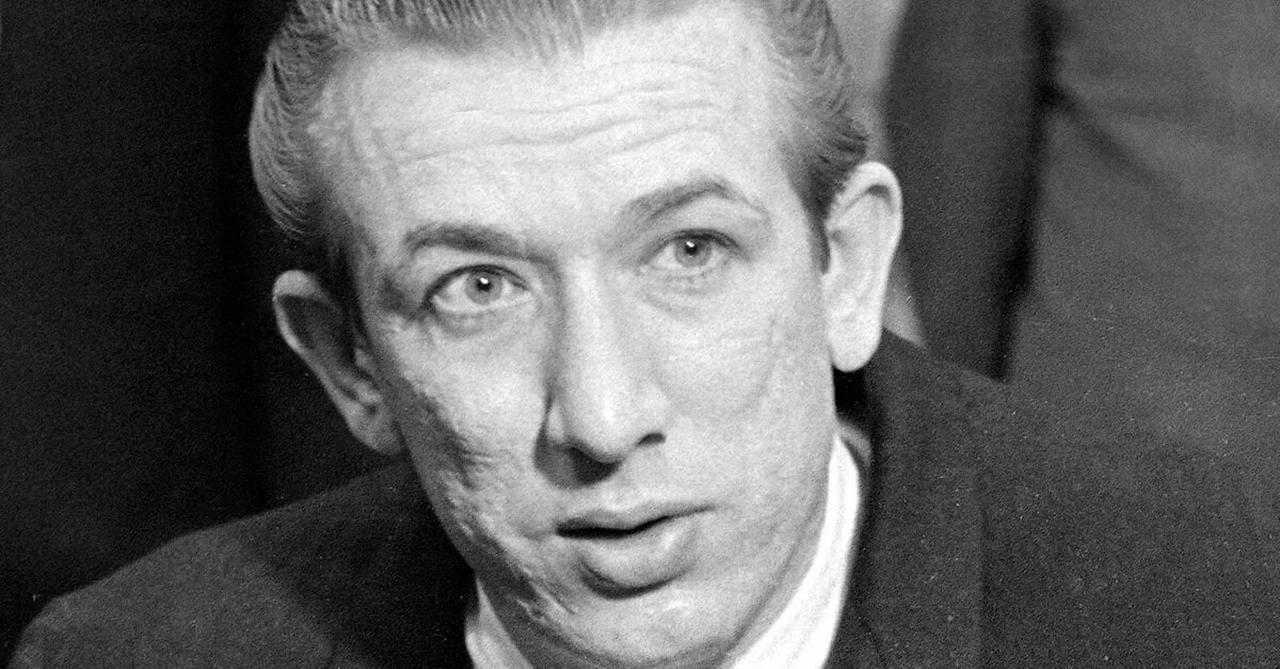
The grainy footage from Stateville Correctional Center didn't just shock the public because of the drugs or the blatant disregard for prison rules. It was the physical transformation of one of America’s most hated mass murderers. Seeing the man who slaughtered eight student nurses in 1966 sporting large breasts and blue silk lace underwear sparked a question that has lingered for decades: was Richard Speck trans, or was something else entirely happening behind those stone walls?
People often want a simple label. Human history is messy, though. When Bill Kurtis aired that leaked video on WBBM-TV in 1996—five years after Speck’s death—the world saw a killer who seemed to have traded his hyper-masculine, "Born to Raise Hell" persona for something feminine. He was wearing makeup. He had developed significant breast tissue. He was performing sexual acts with another inmate while bragging about how much he enjoyed his life of leisure. It looked like a transition. But if you dig into the medical records and the interviews with those who knew him, the reality is far more clinical and, frankly, weirder.
The 1988 Video and the Hormone Controversy
You’ve probably seen the stills. Speck is sitting there, looking relaxed, high on what he claimed was "hundreds of dollars" worth of cocaine. In the video, Speck’s physical appearance is jarring. He clearly has developed breasts, a condition known medically as gynecomastia.
This led to immediate speculation that Speck was transitioning or identifying as a woman. However, Speck himself never claimed to be transgender in the way we understand the term today. In the footage, he laughs about his body, almost treating it like a tool or a joke. He mentions taking "pills" that he obtained through the prison's black market.
There is no evidence Richard Speck ever requested gender-affirming care from the Illinois Department of Corrections. In the 1970s and 80s, that wasn't exactly a standard offering in maximum-security facilities. Instead, reports suggest he was self-administering smuggled hormones. Why? Not necessarily because of gender identity.
In the brutal hierarchy of Stateville, Speck found that being "feminized" actually afforded him protection and a bizarre kind of status. He became a "prison wife" to a much larger, more powerful inmate. By altering his body, he navigated the predatory environment of the prison system in a way that kept him from being the victim of random violence. He traded his masculinity for a twisted kind of safety.
Separating Gender Identity from Prison Survival
To answer the question of was Richard Speck trans, we have to look at his own words. He was a narcissist. A heavy drinker. A man who, by all accounts, had a deep-seated hatred for women. That’s the irony people struggle with. How does a man who committed one of the most misogynistic crimes in history choose to look like a woman?
Speck didn't express a "soul-deep" misalignment with his birth sex. He expressed a desire to be pampered.
In the Kurtis video, he’s heard saying, "If they only knew how much fun I was having, they’d turn me loose." He wasn't living in agony over his gender; he was manipulating his surroundings. Experts like Dr. James Alan Fox, a noted criminologist, have pointed out that Speck's behavior in prison was consistent with his lifelong pattern of taking the path of least resistance. If being "female" meant he got better food, drugs, and protection, Speck was more than willing to play the part.
It's also worth noting the medical side.
Gynecomastia can be caused by many things. While Speck claimed to be taking hormones, long-term liver damage from his years of chronic alcoholism can also cause a hormonal imbalance leading to breast growth. He had been a heavy drinker since his teens. By the time he was in Stateville, his body was failing in multiple ways.
The Myth of the XYY Syndrome
For a long time, people tried to explain Speck’s violence and his later physical changes through biology. You might remember the "Supermale" theory. During his trial, his defense team actually tried to claim he had an extra Y chromosome (XYY syndrome).
They argued this made him inherently more aggressive and potentially accounted for his physical irregularities.
It turned out to be a total fabrication.
Genetic testing proved Richard Speck was a standard XY male. The "extra chromosome" story was a legal Hail Mary that failed, but it stuck in the public consciousness for years. It fed into the idea that Speck was a "biological freak," which made the later rumors about him being trans easier for the public to swallow. If he was already "genetically different," then the breasts and the lace underwear just seemed like the next logical step in his "abnormality."
But he wasn't different. He was just a man who chose to be a monster, and later, a man who chose to adapt to a cage.
Life in Stateville: The Reality of the "Silk Panties" Killer
Stateville in the 80s was a nightmare. It was overcrowded and run by gangs. For a high-profile inmate like Speck, life should have been looking over his shoulder every second.
Instead, he was living like a king.
The video showed him with a TV, high-grade drugs, and a companion. He had essentially built a domestic life within the prison. This is where the confusion about his gender identity usually peaks. He was referred to by some inmates with feminine pronouns, and he didn't seem to mind. But he also continued to refer to himself in the masculine in many contexts.
It was a performance.
Honestly, the most chilling part of the video isn't the lace or the hormones. It's his total lack of remorse. At one point, he describes the night of the murders with a casual, almost bored tone. "It just wasn't their night," he says about the eight women he killed. This suggests that his physical "transition" hadn't changed his fundamental psyche. He remained a sociopath.
Whether he was wearing a denim work shirt or a silk bra, the person underneath was the same individual who broke into a townhouse on 100th Street and methodically extinguished eight lives.
What Modern Psychology Says About the Case
If Speck were alive today, would he be diagnosed with Gender Dysphoria? Most forensic psychologists say no.
The consensus leans toward Maladaptive Plasticity. Speck was a chameleon. Before the murders, he was a drifter, a petty thief, and a husband. In prison, he became whatever he needed to be to survive.
- He used the hormones as a form of social currency.
- The feminine presentation was a shield against the general population.
- His "relationship" in prison was transactional, providing him with drugs and security.
There is a distinct difference between a transgender person seeking to live authentically and a criminal using gender presentation as a tactical maneuver. Mixing the two does a disservice to the trans community and obscures the predatory nature of Speck's personality.
The Aftermath of the Video Leak
When the video hit the news in 1996, it caused a massive political scandal. Illinois lawmakers were livid. How could a mass murderer be filmed doing drugs and having sex in a state facility?
It led to major reforms in the Illinois prison system. Security was tightened. The "party" was over for inmates like Speck (though he had already died of a heart attack in 1991). The video remains one of the most surreal artifacts in true crime history. It’s a 130-minute window into the life of a man who had completely checked out of reality.
Spek died at the age of 49. His body was unclaimed by his family. He was cremated, and his ashes were scattered in an undisclosed location to prevent his grave from becoming a macabre tourist attraction.
Actionable Insights: Understanding the Speck Case Today
To truly grasp the "was Richard Speck trans" debate, you have to look past the tabloid headlines and focus on the intersection of prison culture and personality disorders.
Look at the context of the era. In 1988, there was no mainstream "transgender" movement for Speck to join. His behavior was viewed through the lens of prison "situational homosexuality" and survivalism.
Check the medical source material. If you're researching this, look for the Illinois Department of Corrections reports released after the 1996 scandal. They detail the lack of official medical requests for gender care.
Differentiate between identity and behavior. Behavior in a total institution (like a prison) is often driven by external pressures rather than internal identity. Speck’s "feminization" was a localized adaptation to Stateville, not a lifestyle he sought outside of those walls.
Analyze the psychopathy. Speck’s primary diagnosis was always rooted in anti-social personality disorder. Every action he took, including his physical transformation, was centered on his own immediate gratification and comfort.
While the imagery of the 1988 video is haunting and provocative, it doesn't point to a secret identity. It points to a man who, even in captivity, found a way to manipulate the system and the people around him for his own gain. He wasn't a pioneer of gender identity; he was a master of manipulation until the very end.