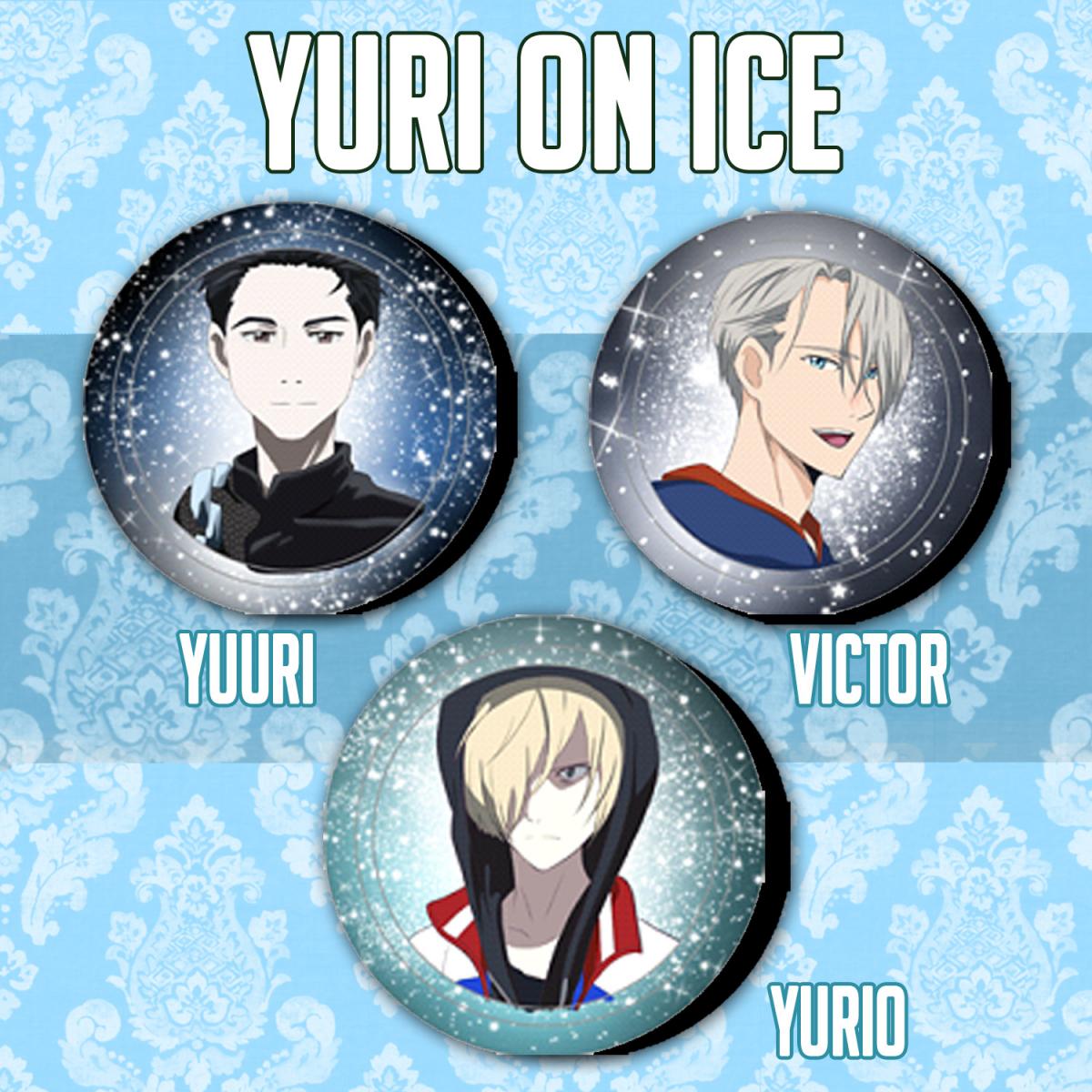
Honestly, if you were anywhere near the anime scene in 2016, you couldn’t escape the silver-haired whirlwind that was Victor Nikiforov. He wasn't just another pretty face in a sports show. He was a shift in the atmosphere. Even now, years after the credits rolled on the first season of Yuri on Ice, fans are still dissecting his every move, his questionable coaching methods, and that heartbreakingly unfinished prequel movie.
Victor is a "living legend" in the world of men’s singles figure skating. Five consecutive World Championships. Five straight Grand Prix Finals. He’s basically the Michael Jordan of the ice, but with better hair and a much more expensive taste in trench coats. When he abandoned his throne to coach Yuri Katsuki—a skater who had just finished dead last—it wasn't just a plot twist. It was a character study in burnout and the desperate search for "life and love" after two decades of neglecting both.
The Real Inspiration Behind Victor Nikiforov
There’s a lot of chatter about who Victor actually is based on. If you look at his career stats, it’s hard not to see the shadow of Evgeni Plushenko. The Russian dominance, the longevity, the sheer "rockstar" status in a sport that can sometimes feel rigid—that’s all Plushenko.
But his face? That’s a different story.
Mitsurō Kubo, the series co-creator, has been pretty open about the fact that Victor’s visual design was heavily inspired by American actor and director John Cameron Mitchell. She saw him during a trip to New York while he was performing in Hedwig and the Angry Inch and was struck by his aura. It gives Victor that specific, androgynous glam-rock edge that sets him apart from the more traditional "princely" archetypes usually found in sports anime.
Then you have the tributes to Johnny Weir. The flower crown, the Makkachin tissue box (which became a real-life merchandising juggernaut), and the costumes that blurred gender lines—all of that is a direct nod to Weir’s influence on the skating world. It’s this mix of real-world grit and high-fashion theatricality that makes Victor feel like a person who could actually exist, even if his triple axels are a bit too perfect for physics.
What People Get Wrong About Victor’s Coaching
Let’s be real for a second: Victor was a terrible coach at the start. Brilliant skater? Absolutely. Natural mentor? Not so much.
He didn't really understand how to handle Yuri Katsuki’s crippling anxiety. Remember the scene in the parking lot during the Cup of China? Victor basically threatened to resign as coach if Yuri messed up, thinking that "shock therapy" would motivate him. It backfired spectacularly. Yuri ended up in tears, and Victor looked like a deer in headlights.
"I'm not very good at managing others' emotional distress," Victor admitted in so many words.
This is what makes him interesting. He’s a genius who spent his entire life being pampered and praised. He had no idea how to be "normal" or how to support someone who didn't share his titanium-strength ego. His growth throughout the series isn't just about teaching Yuri how to land a quadruple flip; it's about Victor learning that people aren't puzzles to be solved, but humans to be cared for.
By the time we get to the Grand Prix Final in Barcelona, he’s not just a coach. He’s a partner. The exchange of gold rings wasn't just a "good luck charm" or a bit of queer-coding—it was a definitive commitment. In a world that often treats same-sex relationships as "subtext," Yuri on Ice walked right up to the line and crossed it.
The Tragedy of Ice Adolescence
We have to talk about the elephant in the room: the cancellation of Yuri on Ice the Movie: Ice Adolescence.
For years, MAPPA teased us with that 60-second clip of a teenage Victor, long hair flowing, looking lonely as hell in the Russian snow. Then, in April 2024, they officially pulled the plug. It felt like a punch to the gut for a fandom that had stayed loyal for nearly a decade.
The official line was "various circumstances" and creative difficulties. But if you dig into the production history, it’s clear that making a high-budget, original sports film without a manga source material is a massive financial risk. There have been persistent rumors about creative clashes regarding how "canon" the romantic elements of Victor and Yuri’s relationship should remain in a global market, but regardless of the why, the result is the same: a massive gap in Victor’s backstory that we might never see filled.
We missed out on seeing how a young Victor went from a lonely prodigy under Yakov Feltsman’s harsh thumb to the charismatic, slightly detached legend we met in episode one. That transition is the missing piece of his soul.
Why He Still Dominates the Conversation
So, why does a character from a 2016 show still trend on social media in 2026?
It’s the "Victor Effect." He represents the idea that you can be at the absolute top of your game and still feel completely empty. His decision to leave Russia for a tiny hot-springs town in Japan was an act of rebellion against his own success.
- Subverting Masculinity: He wears lace, he cries, he’s openly affectionate, and he’s still the most formidable athlete in the room.
- The "Surprise" Factor: His entire philosophy is based on surprising the audience. "If you don't surprise them, you're dead," he says. This keeps the character from feeling stagnant.
- Cultural Impact: He became a bridge. Real-world skaters like Evgenia Medvedeva and Yuzuru Hanyu have acknowledged the show. It brought a massive new audience to figure skating, changing the "fandom" side of the sport forever.
Moving Forward: What to Do With This Knowledge
If you’re just discovering Victor Nikiforov or you're a returning fan feeling the sting of the movie's cancellation, here is the best way to engage with the legacy:
- Watch the "Welcome to The Madness" OVA: If you only watched the 12 episodes, you missed the extra content where Victor and Yuri (Yurio) show a different side of their rivalry.
- Support the Creators: Follow Mitsurō Kubo’s work. She poured her heart into this character, and her art still carries that specific "Victor" spark.
- Look at Real Skating: Watch clips of the skaters who inspired him. Seeing a Plushenko routine or a Johnny Weir performance gives you a much deeper appreciation for the technical accuracy of the anime's choreography.
Victor Nikiforov didn't just change anime; he changed how we view the "perfection" of athletes. He showed us that even a legend needs someone to tell them it's okay to stop being a performer and start being a person. Whether we ever get a Season 2 or not, the impact of the Russian Fairy remains frozen in time—exactly where he belongs.
To keep the spirit of the show alive, you can dive into the official "Yuri on Ice" behind-the-scenes books which detail the frame-by-frame choreography designed by Kenji Miyamoto. It’s the closest we’ll get to seeing the technical mastery Victor was meant to display in his younger years.