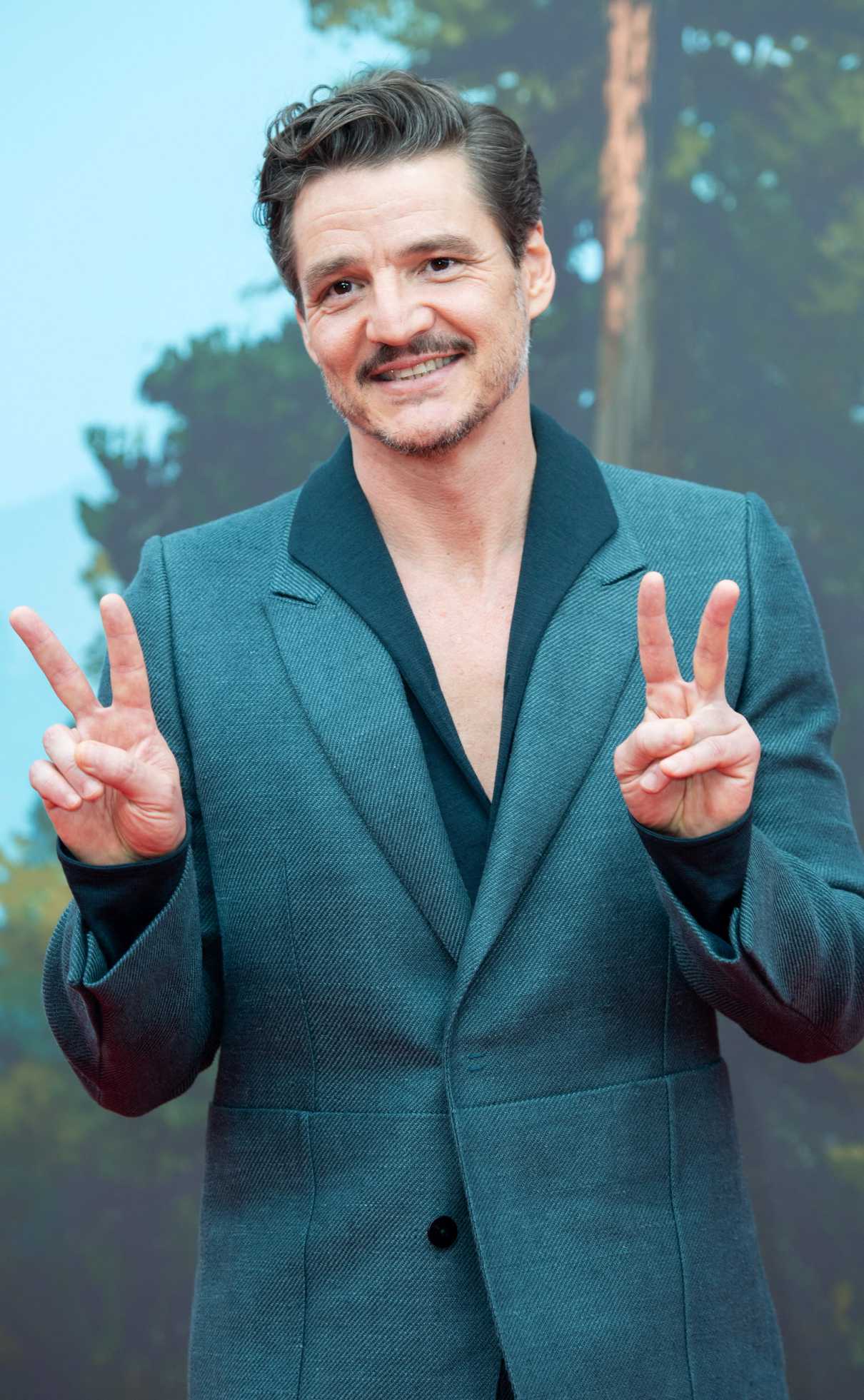
DreamWorks really did it this time. They didn't just make a movie; they made a masterpiece that feels like a warm hug and a gut punch all at once. If you haven't seen The Wild Robot yet, you’re missing out on a rare cinematic experience where the voice acting actually feels as vital as the animation itself. While Lupita Nyong'o is the heart of the film as Roz, it’s honestly The Wild Robot Pedro Pascal performance as Fink the fox that provides the soul, the humor, and the necessary friction that makes the story work.
Pascal is everywhere lately. The Last of Us, The Mandalorian, the upcoming Fantastic Four—the man is booked and busy. But there’s something different about his turn as Fink. It’s not just a celebrity voice-over gig for a paycheck. You can hear the craft. Fink isn't a hero, at least not at first. He’s a lonely, cynical scavenger who stumbles into a makeshift family, and Pascal plays that transition from selfish trickster to reluctant father figure with a nuance that most live-action performances struggle to hit.
How The Wild Robot Pedro Pascal Performance Breaks the "Celebrity Voice" Curse
We’ve all seen those animated movies where a big-name actor just speaks in their normal voice, and it’s distracting. You just see the actor in the recording booth. But with The Wild Robot Pedro Pascal manages to disappear. He adopts this raspy, slightly desperate cadence for Fink. It’s the sound of a fox who has spent his entire life being the "bad guy" because that’s what the woods expected of him.
Director Chris Sanders, who also gave us Lilo & Stitch and How to Train Your Dragon, has a knack for finding the humanity in non-human characters. He clearly let Pascal play with the rhythm of the lines. There are moments where Fink rambles, his voice cracking with a mix of sarcasm and genuine fear. It’s messy. It’s human.
The Chemistry Between Roz and Fink
The movie lives or dies on the relationship between Roz (the robot) and Fink (the fox). Roz is pure logic trying to learn emotion. Fink is pure emotion trying to pretend he’s logical. When they team up to raise Brightbill, the orphaned gosling, the dynamic shifts from a survival alliance to a genuine partnership.
Pascal brings a specific kind of "tired dad" energy to the role. You’ve probably heard him do the protector archetype before, but Fink is different because he’s inherently flawed. He lies. He steals. He’s survival-oriented. Watching Pascal peel back those layers—showing the vulnerability underneath the fur—is arguably the highlight of the film’s second act.
Peter Brown’s Source Material vs. Pascal’s Interpretation
If you’ve read the original book by Peter Brown, you know Fink is a bit more of a secondary character initially. The film expands his role significantly. This was a smart move by the writers. In a world of wild animals and cold machinery, you need a bridge. Fink is that bridge.
The The Wild Robot Pedro Pascal collaboration turns a clever side character into a co-protagonist. In the book, Fink is more of a guide to the island's social hierarchy. In the movie, he’s a mirror for Roz. He teaches her that "wilding" isn't just about survival; it's about finding a place where you belong, even if you weren't "programmed" for it.
Honestly, the way Pascal delivers the line about "kindness not being a survival trait" is chilling. He says it with the weight of someone who has tried to be kind and got burned for it. It’s those tiny vocal choices that elevate the film from a "kids' movie" to a profound meditation on social structures.
Why This Movie Is Dominating the Box Office and Awards Talk
It’s not just the star power. The animation style is painterly and gorgeous, looking more like a living illustration than a polished 3D render. But audiences are sticking around for the performances. There is a specific scene where Fink describes his own backstory—or lack thereof—and the crack in Pascal’s voice is what sells the tragedy.
- The film relies on visual storytelling first.
- The dialogue is sparse but impactful.
- The "family" dynamic feels earned, not forced by the script.
People are comparing this to The Iron Giant or Wall-E, and honestly? That’s not hyperbole. It deserves to be in that conversation.
The Technical Side of Pascal's Voice Work
Voice acting is grueling. You're in a dark room, often alone, trying to match the energy of characters that aren't even fully animated yet. Pascal has mentioned in interviews that he found the process liberating. He could be bigger, louder, and more expressive than he can be when a camera is two inches from his face.
The sound designers also did an incredible job layering his voice. Fink has these little snorts and clicks—animalistic sounds—that Pascal integrated into his speech patterns. It makes the fox feel like a part of the environment rather than a human in a fox suit.
A Departure from Joel Miller and Din Djarin
If you're coming to this movie expecting "The Space Dad" or "The Apocalypse Dad," you’ll get a version of that, but it’s much more chaotic. Joel Miller is controlled. Din Djarin is stoic. Fink is a mess. He’s neurotic. He’s funny. It’s a side of The Wild Robot Pedro Pascal fans haven’t seen as much of lately, reminding everyone that he actually started in theater and has a massive range beyond the "grumpy protector."
He talks fast. He trips over his words. He uses humor as a shield. It’s a very "human" way for a fox to behave, which is the irony at the center of the film.
What to Expect Next for the Franchise
With the massive success of the film, DreamWorks has already confirmed a sequel is in development. This is great news because Peter Brown wrote three books: The Wild Robot, The Wild Robot Escapes, and The Wild Robot Protects.
Without spoiling the ending of the first movie, Fink’s journey is far from over. If the sequel follows the books, we’re going to see how the island community survives without their central figure, and how Fink steps up into a leadership role he never wanted. Pascal is expected to return, and his character’s growth will likely be the emotional anchor of the next installment.
Actionable Takeaways for Fans and Collectors
If you're obsessed with the movie, there are a few things you should actually do rather than just re-watching the trailer for the tenth time.
- Read the Books: Peter Brown’s trilogy offers a lot more world-building that the movie had to trim for time. The relationship between Fink and Roz is explored with more internal monologue.
- Watch the "Behind the Scenes" Featurettes: Look specifically for the footage of the voice recording sessions. Seeing Pascal’s physical movements while voicing Fink explains why the character moves the way he does on screen.
- Check Out the Soundtrack: Kris Bowers composed the score, and it’s one of the best of the decade. It uses organic sounds that perfectly complement Pascal’s raspy performance.
- Support Original Animation: In an era of endless sequels and remakes, The Wild Robot is a reminder that mid-budget, high-concept animation is where the real art is happening.
The legacy of The Wild Robot Pedro Pascal won't just be that he voiced a fox. It will be that he helped anchor a story about what it means to go against your nature to help someone else. That’s a universal theme, and he nailed it.
Go see it on the biggest screen possible. Bring tissues. Don't say I didn't warn you. The "Fox and Robot" dynamic is going to be talked about for years, and Pascal’s Fink is a huge reason why. It’s a masterclass in how to use a famous voice to serve a story, rather than overshadowing it.