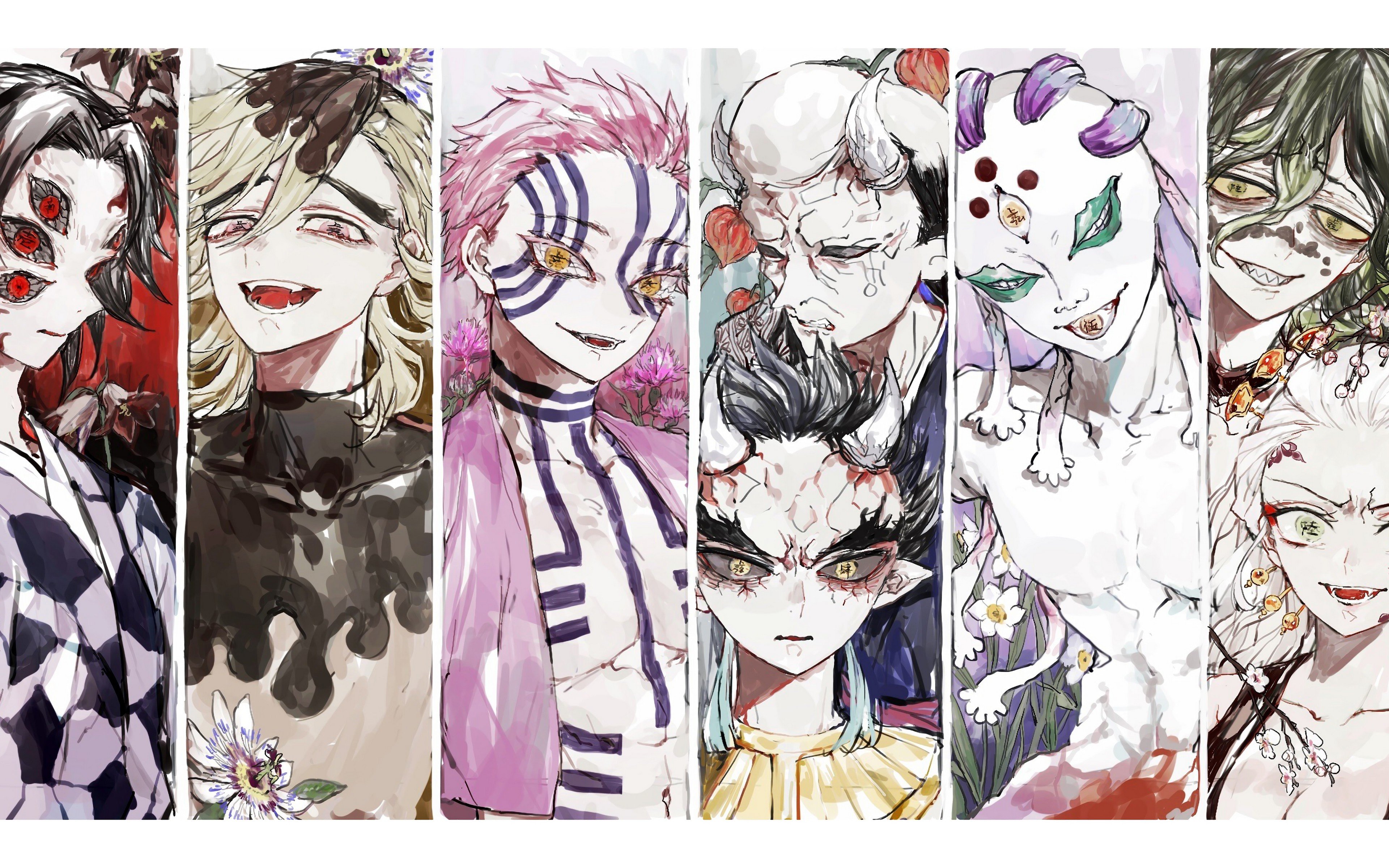
You've probably seen the fan art. Maybe you’ve stumbled across a YouTube thumbnail with a glowing, terrifying demon marked with the kanji for Upper Moon 7. It looks official. It feels like a piece of the lore you just haven't reached yet. But if you’re scouring the manga or rewatching the Infinity Castle arc looking for this mysterious seventh seat, I’ve got some bad news for you.
There is no Upper 7.
Honestly, it’s one of those things that keeps popping up in the community, mostly because the math feels like it should work. Muzan Kibutsuji, the big bad himself, is obsessed with order and power. He has six Upper Moons and six Lower Moons. That's twelve. A nice, even dozen. But the idea of an "Upper 7" is basically a phantom of the internet, born from a mix of translation confusion, the "Seven Deadly Sins" fan theory, and the chaotic reshuffling of ranks that happens toward the end of the series.
Why People Think an Upper 7 Exists
So, why does everyone keep talking about it? Part of it is just how the brain works. We like sets of seven. In the Kimetsu no Yaiba fandom, there's a super popular theory that the Upper Moons represent the Seven Deadly Sins. You’ve got Akaza as Wrath, Doma as Gluttony, and Kokushibo as Envy. It fits so well that people naturally assume there must be a seventh demon to round out the list.
But Koyoharu Gotouge, the creator, didn't build the hierarchy that way. The Twelve Kizuki (Twelve Demon Moons) are strictly divided into two groups of six. When you look at the eyes of these monsters, they are engraved with their specific rank. You’ll see "Upper Rank 1" or "Lower Rank 6," but you will never see a 7.
The confusion also spiked during the Infinity Castle arc. After the Entertainment District and Swordsmith Village battles, the ranks were a total mess. Muzan lost Daki, Gyutaro, Gyokko, and Hantengu. He had huge holes in his lineup. To fill the void, he promoted two new demons: Nakime and Kaigaku.
The Replacement Ranks
- Nakime: She took over the Upper Moon 4 spot after Hantengu was defeated.
- Kaigaku: He filled the Upper Moon 6 vacancy left by Daki and Gyutaro.
Because there were "new" Upper Moons appearing alongside the "old" ones, some fans got turned around and thought the number of Upper Moons had expanded. Nope. Muzan is a "quality over quantity" kind of guy—though, let's be real, his HR management skills are atrocious.
The "Lower 7" vs. "Upper 7" Confusion
Sometimes, the "Upper 7" talk comes from a misunderstanding of how the Twelve Kizuki are actually numbered.
If you count the entire group of twelve as a single list, the Lower Moon 1 (Enmu) would technically be the 7th strongest demon in Muzan’s service. If someone refers to "the seventh moon," they might be talking about Enmu. But in the world of Demon Slayer, "Upper" and "Lower" are completely different classes.
Think of it like professional sports leagues. The Upper Moons are the Major Leagues; the Lower Moons are the Minors. An Upper Moon hasn't been replaced in over 100 years until Tanjiro and his friends start showing up. The Lower Moons, meanwhile, are basically cannon fodder. Muzan gets so annoyed with their weakness that he literally executes almost all of them himself in a fit of rage.
Could There Have Been an Upper 7?
Technically, Muzan could have made one. He has the blood. He has the ego. But he didn't.
According to official databooks and the manga's progression, Muzan kept the number at six because of the sheer amount of blood required to create an Upper Moon level threat. Not many humans can survive the "overdose" of Muzan’s cells. When he turned Kaigaku, it was a desperate move to bolster his defenses before the final showdown. Kaigaku didn't even have time to develop a proper Blood Demon Art or refine his skills—which is why Zenitsu was able to take him down.
There's also the trust factor. Muzan is incredibly paranoid. He doesn't want too many powerful demons running around because they might team up and try to overthrow him. Keeping the inner circle small—just six elites—allows him to maintain absolute mental control through his blood connection.
How to Spot "Fake" Upper 7 Content
If you see a video or an article claiming to have the "leaked" backstory of the Upper 7, here’s how to tell it’s fan-made:
- The Name: Fans often use names like "Kairu" or "Mitsuo." These aren't in the manga.
- The Design: Most "Upper 7" designs are just high-quality edits of existing characters or original characters (OCs) from artists on Pixiv or DeviantArt.
- The Ranking: If the eyes don't show the specific kanji for "Upper" (上) and "Six" (六) or "Four" (四), and instead show a "Seven" (七), it’s 100% fan fiction.
Koyoharu Gotouge finished the manga in 2020. There aren't any secret chapters or "lost" demons waiting to be discovered. What we see in the anime and manga is the complete roster.
Actionable Insights for Fans
If you're trying to keep the ranks straight, stick to the official lineup. The "Seven Deadly Sins" theory is fun for headcanons, but it isn't the blueprint for the story. If you're looking for more "hidden" content, your best bet is the Demon Slayer: Kimetsu no Yaiba – Stories of Water and Flame gaiden or the official fanbooks, which give extra details on the existing Upper Moons.
Stop searching for an Upper 7; instead, look into the backstories of the demons we actually have. The history of Kokushibo and his relationship with the first Sun Breather, or the tragic origin of Akaza, offers way more depth than any made-up seventh rank ever could.
Stick to the source material. It's already wild enough without adding extra numbers.
Next Steps:
Check out the Demon Slayer Fanbook: Kisatsutai Ibunroku. It contains the "Report on Demons" section where Muzan actually gives his personal opinions on each of the Upper Moons. It's the closest you'll get to seeing the internal politics of the Twelve Kizuki.