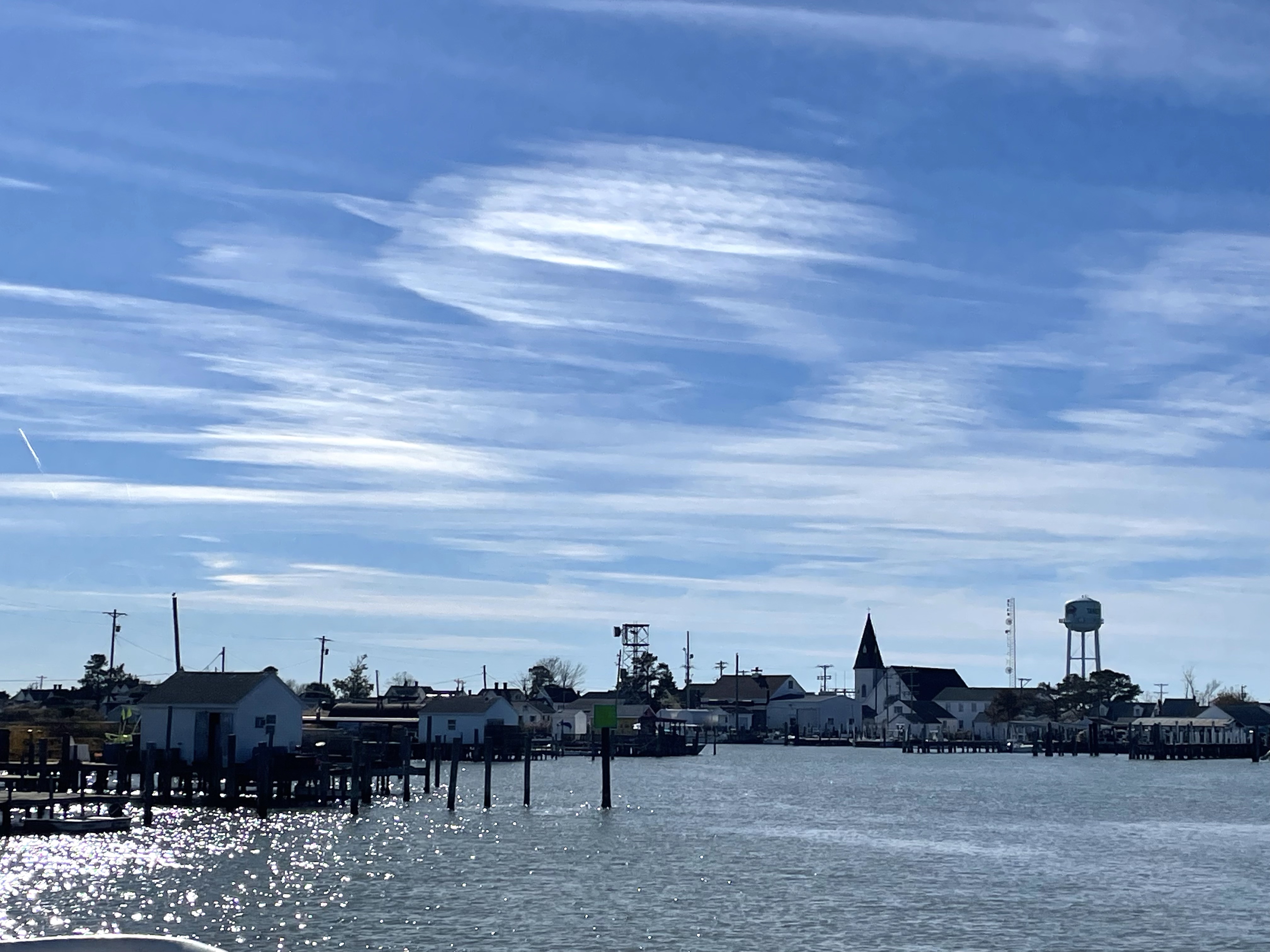
You’re standing on a narrow strip of sand in the middle of the Chesapeake Bay. It’s windy. The air smells like salt and diesel. A local crabber walks up, nods, and says something that sounds exactly like a pirate from a 1950s movie, or maybe a villager from a remote corner of Cornwall in 1640. You blink. You ask him to repeat it. He does. You still don't have a clue what he just said. This is the Tangier Island Virginia accent, and honestly, it’s one of the most misunderstood ways of speaking in the entire United States.
It’s not "Old English." Let's just get that out of the way right now because every travel documentary from the last thirty years loves to claim these people are speaking the King’s English from the time of Shakespeare. They aren't. Language doesn't just freeze in a block of ice for four hundred years. But the truth is actually way more interesting than that myth. What you're hearing on Tangier is a biological and cultural fluke—a relic of extreme isolation mixed with a very specific maritime history.
Where the Tangier Island Virginia Accent Actually Comes From
Tangier is tiny. It’s barely a mile wide. It sits about 12 miles off the coast of the mainland, and for a long time, the only way in or out was by boat. When the original settlers arrived in the late 1600s, mostly from South West England—places like Cornwall, Devon, and Dorset—they brought their West Country dialects with them.
Then, they stayed.
They didn't move around. They didn't have TikTok. They didn't have interstate highways. While the rest of Virginia’s accent evolved through contact with different immigrant groups and the shifting tides of American English, Tangier stayed put.
The Sound of the "Hoi Toider"
You might have heard the term "High Tider" (often pronounced Hoi Toider). This refers to the Ocracoke and Tangier way of saying "High Tide." Linguists call this a "dipthong shift." In most of America, the "i" sound in "tide" is flat or open. On Tangier, it rounds out, pushing toward an "oy" sound.
It’s weirdly rhythmic.
The vowels are slippery. If a Tangierman says the word "fish," it might sound like "feesh" or "fush" depending on who’s talking. If they say "out," it’s more of an "a-oot." This is a feature of what's known as the Tidewater accent, but on Tangier, it’s been turned up to eleven.
It's Not Just the Sound—It's the Slang
If you want to understand the Tangier Island Virginia accent, you have to understand "backwards talk." This is a local quirk that confuses the hell out of tourists. Basically, islanders often use negatives to mean positives, or they’ll say the exact opposite of what they mean with a very specific, dry irony.
Imagine a day where the weather is absolutely miserable. Gale force winds. Rain sideways. A local might look at you and say, "Right nice day, ain't it?" with a completely straight face. They aren't lying; they're using a linguistic survival mechanism that reinforces who is an "insider" and who is an "outsider."
If you don't get the joke, you're not from there.
A Few Phrases You’ll Actually Hear:
- "Momick": This is an old one. It means to bother, pester, or harass. "Don't you momick me today!"
- "All-stop": Used to describe something that is completely finished or a person who is stubborn.
- "Otymey": This sounds like a strange name, but it's often a variation of "old-timey" or referring to something from the past.
- "Cawn": This isn't a vegetable; it's how some locals say "can't."
The David Shores Study and Why It Matters
In the 1990s, a linguist named David Shores wrote a book called Tangier Island: Village, Community, and Speech. He spent years actually listening to these folks rather than just filming them for a three-minute news segment. Shores pointed out that the accent isn't just about vowels; it's about the speed and the pitch.
The speech is fast.
It’s clipped. Because the island is so small and everyone knows everyone, they don't have to be precise. You don't have to enunciate "The Chesapeake Bay Blue Crab" when everyone knows you're talking about a "crub."
There's a specific cadence to it—a musicality that feels more British than American, but more Appalachian than Southern. It’s a hybrid. It's a survivor.
The Real Threat to the Accent
The Tangier Island Virginia accent is dying.
It’s not just because of the internet, though that’s part of it. Young people on the island watch the same YouTube videos as kids in California. They hear "Standard American" English all day long. But the bigger threat is the water.
Tangier Island is sinking. Between land subsidence (the earth literally packing down) and rising sea levels, the island has lost about two-thirds of its landmass since the mid-1800s. Some estimates suggest the island could be uninhabitable within 25 to 50 years.
When the people leave, the accent goes with them.
Linguists from Old Dominion University and William & Mary have been trying to document as much as possible. They’ve noted that the "thickest" versions of the accent are now mostly found among the older men—the ones who spent their entire lives on deadrise workboats catching oysters and crabs. The younger generations still have a "twang," but it’s becoming more generalized. It’s losing its sharp edges. It's becoming "Mainland-ish."
Don't Call Them "Time Travelers"
One thing that really bugs the locals is when outsiders treat them like a living museum exhibit. They’re modern people. They have high-speed internet. They follow politics. They drive golf carts (the main mode of transport since cars are too big for the narrow paths).
When you go there and act like they’re "stuck in the 17th century," it feels condescending. Their accent isn't a sign of a lack of education or a lack of progress. It’s a badge of resilience. It’s a way of saying, "We have lived in the middle of this bay, through hurricanes and frozen winters, for 300 years, and we aren't changing for you."
How to Hear It Yourself
If you’re genuinely interested in the Tangier Island Virginia accent, don’t just watch a YouTube clip. Go there. Take the ferry from Reedville, Virginia, or Crisfield, Maryland.
But here’s the trick: don't just stand on the dock and stare.
Go to Lorraine’s Seafood Restaurant. Order a soft-shell crab sandwich (the best you will ever have, guaranteed). Sit there and just... listen. Don't interrupt. Don't ask them to "say something in the accent." Just listen to the rhythm of the room.
You’ll start to pick up the patterns. You’ll hear the way they drop certain consonants and how they stretch out the "o" sounds. It’s a beautiful, messy, complicated way of speaking that tells the story of an entire community's survival.
Actionable Steps for Language Enthusiasts
- Reference the Pros: If you want the real data, look up the work of Walt Wolfram, a sociolinguist at North Carolina State University. He’s done the most extensive work on "Outer Banks" and "Chesapeake" dialects.
- Visit the Museum: The Tangier History Museum is small but packed with recordings and oral histories. It’s the best place to hear the accent in its historical context.
- Support the Community: The best way to preserve a dialect is to preserve the place where it lives. Support the local economy by visiting during the shoulder seasons (May or September), which helps keep the community viable.
- Listen for the "Backwards Talk": Try to spot when a local says something that seems obviously false. Instead of correcting them, look for the wink or the slight change in tone. That's where the real island culture hides.
The Tangier accent is a disappearing treasure. It’s a linguistic fingerprint of a very specific time and place. Once it’s gone, we won’t just lose a "weird sound"—we’ll lose a direct connection to the people who built the maritime foundations of the American East Coast.