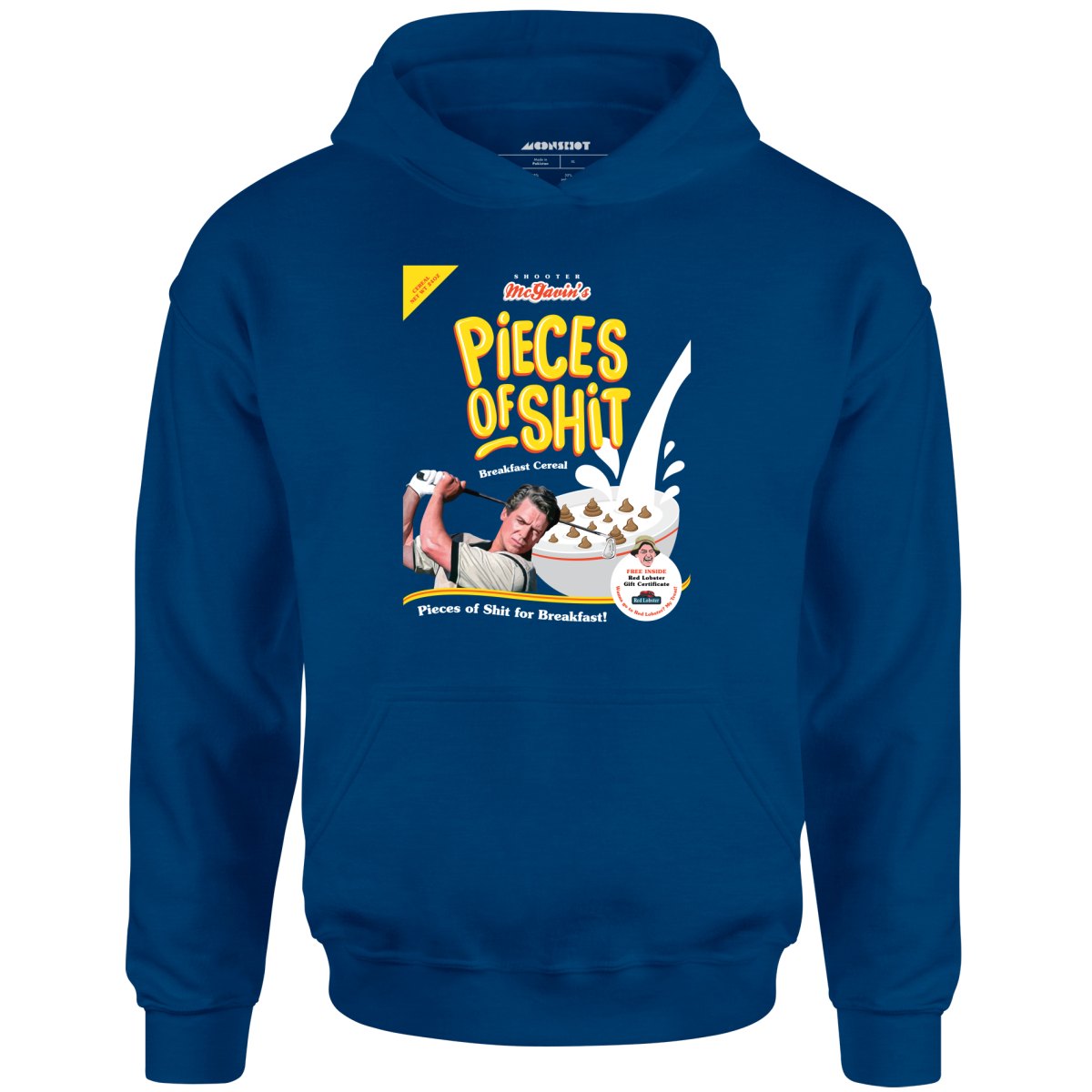
Food is subjective. We all know that. One person’s childhood staple is another person’s soggy nightmare. But when we talk about pieces of shit cereal, we aren't just complaining about a box of flakes that went stale too fast. We are talking about those rare, spectacular corporate misfires where the flavor profile, the texture, or the sheer audacity of the marketing left consumers wondering if the R&D department had collective taste bud failure.
It happens more often than you'd think.
Cereal is a multi-billion dollar industry built on nostalgia and sugar. Brands like Kellogg’s and General Mills have spent decades perfecting the science of "crunch retention" and "milk-color-change-dynamics." Yet, every few years, a product hits the shelves that feels less like breakfast and more like a dare.
The Science of Why Good Brands Make Bad Cereal
Why do we get stuck with cereals that taste like cardboard or, worse, something chemically "off"? It usually comes down to the gap between laboratory testing and the real-world breakfast bowl. In a lab, a "Birthday Cake" flavored corn puff might hit all the right chemical notes. Put it in a bowl of 2% milk on a Tuesday morning at 7:00 AM, and it tastes like a candle.
Taste is complex. Humans have roughly 10,000 taste buds. When a cereal brand tries to replicate a complex dessert—think Oreo O’s or Cinnabon Cereal—they are fighting an uphill battle against the "flavor ceiling." If the flavoring is too intense, it becomes cloying. If it’s too weak, it’s just another beige oat ring.
Take the infamous cases of "healthy" rebrands. When brands try to strip out the "good stuff" (sugar and fat) to meet health trends, they often end up with what many colloquially call pieces of shit cereal. The texture changes. The mouthfeel disappears. You’re left with a bowl of fiber that has the structural integrity of wet drywall. It's a betrayal of the morning ritual.
The Texture Trap
Texture is arguably more important than flavor in the cereal world. Dr. Zata Vickers, a food scientist at the University of Minnesota, has spent a significant portion of her career studying the acoustics of food. According to her research, the "crunch" isn't just a physical sensation; it's an auditory one that tells our brain the food is fresh and safe.
When a cereal fails, it’s often because it skips the "crunch" phase and goes straight to "mush."
Remember Kellogg’s Krave? People either love it or think it’s a disaster. For the detractors, that center-filled chocolate bit doesn't feel like a treat; it feels like a weird, oily paste inside a shell that gets soggy in approximately thirty seconds. That’s a texture failure. It’s the kind of experience that makes a consumer toss the whole box in the trash.
Notable Misfires in Breakfast History
Let's look at some specific examples that have earned the ire of breakfast enthusiasts over the years.
1. Cabbage Patch Kids Cereal (1985)
Yeah, this was real. Ralston, a company that usually made pet food (which says a lot), decided that the best way to market a doll was to make a cereal that tasted like "low-quality Trix." It was essentially round, multicolored puffs that had a strange, artificial tang. It didn't taste like fruit; it tasted like a chemical approximation of what a doll might dream about.
2. Grins & Smiles & Giggles & Laughs
The name alone is a red flag. Released in the 1970s, this was a "smiling face" shaped cereal. The problem? The shapes were terrifying once they started to dissolve in milk. It looked like a bowl of melting faces. Beyond the visuals, the taste was remarkably bland. It was a gimmick that forgot that people actually have to eat the stuff.
3. Hidden Treasures
General Mills tried something ambitious here. They made little square pillows, some of which had a fruity filling and some of which were empty. It was supposed to be a "game" for kids. In reality, it was a frustrating experience of eating dry corn squares punctuated by the occasional squirt of artificial grape jelly. It felt like a chore.
When "Healthy" Goes Wrong
The 90s and early 2000s were a dark time for cereal "innovation" focused on health. We saw an influx of high-fiber, low-carb options that were, frankly, miserable. Kashi has been a repeat offender in the eyes of many. While some of their products are genuinely good, others—like the original GoLean—had a texture that many compared to gravel.
It’s the classic "health halo" effect. Brands assume that because a product is good for your colon, you'll forgive it for tasting like salted birdseed. Most people won't. If you have to bury your cereal in fruit and honey just to swallow it, you’ve bought a box of pieces of shit cereal.
The Economics of the "Limited Edition" Flop
Marketing departments are desperate. The cereal aisle is one of the most competitive spots in the grocery store. To keep people interested, brands have leaned hard into "limited edition" flavors that probably should have stayed in the brainstorming phase.
- Sour Patch Kids Cereal: Post actually did this. They took a sour, gummy candy and turned it into a milk-based cereal. Think about that for a second. Sour milk. That is the fundamental flavor profile of this product. It was a viral sensation for all the wrong reasons.
- Peeps Cereal: Marshmallow-flavored cereal with more marshmallows. It was a sugar-on-sugar crime that left consumers with a headache before they finished the bowl.
- Dunkin’ Caramel Macchiato Cereal: Coffee and milk go together. Coffee-flavored corn puffs and milk? Not so much. The "coffee" flavor usually ends up tasting burnt, and the caramel notes are often cloyingly sweet.
These cereals aren't designed to be long-term staples. They are designed for "The Drop." They want you to buy one box, take a picture for social media, realize it's a disaster, and then let it sit in your pantry until it expires. It’s a cynical way to do business, but it works—at least for the first quarter's sales figures.
How to Identify a Bad Cereal Before You Buy It
Nobody wants to waste seven dollars on a box of disappointment. While you can't always predict a flop, there are certain "tells" that a cereal is going to be a letdown.
First, look at the "Flavor Fusion." If a cereal is trying to replicate a flavor that is fundamentally acidic (like citrus or sour candy), be very wary. Milk and acid do not play nice together.
Second, check the ingredient list for "Artificial Sweeteners" in cereals that aren't marketed as diet food. Sometimes brands sneak in stevia or monk fruit to lower the calorie count, but these can leave a bitter aftertaste that ruins the entire experience.
Third, consider the shape. Complex shapes look cool on the box, but they often have high surface areas. A high surface area means the milk penetrates the cereal faster. If you aren't a fast eater, your "Star Wars" shaped cereal will be a bowl of gray mush in under two minutes.
The Role of Nostalgia
Why do we keep buying this stuff? Nostalgia is a hell of a drug. We remember the joy of a Saturday morning with a bowl of something sweet, and we try to recapture that as adults. Brands know this. They use retro packaging and "classic" flavor profiles to bait us into buying products that they’ve actually changed for the worse.
If you’ve ever bought a box of your childhood favorite only to find it tastes "different," you’re likely right. Recipes change. Ingredients are swapped for cheaper alternatives (looking at you, high fructose corn syrup). The pieces of shit cereal of today are often just cheaper, lazier versions of the classics we loved in 1994.
Breaking the Cycle of Bad Breakfasts
You don't have to settle for a mediocre bowl. If you find yourself staring at a bowl of soggy, flavorless O's, it’s time to pivot.
The best way to avoid the duds is to stick to the "Core Four" components of a good cereal:
- Structural Integrity: Can it survive five minutes in milk?
- Balanced Sweetness: Does it taste like food or a lab experiment?
- Natural Flavoring: Does the "strawberry" actually come from a plant?
- Consistency: Does the last bite taste as good as the first?
If a box fails more than two of these, it’s a pass. Honestly, life is too short to spend your mornings eating something you hate just because it was on sale or had a cool mascot on the box.
Practical Steps for the Disappointed Consumer
If you’ve already bought a box of what turned out to be pieces of shit cereal, don't just throw it out. There are ways to salvage a bad purchase.
- The Trail Mix Pivot: If the cereal is too sweet or has a weird texture in milk, mix it with nuts, pretzels, and dried fruit. The dry crunch of the other ingredients can mask the flaws of the cereal.
- The Topping Strategy: Use the bad cereal as a crunchy topping for yogurt or ice cream. The cold, thick base of yogurt prevents the cereal from getting soggy as quickly as it does in milk.
- The Bake-Off: If it’s a grain-heavy, bland cereal, grind it up and use it as a base for muffins or cookies. You can add your own sugar and fats to make it actually palatable.
The cereal industry will keep churning out weird experiments. Some will be hits, but many will be absolute failures that linger in the "clearance" section of your local Kroger. By understanding the mechanics of flavor and texture—and by being skeptical of the latest "limited edition" gimmick—you can ensure your breakfast stays edible.
Check the expiration dates and look for real fruit ingredients. If the box looks like it was designed by a marketing committee trying to "reach the youth," it probably tastes like it. Stick to what works, and don't be afraid to demand better from the brands that have been on your table for decades.