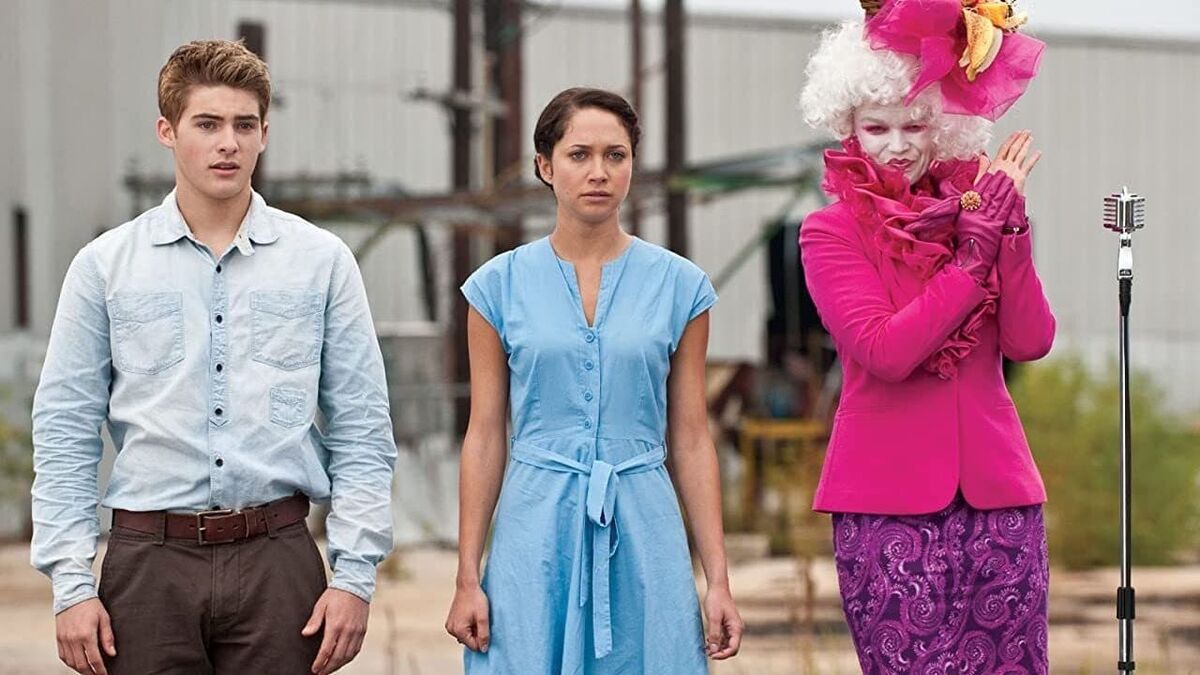
It was 2013. The world was absolutely obsessed with Jennifer Lawrence, archery, and dystopian teenagers killing each other for sport. Naturally, Jason Friedberg and Aaron Seltzer—the duo behind Scary Movie and Epic Movie—saw an opening. They decided to take aim at the massive cultural footprint of The Hunger Games. The result was The Starving Games, a low-budget parody that basically threw every 2012-2013 pop culture meme into a blender and hit "liquefy."
Look, parody is a tough business.
Honestly, by the time this movie hit theaters and VOD, the "spoof movie" genre was already on life support. Audiences were getting tired of the gag-per-second formula that prioritized quantity over actual wit. But The Starving Games is a fascinating artifact of its time. It captured a very specific moment in the zeitgeist where everything from The Avengers to Angry Birds was fair game for a punchline. It didn't care about being "good" in a traditional sense; it just wanted to see how many references it could cram into 83 minutes.
What The Starving Games Was Actually Trying To Do
At its core, the film follows Kantmiss Evershot.
Maiara Walsh took on the lead role, and to be fair, she actually nailed the Katniss Everdeen mannerisms. She’s navigating the "75th annual Starving Games" in the District of Las Vegas. The plot is a beat-for-beat mockery of the first Hunger Games film, but with the added "bonus" of cameos from characters who have absolutely no business being there. We're talking about The Expendables, Avatar Na'vi, and even Taylor Swift.
The humor is aggressively crude. It's slapstick. It’s the kind of movie where someone gets hit in the face with a loaf of bread just because it’s a "bread" reference.
Friedberg and Seltzer have a very specific style. They don't do subtle. If you’ve seen Meet the Spartans, you know exactly what the vibe is here. They take the source material's self-seriousness and turn it into a cartoon. For fans of the original books or movies, it was either a funny "roast" or a painful experience. There’s really no middle ground with this kind of cinema.
The Casting and Production Reality
Believe it or not, the movie had a budget of about $4.5 million.
That’s pennies in Hollywood terms.
Most of the filming happened in Louisiana. They used the tax incentives there to stretch every dollar. While the CGI looks intentionally—or perhaps unintentionally—cheap, the production design actually managed to replicate some of the iconic Hunger Games sets surprisingly well. It’s clear they spent the bulk of the budget on making sure the "Cornucopia" looked recognizable enough for the jokes to land.
The cast featured:
- Maiara Walsh as Kantmiss (You might know her from Desperate Housewives or Switched at Birth).
- Cody Christian as Peter Malarkey (Before his Teen Wolf and All American fame).
- Brant Daugherty as Dale (From Pretty Little Liars).
It’s actually wild to look back and see these actors who went on to have very solid careers in TV and film. They were playing these roles totally straight while the chaos happened around them. That’s usually the secret to parody: the actors have to act like they’re in a real drama for the absurdity to work.
Why Parody Movies Like This Died Out
The "Spoof Movie" era basically peaked with Scary Movie in 2000.
After that, the quality started a slow, agonizing slide. By the time The Starving Games arrived, the internet had already done the job. Why wait a year for a movie to make fun of The Hunger Games when YouTube creators and Twitter users were making memes the day the trailer dropped? The "speed of funny" changed.
The movie currently sits with a 0% on Rotten Tomatoes from critics.
Ouch.
Even the audience score is low. People felt like the jokes were dated the second they were filmed. Making a joke about Gangnam Style or The Annoying Orange in a movie that comes out months after those trends peaked is a risky move. It makes the film feel like a time capsule of "stuff that was popular last Tuesday."
Real Talk: Is It Actually Watchable?
If you go into it expecting Airplane! or The Naked Gun, you’re going to be disappointed. Those movies had a level of craft and "joke-writing" that Friedberg and Seltzer usually bypassed in favor of "hey, look at this recognizable person getting hurt."
However, if you’re hanging out with friends and want to watch something that requires zero brain power, it has its moments. There’s a certain nostalgia in seeing how we used to make fun of the "YA Dystopian" craze. The movie mocks the love triangle between Katniss, Peeta, and Gale quite effectively because, let’s be honest, that triangle was pretty melodramatic to begin with.
The film also takes shots at:
- The Avengers (Specifically Nick Fury and Hawkeye).
- Harry Potter.
- Sherlock Holmes.
- The Hobbit.
It’s basically a pop culture junk drawer.
How The Starving Games Fits Into Film History
We shouldn't just dismiss it as "bad."
It represents the end of a specific type of mid-budget comedy filmmaking. Studios don't really make these anymore. Everything is either a $200 million blockbuster or a $5 million horror movie from Blumhouse. The "studio parody" has migrated almost entirely to social media and TikTok.
Interestingly, The Starving Games did okay financially in international markets and on home video. It wasn't a "flop" in the sense that it lost everyone’s house, but it was a sign that the formula was exhausted. It proved that you can't just reference things; you have to have a perspective.
What You Probably Didn't Know
One of the more interesting aspects of the film is its distribution.
It was one of the early adopters of the "Day-and-Date" release strategy. It hit a very limited number of theaters while simultaneously being available to rent on digital platforms. This is common now—Netflix does it all the time—but in 2013, it was still a bit of a "straight-to-DVD" red flag.
Also, the film was released under different titles in different regions. In some places, it was just leaned into as a generic "spoof" to capitalize on the success of the duo's previous hits. They knew the brand of the directors was more important to some viewers than the actual content of the movie.
Navigating the Legacy of The Starving Games
If you’re planning on revisiting this movie or watching it for the first time, keep your expectations in the basement. It’s a relic. It’s loud, it’s gross, and it’s frequently nonsensical.
But it’s also a reminder of a time when The Hunger Games was the biggest thing on the planet. To be parodied by Friedberg and Seltzer was almost a rite of passage for any major franchise back then. If you weren't being mocked by them, were you even a blockbuster?
Practical steps for those diving into the spoof genre:
If you want to understand the parody landscape, don't start and end here. Compare The Starving Games to the early 80s classics. Notice how the older films focused on mocking the tropes of a genre, while these later films focused on mocking specific characters and scenes.
- Watch for the cameos: Try to count how many 2013-era celebrities are "portrayed" by lookalikes. It’s a weirdly accurate map of who was famous that year.
- Check out the lead actors' later work: Seeing Cody Christian in All American after seeing him as Peter Malarkey is a trip. It shows the hustle of young actors in Hollywood.
- Analyze the "reference" comedy: Use it as a case study for why "timeless" humor usually beats "topical" humor. Notice which jokes still make sense and which ones require a Google search to understand.
The "spoof" isn't dead, it just changed form. Watching this film today is like looking at an old social media feed from a decade ago—it’s cringey, it’s a bit confusing, but it’s a very real piece of the cultural puzzle.
Go into it for the nostalgia, stay for the bizarre "Expendables" cameo, and leave with a better appreciation for why modern comedies have moved toward more character-driven humor. It’s an easy watch, just don't expect it to change your life.