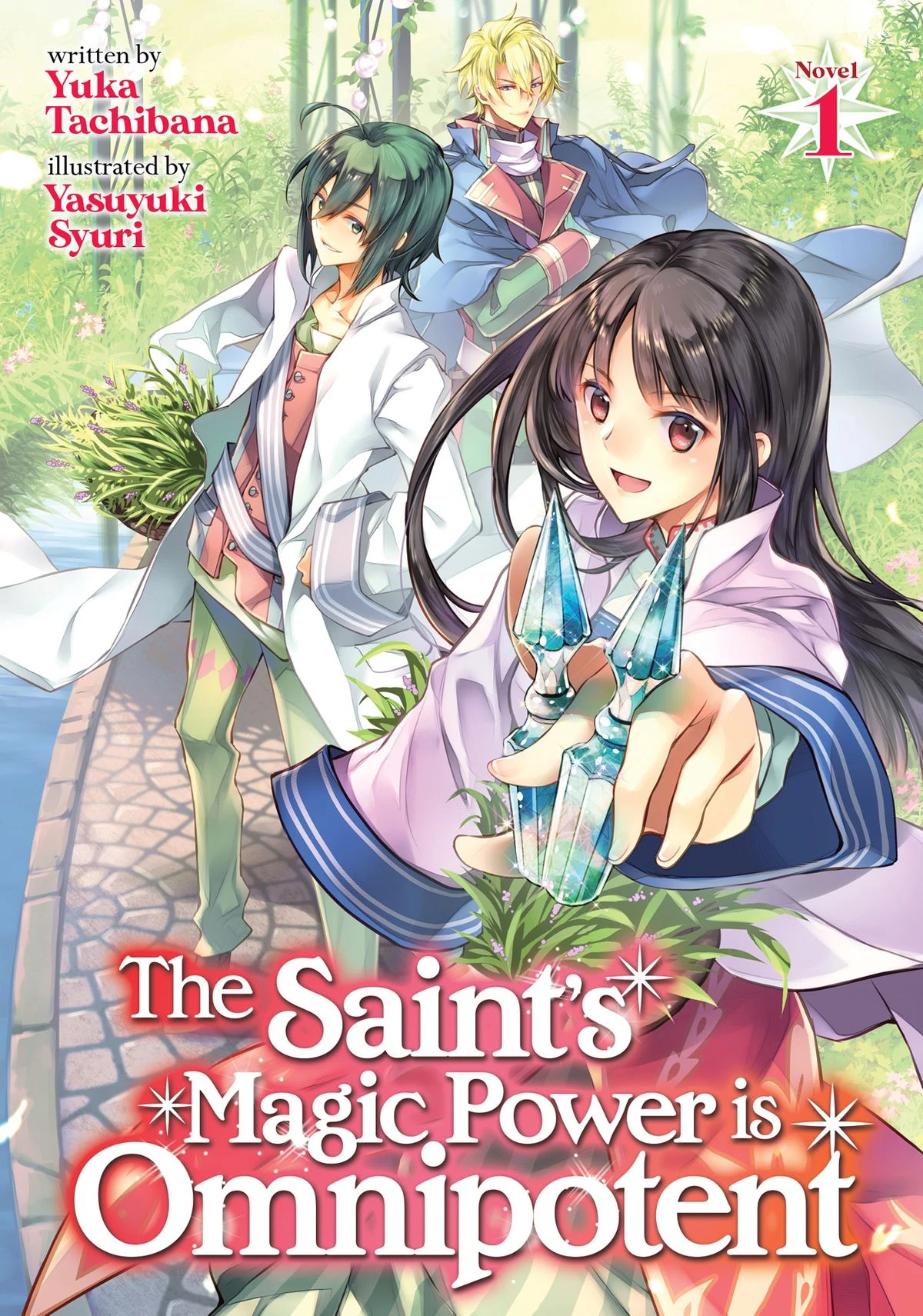
Maybe you’re tired of the typical "Isekai" tropes where some teenager gets hit by a truck and suddenly becomes a god-tier swordsman with a harem. It’s a bit much, right? That’s probably why The Saint's Magic Power is Omnipotent (or Seijo no Maryoku wa Bannou Desu) felt like such a breath of fresh air when it first hit the scene as a light novel by Yuka Tachibana. It didn't try to be an epic battle shonen. Instead, it gave us Sei Takanashi, a 20-something office worker who just wanted to go home and maybe eat some decent food.
She's relatable.
Honestly, the series succeeded because it leaned into the "slow life" fantasy while actually respecting its characters' emotional intelligence. When Sei is summoned to the Kingdom of Salutania, she isn’t even the one the Prince wants. He ignores her for the other girl summoned alongside her. Most protagonists would throw a fit or plot revenge. Sei? She just finds a job at a research institute because she likes herbs. It’s low-stakes in the best way possible.
What People Miss About Sei’s "Omnipotent" Power
The title implies she can do anything. But if you've actually read the light novels or watched the anime produced by Diomedéa, you know her "omnipotence" isn't about snapping her fingers and ending the world. It’s specifically tied to her status as the Holy Saint.
Her magic is basically a cheat code for healing and purification.
In the world of Salutania, standard potions are okay, but Sei’s potions are 50% more effective. Then they become 1.5 times better. Eventually, she’s making stuff that can regrow limbs. This creates a weirdly satisfying loop for the viewer. You get to see the "expert" side of her—the science of alchemy—mixed with this raw, unchecked magical talent. It’s the ultimate "competence porn." We love watching people who are actually good at what they do.
Wait, there’s a catch.
Her most powerful ability, the Saint’s Conjuration, doesn’t just trigger because she’s "The Chosen One." It’s fueled by affection. Specifically, her feelings for Albert Hawke, the Commander of the Third Order of Knights. This is where the story pivots from a standard fantasy into a genuine romance. The magic is a literal manifestation of her heart. If she isn't feeling it, the magic doesn't work. It’s a clever way to keep her from being too overpowered; she has to actually manage her emotions and relationships to stay "omnipotent."
The Production Quality and That "Golden Hour" Vibe
If you watched the anime, you noticed the colors. They’re warm.
The art direction in the first and second seasons really leaned into the "shoujo" aesthetic—lots of soft lighting, sparkles, and detailed backgrounds of the medicinal herb gardens. It creates this cozy atmosphere that mirrors the "Iyashikei" (healing) genre. You aren’t watching this for the fight scenes, though the occasional battle against monsters in the Western Woods provides some necessary tension.
You’re watching it for the tea parties.
And the food. Oh, the food. Sei’s ability to bring modern Japanese cooking techniques to a medieval fantasy world is a trope, sure, but it’s handled with a lot of charm here. It makes the world feel lived-in. When she explains the difference between a standard soup and something with proper seasoning, it feels like a bridge between her old life and her new one.
Why the Supporting Cast Matters
- Albert Hawke: He isn't just a "pretty boy" love interest. He’s respectful. He waits for Sei to get comfortable. He’s arguably the most supportive male lead in recent Isekai history.
- Johan Valdec: The director of the Medicinal Flora Research Institute. He’s the boss we all wish we had. He protects Sei from the political vultures who want to weaponize her power.
- Jude: The first friend she makes. He’s the entry point into the world's mechanics and provides a grounded perspective on how magic usually works for "normal" people.
The Subtle Politics of Salutania
One thing the series handles surprisingly well is the bureaucracy. Being a "Saint" isn't just about having cool powers; it’s a political nightmare. The King, the Grand Magus Yuri Drewes, and the various noble factions all have stakes in Sei’s existence.
Yuri Drewes is a fascinating character because he’s basically a magic nerd. He doesn't want to use Sei for war; he just wants to see how her magic works because it defies the laws of the world he’s studied his whole life. This creates a different kind of pressure. Sei isn’t running from assassins; she’s running from social obligations and research requests.
It’s a different kind of "final boss."
The conflict with Aira Misono—the other girl summoned—is handled with a surprising amount of grace too. In a lesser series, Aira would be a "mean girl" villain. Here, she’s just a confused kid who was manipulated by a narrow-minded Prince. The resolution of her arc in the later volumes of the light novel is actually quite touching and highlights the core theme of the series: finding where you belong.
Real-World Takeaways for Fans
If you’re looking to get into the series or you’ve already binged it, there are a few ways to appreciate it more.
First, check out the light novels. The anime is great, but the internal monologue of Sei gives you a much better sense of her "office worker" pragmatism. She thinks about ROI (Return on Investment) and efficiency in a way that’s very funny but lost in the visual medium.
Second, pay attention to the botany. While the herbs are fictional, the way Sei approaches research is based on actual herbalism and pharmaceutical logic. It’s surprisingly well-researched for a fantasy story.
How to Experience the Series Today
- Start with the Anime: Season 1 is a perfect introduction. It’s 12 episodes of pure relaxation.
- Move to the Manga: If you prefer visuals but want more detail, the manga adaptation by Fujiazuki is stunning. The character designs are slightly sharper than the anime.
- Read the Light Novels: This is the "source of truth." Volume 1 through 9 (and beyond) expand the world significantly past what the screen could capture.
- The Spin-off: There’s actually a spin-off manga called The Saint's Magic Power is Omnipotent: The Other Saint which follows Aira’s perspective. It’s essential for understanding the full scope of the summoning incident.
The series proves that "omnipotence" doesn't have to be about destruction. Sometimes, the most powerful thing you can do is fix what’s broken—whether that’s a scarred soldier's arm or a broken heart. It’s a quiet masterpiece of the genre.
Actionable Insights for New Viewers:
To get the most out of the experience, watch it during your "winding down" time. It’s designed to lower your cortisol levels. If you're a collector, the light novels are published in English by Seven Seas Entertainment and they look great on a shelf. Don't skip the "The Other Saint" spin-off; it completely changes how you view the early episodes of the main story by humanizing the characters who initially seem like antagonists.