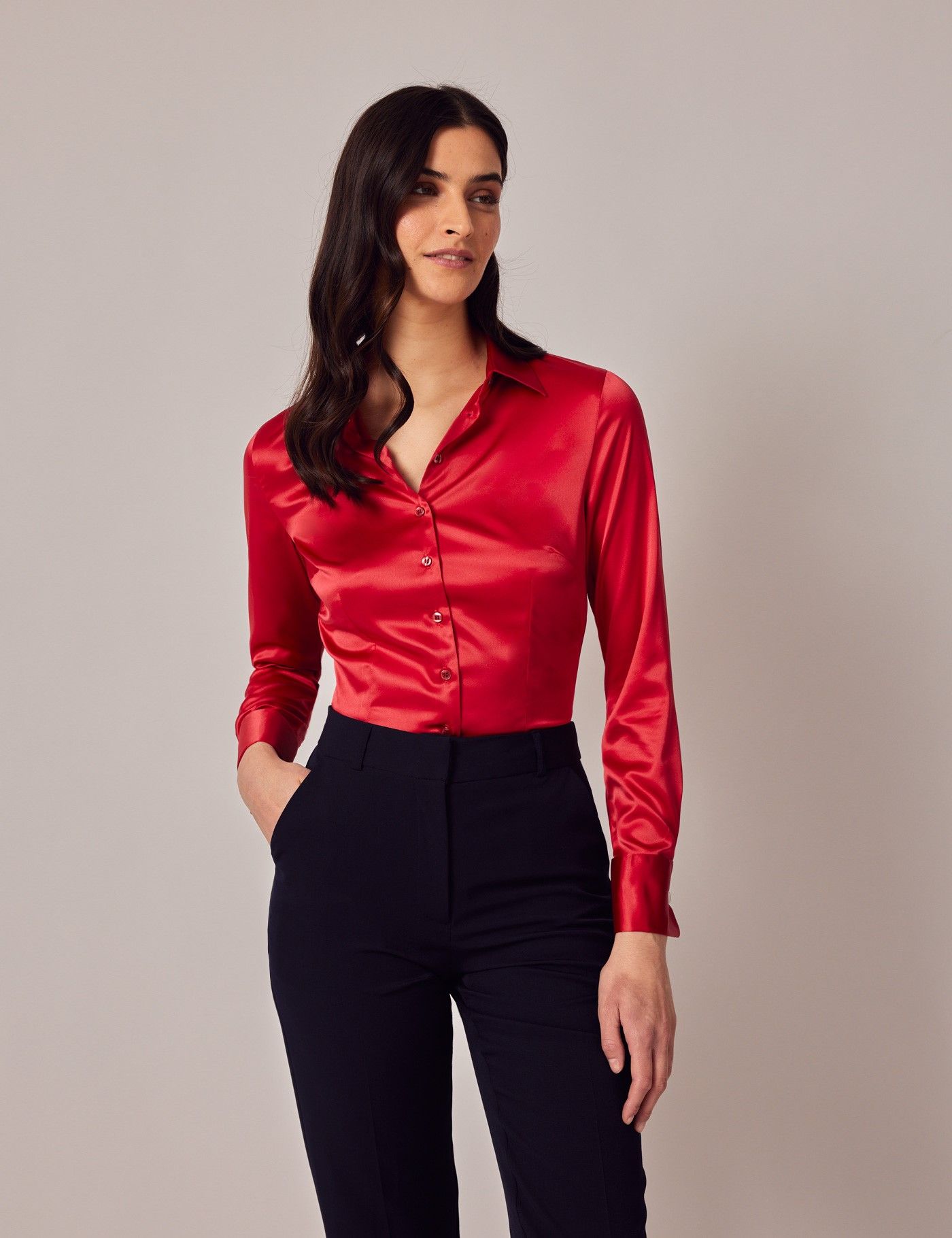
You've probably seen it. Maybe it was a late-night scroll through TikTok or a random "suggested for you" post on Instagram. A flash of crimson, a catchy beat, and suddenly everyone is talking about the red shirt girl video. It’s one of those weird internet moments where a single piece of content transcends its original niche to become a universal reference point. But why?
Digital culture moves fast. It’s a blur. Honestly, most things that go viral are forgotten in forty-eight hours, yet this specific clip has managed to stick around like digital glue. It isn’t just about the visual—though that bright red top definitely helps with the "scroll-stop" factor—it’s about the intersection of timing, algorithm luck, and that hard-to-define "vibey" quality that creators spend years trying to manufacture.
The Anatomy of the Red Shirt Girl Video
What actually happens in the video? Depending on which version you’ve stumbled upon—because there are now hundreds of edits, remixes, and parodies—the core remains the same. It features a young woman, often dancing or reacting to a specific audio track, wearing a distinctive red shirt.
Colors matter. In color psychology, red is the most intense color, often triggering the fastest physical reaction in the human brain. On a platform like TikTok, where you have roughly 1.5 seconds to capture a viewer's attention before they swipe to a video of a cat playing the piano, that red shirt acts as a visual siren.
The red shirt girl video succeeded because it didn't look like an ad. It looked like a person in their bedroom, or a park, or a hallway, just living. That's the secret sauce. Authenticity is a buzzword that people throw around until it loses all meaning, but in this context, it refers to the lack of high-production polish. We trust the girl in the red shirt because she looks like someone we might actually know.
Why the Algorithm Loves It
Algorithms are essentially just giant mirrors. They reflect what we stare at the longest. When the red shirt girl video first started gaining traction, the watch-time metrics were off the charts. People weren't just watching it once; they were looping it.
Data from social media analytics platforms suggests that videos with high-contrast primary colors (like red against a neutral background) tend to perform 20% better in "Explore" or "Discover" tabs. It’s a biological hack. Our eyes are evolved to spot red berries in green bushes. Now, we use that same evolution to spot viral creators in a sea of beige influencers.
Common Misconceptions and the "Copycat" Effect
Whenever something goes viral, the vultures circle. You’ve likely seen "re-uploads" or people claiming to be the original creator. This is where the red shirt girl video story gets a little messy.
- The Identity Mystery: For a while, there was genuine debate about who the creator actually was. Because the video was shared so many times without credit (a huge problem in the creator economy), the original source got buried under layers of reposts.
- The "Curse" Rumors: Because the internet loves a good creepypasta, several urban legends popped up. Some claimed the video was "lost media" or that there was something sinister hidden in the background. Spoiler alert: there wasn't. It's just a girl in a shirt.
- The Scripted Argument: Critics often claim these videos are "industry plants" or carefully staged by marketing agencies. While that happens sometimes, most evidence points to this being a genuine organic moment that just happened to catch fire.
It's fascinating how a fifteen-second clip can generate hours of "commentary" content. YouTubers have made twenty-minute video essays breaking down a video that is shorter than a microwave's "done" beep. That's the power of the modern internet. We don't just consume content; we dissect it until there's nothing left.
The Impact on the Creator Economy
The red shirt girl video isn't just a meme; it's a case study in how fame works in 2026. Traditional fame used to be a ladder. You had an agent, you went to auditions, you got a bit part, and maybe you became a star.
Now? You put on a red shirt. You hit record. You become a global phenomenon overnight.
But there’s a downside. Viral fame is volatile. One day you're the "Red Shirt Girl," and the next day, the internet has moved on to a guy eating a giant pickle in a library. Managing that transition from "meme" to "brand" is where most creators fail.
Lessons from the Viral Surge
If you’re a creator looking at the red shirt girl video and thinking, "I should buy a red shirt," you’re missing the point. It’s not about the garment. It’s about the pattern interruption.
- Vulnerability over Production: The video felt raw.
- Audio Selection: The choice of music was perfectly synced to the movement, creating a "satisfying" loop.
- The Comment Section: The creator engaged early on, turning a passive audience into a community.
What Really Happened with the Trends?
Trends are like wildfires. They need fuel. The fuel for the red shirt girl video was the "remix" culture. Once the original hit a certain threshold, other creators started "dueting" it. Then came the parodies. Then came the "storytime" videos where people claimed they knew her in high school (they usually didn't).
This cycle creates a feedback loop. Every time someone makes a parody, it drives more traffic back to the original. It’s a self-sustaining ecosystem of attention.
Actionable Insights for Navigating Viral Trends
Whether you're a casual viewer or someone trying to understand the mechanics of the internet, the red shirt girl video offers a few clear takeaways.
First, stop looking for "perfection." The more polished a video is, the more our brains flag it as "advertising" and try to skip it. We crave the human element. We want to see the messy room in the background or the slightly awkward laugh.
Second, recognize the "Red Shirt" principle in your own life or business. What is your pattern interrupter? If everyone is doing X, you should probably be doing Y—or at least doing X in a very bright, distracting color.
Third, be skeptical of the "dark side" of viral stories. Most "mysteries" surrounding viral videos are just bored people on Reddit trying to make life more interesting. Usually, the simplest explanation—that someone made a fun video and people liked it—is the truth.
How to Find the Original Source
If you're still hunting for the "real" red shirt girl video among the sea of fakes, follow these steps:
- Check the upload dates. The oldest one is usually the winner.
- Look for the highest-resolution version; reposts lose quality every time they are "screenshotted" and re-uploaded.
- Check the verified badges. Most original creators get verified quickly once a video hits the million-view mark.
The internet is a weird place. One day we're debating geopolitical shifts, and the next, we're all hyper-fixated on a girl in a red shirt. Maybe that's just how we cope with the chaos. We find something simple, something bright, and we all agree to look at it for a while.
To stay ahead of these trends, you have to watch the edges of the internet. Don't just look at what's trending now; look at what people are starting to parody. That's where the next big thing is hiding. Keep your eyes peeled for the next "red shirt," whatever color it might be.