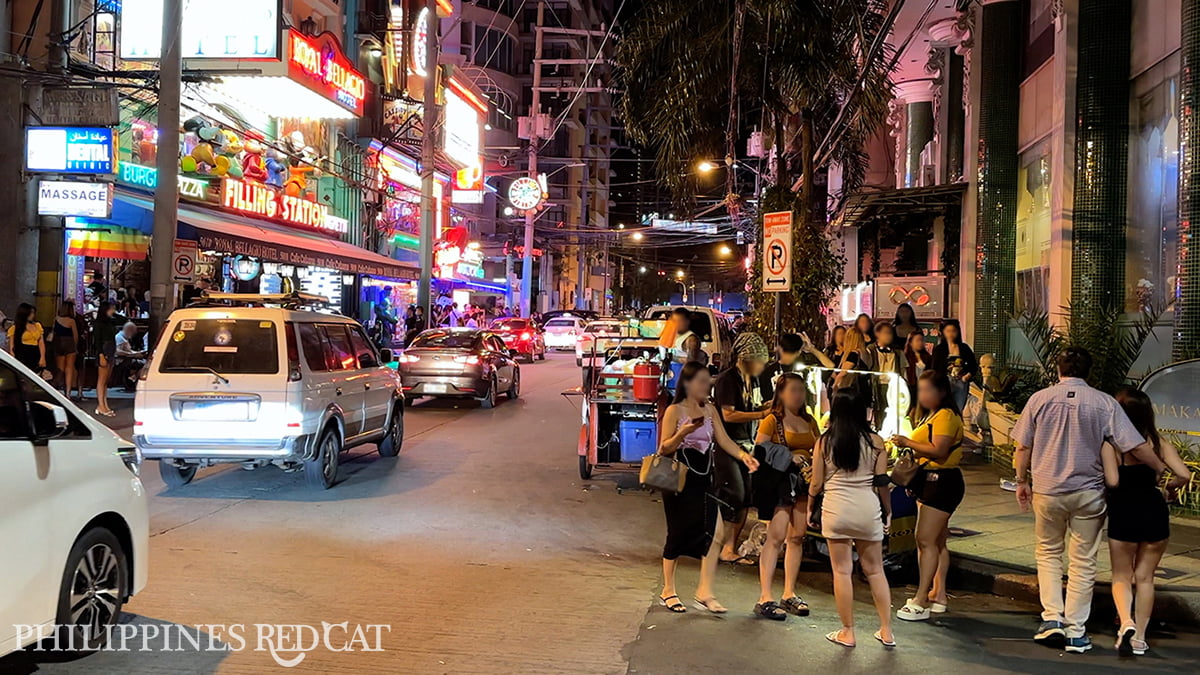
Manila is loud. It’s a sensory overload of Jeepney horns, the smell of street-side isaw, and a humidity that clings to your skin like a wet blanket. But when the sun dips below the skyline of BGC and the smog turns a hazy purple, a different kind of energy takes over. If you’ve spent any time researching the nightlife here, you’ve definitely heard whispers—or seen the neon signs—of the red light district Philippines Manila.
Honestly, it’s not just one spot. People talk about "the" district as if it’s a single walled-off neighborhood, but the reality is much more fragmented. You have the aging grit of Ermita, the high-octane neon of P. Burgos Street in Makati, and the scattered pockets in Pasay or Quezon City. It’s a world of Go-Go bars, "entertainment" clubs, and street-level hustle that has existed for decades, stubbornly resisting every government attempt to "clean up" the image of the capital.
Understanding P. Burgos: The Heart of the Makati Scene
Most travelers end up in Makati. It’s the financial hub, the place with the safe hotels and the fancy malls. But tucked right into the side of this corporate machine is P. Burgos Street. This is the most famous iteration of the red light district Philippines Manila today.
Walking down Burgos at 11:00 PM is an experience in organized chaos. You’ve got the high-end bars like Bottoms Up or High 5 where the music is deafening and the "Bar Fine" system is the primary business model. For those who don't know, a bar fine is basically a fee you pay to the establishment to allow an employee to leave their shift early with you. It’s a legal gray area that the Philippines has navigated for years by labeling these venues as "Entertainment Clubs" and the workers as "Guest Relations Officers" (GROs).
The vibe here is aggressive but weirdly friendly. You'll be approached by touts every five feet offering "massages" or "cheap beer." It’s easy to get overwhelmed. One minute you’re looking for a burger at Filling Station—a legitimately cool 50s-style diner on the strip—and the next you’re being beckoned into a darkened doorway with flashing LED lights.
The Ermita and Malate Legacy
Before Makati took the crown, Ermita and Malate were the undisputed kings of the Manila nightlife scene. Back in the 70s and 80s, this area near Manila Bay was the epicenter. It was the playground for sailors, expats, and tourists looking for the wild side of the Pacific.
Then came the 90s.
Mayor Alfredo Lim, nicknamed "Dirty Harry," went on a crusade. He shut down hundreds of bars, trying to scrub the "sin city" label off the district. It worked, sort of. Today, Ermita feels like a ghost of its former self. There are still bars along Del Pilar and Mabini streets, but they feel tired. The paint is peeling. The neon flickers. It’s a grittier, more desperate version of the red light district Philippines Manila compared to the polished veneer of Makati.
Yet, some people prefer it. It’s cheaper. It’s less "touristy" in a traditional sense. You’ll find old-school expat pubs where guys who moved here thirty years ago sit under slow-moving fans, nursing San Miguel pilsens and talking about how the city used to be. It’s a place of heavy nostalgia and visible decay.
The Legal and Social Reality
Let’s get real for a second. Prostitution is illegal in the Philippines.
Article 202 of the Revised Penal Code is pretty clear about it. However, the enforcement is... inconsistent. The government often looks the other way because of the massive amounts of tourism revenue these districts generate. Instead of flat-out bans that stick, they use regulatory hurdles. Workers are required to have "Social Hygiene" cards and undergo regular health checks for STIs.
It’s a system built on euphemisms. Nobody is a sex worker; they are "entertainers." Nobody is buying sex; they are paying a "compulsory bar fee."
This creates a precarious situation for the women (and men) working in the red light district Philippines Manila. Because their work is technically illegal, they have very little recourse if they are mistreated by customers or employers. Organizations like ECPAT Philippines and various local NGOs constantly highlight the risks of trafficking and exploitation that thrive in these shadows. It’s not all "fun and games" or a "victimless party scene," despite what the travel vlogs might tell you.
How to Navigate the Area Without Getting Scammed
If you’re heading into these areas, you need your wits about you. Manila is generally hospitable, but the red light districts are designed to extract as much money from your pockets as humanly possible.
- Watch the "Lady Drinks": This is the oldest trick in the book. A girl sits with you, you offer a drink, and suddenly you’re charged 500 to 1,000 Pesos for a small glass of cranberry juice. Over an hour, that bill adds up fast. Always ask for the price of the lady drink before you agree.
- The Bill Shock: Some bars in the red light district Philippines Manila are notorious for adding "service charges" or simply inflating the number of drinks you actually had. Keep your receipts. Or better yet, pay as you go.
- Pickpockets are Pros: In the crowded streets of Burgos or Malate, professional pickpockets operate in teams. One will distract you—maybe a kid asking for money or a tout being overly touchy—while another lifts your wallet. Keep your phone in your front pocket and your hand on it.
- The "Special" Massage: If someone on the street offers you a massage for 300 Pesos, it’s never just a massage. You will be taken to a room, and the price will suddenly skyrocket for "additional services." If you want a real massage, go to a reputable chain like Nuat Thai or Blind Massage.
Beyond the Neon: The Changing Landscape
Manila is modernizing at a breakneck pace. The rise of dating apps like Tinder and Bumble has actually done more to disrupt the traditional red light district Philippines Manila than any police raid ever did. A lot of the "business" has moved online.
Furthermore, the development of areas like Bonifacio Global City (BGC) has created a "clean" nightlife alternative. The younger, wealthier Filipinos and the new wave of expats tend to hang out at high-end clubs like Revel or Xylo. There’s still plenty of hedonism, but it’s wrapped in a velvet rope and a bottle-service culture rather than the transactional grit of P. Burgos.
We are also seeing a shift in how the city views these districts. There is a growing movement to decriminalize the work to better protect the workers, though this faces massive opposition from the powerful Catholic Church in the country. It's a tug-of-war between the reality on the ground and the moral image the country wants to project.
Safety and Common Sense
Is the red light district Philippines Manila dangerous?
Not inherently, if you aren't looking for trouble. Most of the "danger" is financial. However, drugs are a massive no-go. The Philippines has notoriously harsh drug laws, and "set-ups" aren't unheard of. If someone offers you anything illegal on the street, walk away immediately. It is not worth the risk of ending up in a Philippine jail, which, trust me, is not where you want to spend your vacation.
Also, be mindful of the "Ativan Gang." This is a group that uses spiked drinks to knock out tourists and rob them blind. They usually start by being very friendly, often appearing as a nice family or a group of locals wanting to show you around. Never accept food or drinks from strangers you’ve just met on the street, no matter how "hospitable" they seem.
Actionable Insights for the Modern Traveler
If you decide to visit these areas, do so with your eyes open. The red light district Philippines Manila is a complex ecosystem of poverty, tourism, and survival.
- Stay in a reputable hotel: If you're in Makati, stay a few blocks away from Burgos (like near Greenbelt) so you can escape the noise when you're done.
- Set a budget: Carry only the cash you are willing to lose. Leave your main credit cards and passport in the hotel safe.
- Respect the locals: It sounds simple, but many tourists lose their manners in these districts. A little respect goes a long way in ensuring you have a smooth night.
- Use Grab: Don't haggle with white taxis at 3:00 AM in a red light zone. Use the Grab app (the Southeast Asian version of Uber). It’s tracked, the price is fixed, and it’s significantly safer.
The reality of Manila’s nightlife is that it’s whatever you make of it. It can be a wild, neon-soaked adventure or a cautionary tale of scams and empty pockets. Just remember that behind the lights and the music, these are real neighborhoods where people are just trying to make a living in a very tough city.
To stay safe and make the most of your time, always prioritize licensed establishments, keep your transportation logged via apps, and never let your drink out of your sight. If a deal seems too good to be true—especially on the streets of Ermita or Makati—it definitely is.