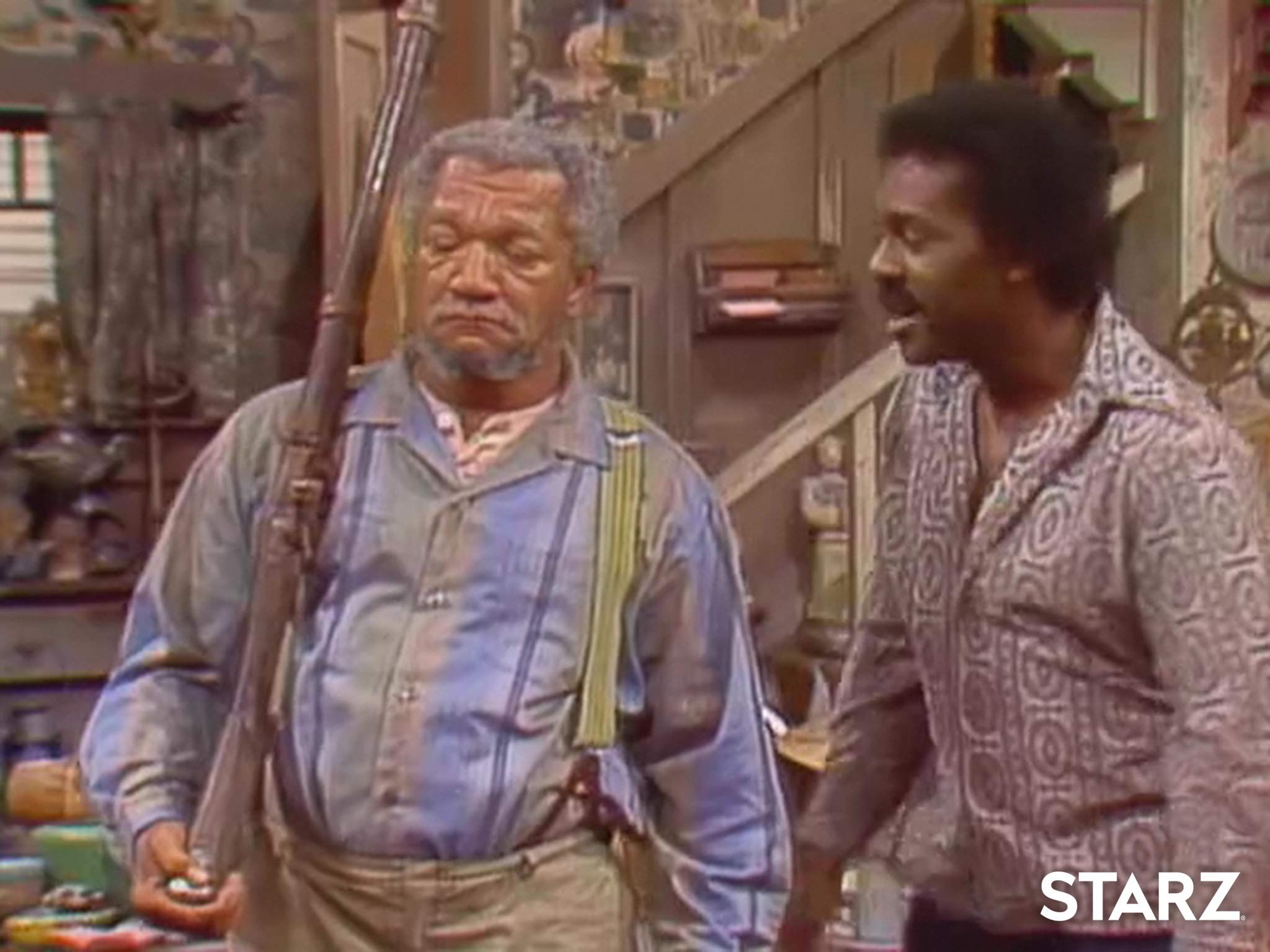
If you close your eyes and think about the 1970s sitcom landscape, you probably hear Redd Foxx’s raspy voice faking a heart attack. "This is the big one, Elizabeth!" It’s iconic. But if you watched Sanford and Son closely, you know the show wasn't just about the bickering between Fred and Lamont. It was about the neighborhood. Specifically, it was about the "Puerto Rican guy on Sanford and Son" who lived next door and drove Fred absolutely up the wall.
His name was Julio Fuentes.
Played by the late Gregory Sierra, Julio wasn't just a sidekick or a punchline. Honestly, looking back at the show from 2026, Julio might be one of the most underrated characters in television history. He represented a shift. Before Julio, Latin characters on TV were often relegated to "The Cisco Kid" tropes or heavy-handed caricatures. Julio was different. He was a hardworking guy from New York who moved to Watts, kept a goat in his yard, and tried—often unsuccessfully—to be friends with a stubborn old junk dealer who wasn't exactly thrilled about the changing demographics of the neighborhood.
Who Was the Actor Behind Julio Fuentes?
Gregory Sierra. That’s the name you’re looking for.
Sierra was a New York City native, born in Spanish Harlem, which explains why his portrayal of Julio felt so authentic. He didn't have to "act" like a Puerto Rican guy; he was one. He brought a specific Nuyorican energy to the set that contrasted beautifully with the South Central Los Angeles vibe of the Sanford household.
Before he landed the role of the Puerto Rican guy on Sanford and Son, Sierra was a journeyman actor. He did Shakespeare. He did Macbeth and Richard III. You can actually see that training in his timing. His "straight man" reactions to Fred Sanford’s bigotry were masterclasses in facial acting. He stayed on the show from 1972 to 1975, appearing in 12 episodes, which feels like a lot more because his impact was so massive.
He eventually left the junk yard for another iconic 70s show, Barney Miller, where he played Sergeant Chano Amenguale. Sierra passed away in 2021 at the age of 83, but his work as Julio remains the gold standard for how to handle "ethnic" humor without losing the character's dignity.
The Friction Between Fred and Julio
The comedy in Sanford and Son usually came from Fred’s refusal to accept the world as it was. When Julio Fuentes moved in next door, he became the primary target for Fred’s xenophobia. Fred called him names. He made fun of his accent. He complained about Julio's goat, Chico.
It was uncomfortable. It was also incredibly real.
The show used the Puerto Rican guy on Sanford and Son to highlight the tensions between Black and Latino communities during that era. But here’s the thing: Julio never took it lying down. He’d throw the insults right back, or better yet, he’d kill Fred with kindness. Julio’s constant refrain of "Hey, Mr. Sanford!" was delivered with a genuine warmth that made Fred look even more ridiculous.
Lamont, on the other hand, loved Julio. They were buddies. This created a fantastic dynamic where Julio wasn't just a neighbor; he was a wedge between father and son. When Fred would say something particularly nasty, Julio would often respond in Spanish, knowing Fred couldn't understand him. It was a subtle way of maintaining power in a situation where he was being marginalized.
Why the Goat Mattered
Let's talk about Chico the goat.
In many ways, the goat was a symbol. To Fred, the goat represented everything he hated about Julio moving in—it was "country," it was messy, and it didn't belong in the city. But for Julio, the goat was a piece of home. It was a connection to his heritage and a practical source of milk and companionship.
The writers used the goat as a recurring gag, but it also humanized Julio. He wasn't just a neighbor; he was a guy trying to carve out a life in a place that didn't always want him. The fact that he kept a goat in a junk yard is objectively hilarious, but it also spoke to the resourcefulness of the character.
Breaking Down the Stereotypes
People often ask if the Puerto Rican guy on Sanford and Son was a stereotype.
The answer is complicated.
Yes, Julio had a thick accent. Yes, there were jokes about his large family and his livestock. But if you look at the scripts, Julio was often the smartest person in the room. He was a mechanic. He was skilled. He was upwardly mobile in a way that Fred Sanford, trapped in his piles of junk, simply wasn't.
Julio represented the "New Latino" of the 1970s. He was proud of his Puerto Rican roots but fully invested in the American Dream. He wasn't a victim. He was a participant. When Gregory Sierra played the role, he made sure Julio had a backbone.
"I didn't want him to be a buffoon," Sierra once mentioned in an interview. He succeeded. Even when Fred was at his worst, Julio stayed composed. He was the one who usually walked away with his head held high, leaving Fred to grumble to himself among his rusty hubcaps.
The Cultural Impact of Julio Fuentes
Why do we still care about the Puerto Rican guy on Sanford and Son fifty years later?
Because representation matters, even when it’s wrapped in a 22-minute sitcom format. For many viewers in the early 70s, Julio was the first Puerto Rican person they "met." He wasn't a gang member or a caricature from West Side Story. He was a guy who worked on cars and had a complicated relationship with his neighbor.
The show’s creator, Norman Lear, was famous for pushing buttons. By putting a Puerto Rican character next door to a Black family in Watts, he was forcing the audience to look at the internal prejudices within minority communities. It wasn't just "us vs. them" (Black vs. White); it was "us vs. the people next door."
Julio’s presence expanded the world of the show. It made the junk yard feel like a real place in a real city undergoing real changes. When Julio eventually moved away (because Sierra got a better gig), the show lost a bit of its edge. The neighbors who followed never quite had that same spark.
The "Mandela Effect" and Julio's Name
There’s a weird phenomenon where people remember the Puerto Rican guy on Sanford and Son but can’t quite place his name. Some people think his name was Chico because of the goat. Others confuse him with the character from Chico and the Man, which starred Freddie Prinze.
It’s important to set the record straight:
- The Character: Julio Fuentes
- The Actor: Gregory Sierra
- The Goat: Chico
Freddie Prinze was a massive star at the time, and Chico and the Man was often paired with Sanford and Son in the TV lineup. This caused a bit of a mental "blur" for fans of 70s TV. But Julio was his own man. He didn't need a "Man" to define him—he had a junk yard and a dream.
Life After the Junk Yard
After Gregory Sierra left the show, the character of Julio was written out as moving back to New York. It was a bittersweet end for a character that had become a fan favorite. Sierra went on to have a massive career. You’ve probably seen him in:
- The Towering Inferno
- Miami Vice
- Star Trek: Deep Space Nine
- The X-Files
But for a specific generation of TV watchers, he will always be the guy who lived next to Fred Sanford. He will always be the one who handled "You hear that, Elizabeth?" with a grin and a shrug.
What We Can Learn from Julio Today
In the era of 2026, where we talk a lot about "authentic representation," Julio Fuentes is a fascinating case study. He was a character created by a room of mostly white writers, yet he felt lived-in and real.
Why? Because Gregory Sierra brought his own life to the role. He didn't play a script; he played a person.
The lesson here is that comedy can be a bridge. Fred Sanford’s insults were wrong, but the show allowed us to laugh at the absurdity of his prejudice. By the end of most episodes, there was a grudging respect between the two. They were both outsiders in a world that didn't give them many breaks.
If you're revisiting the show on streaming platforms today, pay attention to the scenes with the Puerto Rican guy on Sanford and Son. Watch the way Sierra uses his hands. Listen to the rhythm of his voice. He wasn't just a supporting actor; he was the soul of the neighborhood.
Key Takeaways and Insights
- Identity Matters: Julio Fuentes was a rare example of a Puerto Rican character on 1970s television who was defined by his work ethic and personality rather than just his ethnicity.
- The Gregory Sierra Factor: The actor's New York roots gave the character an edge and authenticity that couldn't be faked.
- Social Commentary through Comedy: Sanford and Son used Julio to explore the "inter-ethnic" tensions that were common in urban centers but rarely discussed on TV.
- Don't Mix Up Your Chicos: Remember that Julio’s goat was named Chico, but the character played by Freddie Prinze was a completely different show.
How to Explore This Topic Further
- Watch the Episode "The Puerto Ricans Are Coming": This is the quintessential Julio episode. It sets the tone for his entire relationship with Fred.
- Check Out Gregory Sierra’s Later Work: Compare his performance as Julio to his role as Chano on Barney Miller to see his incredible range as a character actor.
- Analyze the Dialogue: Look for the moments where Julio speaks Spanish without subtitles. It was a bold choice for the 1970s and added a layer of realism to the character’s identity.
- Research Norman Lear’s Impact: To understand why Julio existed at all, look into how producer Norman Lear intentionally integrated his sitcoms to reflect the real American landscape.