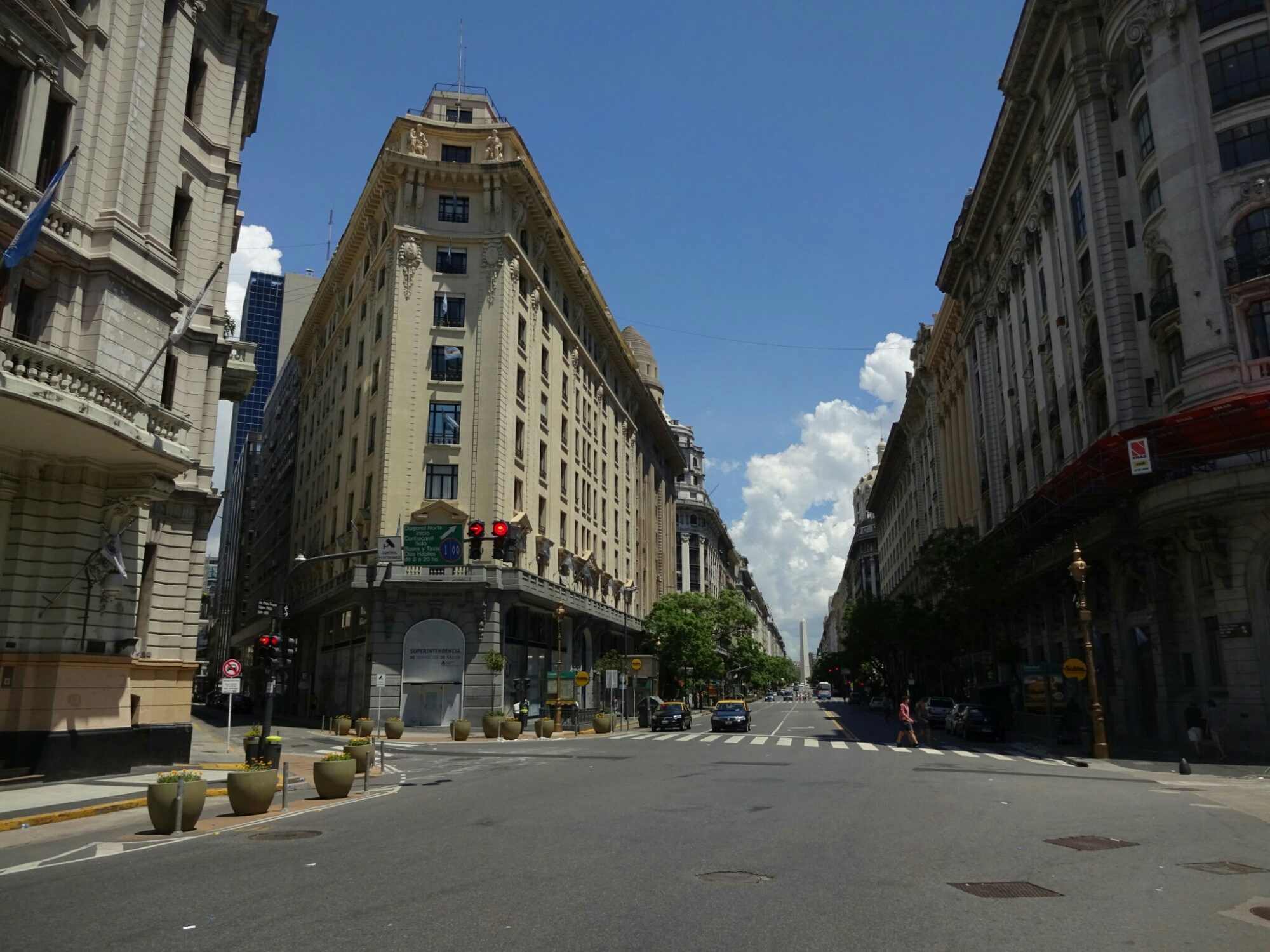
You’ve heard the line. It’s the one everyone drops as soon as you mention booking a flight to Argentina. "Oh, you're going to the Paris of South America! How lovely."
It’s a bit of a cliché, honestly. It conjures up images of berets and baguettes, just with more tango and steak. But if you actually spend time in Buenos Aires, you realize the nickname is both incredibly accurate and kind of a lie. It's a marketing tagline born in the late 19th century that somehow survived a hundred years of economic rollercoasters.
Walking through Recoleta feels like a glitch in the Matrix. You look up at a limestone facade with ornate iron balconies and mansard roofs, and for a second, your brain says Rue de Rivoli. Then a bus screams past, the driver honks like his life depends on it, and you smell grilled beef from a street corner.
That’s the reality. It’s not a replica; it’s a remix.
The Obsession That Built a City
Back in the late 1800s, Argentina was rich. Like, "wealthiest-countries-in-the-world" rich. The local elite—the aristocracia—didn't want to look like their Spanish colonial ancestors. They thought the old buildings were dusty and boring.
They wanted elegance. They wanted status. Basically, they wanted to be French.
These families traveled to Europe for months at a time. They didn't just bring back souvenirs; they brought back architects. They imported Italian marble, French slate, and even the literal soil for the parks. It was a massive, city-wide project to erase the "New World" look and replace it with something that would make a Parisian socialite feel at home.
Baron Haussmann’s Ghost in the Southern Hemisphere
If you’ve been to Paris, you know the vibe of the grand boulevards—those wide, sweeping avenues designed by Baron Haussmann. Buenos Aires basically said, "Hold my Malbec."
The city planners carved out Avenida de Mayo to look exactly like a Parisian thoroughfare. They built Avenida 9 de Julio, which, at 140 meters wide, makes the Champs-Élysées look like a narrow side street.
- Palacio de Aguas Corrientes: Seriously, look at this place. It’s a water pumping station, but it looks like a royal palace. It’s covered in 300,000 glazed terra cotta tiles imported from England and Belgium. Why? Because the elite felt that even the city’s plumbing deserved a tuxedo.
- Teatro Colón: It’s often ranked as one of the best opera houses in the world for acoustics. The style is "eclectic," which is a fancy way of saying they took the best bits of French and Italian design and smashed them together.
The Recoleta Illusion
If you want to see why the Paris of South America label stuck, you go to Recoleta. This is the neighborhood where the comparison feels most real.
The Alvear Palace Hotel is the crown jewel here. It’s all gold leaf, white-glove service, and afternoon tea that feels strictly 1920s. You’ll see older women walking tiny dogs, dressed in Chanel suits, looking like they just stepped off a flight from Charles de Gaulle.
Then there's the Recoleta Cemetery. It sounds weird to suggest a graveyard as a must-see, but this isn't a normal one. It’s a city of the dead. It’s filled with neo-Gothic and Art Deco mausoleums that are basically mini-mansions. You can spend hours wandering the "streets" of the cemetery, looking at the resting place of Eva Perón and various generals, feeling that heavy, European solemnity.
Why the Nickname Doesn't Tell the Whole Story
Here’s the thing: calling it the Paris of the South is a bit of an undersell.
Buenos Aires has a grit that Paris lacks. It’s louder. It’s messier. The sidewalks are often cracked, and there’s graffiti on buildings that would be heritage-protected in France.
But that’s where the soul is.
The city is actually a massive melting pot. While the architecture is French, the soul is Italian. You see it in the way people talk with their hands, the obsession with pizza and pasta, and the "merienda"—the late-afternoon coffee and pastry ritual.
The Spanish-Italian Hybrid
Most Porteños (the people of the port) are descendants of Italian and Spanish immigrants. This created a culture that is far more expressive and "warm" than the typical Parisian stereotype.
- The Language: They speak Spanish, but with an Italian cadence. They use "voseo" instead of "tú," and they have a slang called Lunfardo that borrows words from everywhere.
- The Food: Yes, you can get a croissant (a medialuna), but it’s sweeter and smaller. You can get a steak that will ruin all other steaks for you. The "bodegones" (neighborhood eateries) serve massive portions of milanesa that feel more like Grandma’s house in Naples than a bistro in Montmartre.
Visiting in 2026: What’s Changed?
In the last year or so, the city has leaned even harder into its "European travel dupe" status. As prices in Europe have skyrocketed, travelers are realizing they can get the grand architecture and world-class culture of a European capital for a fraction of the price.
San Telmo is a great example of this evolution. It used to be the "shabby" part of town. Now, it’s a mix of colonial history, cobblestone streets, and some of the coolest modern art galleries in South America. It’s where the 18th-century Spanish roots meet 21st-century hipster culture.
Actionable Tips for Navigating the "Parisian" Vibe
If you’re heading down south and want to find the authentic European-meets-Latin-American spirit, don’t just stick to the tourist maps.
- Skip the "Tango Shows" for a Milonga: The big dinner shows are fine, but they’re for tourists. If you want the real deal, go to a milonga (a local dance hall) like La Viruta or Canning. You’ll see 80-year-olds dancing with 20-year-olds at 2:00 AM. It’s raw, it’s passionate, and it’s zero-percent "staged."
- The Café Culture is Mandatory: You don't "grab coffee" in Buenos Aires. You sit. You read a newspaper (or your phone). You watch people. Check out the Bares Notables—a list of officially protected historic cafes. Café Tortoni is the famous one, but it usually has a line. Try Los 36 Billares instead for a similar vibe with way fewer crowds.
- Dress the Part (Sorta): People in Buenos Aires care about looking good, but they aren't stuffy. Think "smart casual." If you wear zip-off cargo pants and a safari hat, you’re going to stick out like a sore thumb.
- Mind the Rhythm: Everything happens late. Don’t try to eat dinner at 6:00 PM; the restaurant will be empty and the staff will be confused. Prime dining time is 9:30 PM or 10:00 PM.
The Verdict
Is Buenos Aires the Paris of South America?
In terms of the bones of the city—the streets, the parks, the stone facades—yes. It’s the most European-looking city outside of Europe.
But the heartbeat is 100% Argentine. It’s the smell of asado smoke on a Sunday afternoon. It's the roar of the crowd at a Boca Juniors match. It’s the melancholy of a tango lyric.
To get the most out of your trip, start by looking for the French influence. Visit the Palacio Barolo (inspired by Dante's Divine Comedy) and walk the parks designed by Carlos Thays.
But then, let the Paris comparison go. Stop looking for France and start looking for Argentina. That’s when you’ll actually find the city.
Next Steps for Your Trip:
- Check the "Blue Dollar" Rate: Argentina’s economy is famously volatile. Before you go, look up the current exchange rate situation. It changes fast, and knowing how to handle your money (cash vs. card) can save you 40% on your total trip cost.
- Book the Teatro Colón Tour: Even if you don't like opera, the building tour is a masterclass in the architectural history we've talked about.
- Wander Palermo Soho: If Recoleta is the Paris of the past, Palermo is the modern, trendy equivalent. It's full of boutique shops, street art, and the best "New Argentine" cuisine.